Discussion on G7 Positive Sanctions Approach
EU Concerns Over Conflicts Among Member States
Russia May Retaliate Economically
As the Group of Seven (G7) considers a total ban on exports to Russia to tighten the squeeze, the European Union (EU) and Japan have reportedly opposed the move.
According to major foreign media on the 24th (local time), during a working-level meeting held last week in preparation for the G7 summit, the EU and Japan expressed negative views on export sanctions. An anonymous diplomatic source told a foreign media outlet, "From our perspective, that (a total export ban) is not something that can be simply implemented."
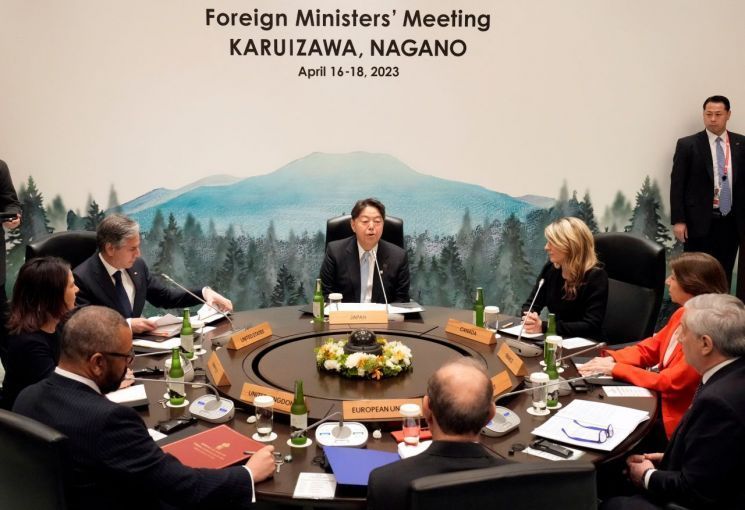 The G7 Foreign Ministers' Meeting held on the 17th in Karuizawa, Nagano Prefecture, Japan
 [Image source=EPA Yonhap News]
According to a Kyodo News report on the 21st, the G7 is discussing shifting the form of export sanctions against Russia from a negative list approach to a positive list approach. While previously sanctions were applied by allowing exports to Russia except for certain prohibited items, they are now considering a total export ban with exceptions only for certain allowed items. Agricultural products and medical supplies are mentioned as possible exceptions to the sanctions.
However, the EU is reportedly opposed to a total export ban on Russia, citing concerns that it could weaken the effectiveness of sanctions currently enforced within the Eurozone and cause conflicts among member states. The EU requires unanimous agreement among its 27 member countries to implement sanctions. In the process of formulating previous sanctions against Russia, the EU has faced significant difficulties in coordinating opinions among member states. For example, during the 10th sanctions package, Poland raised objections regarding exemptions related to Russian synthetic rubber, resulting in repeated failures to reach consensus.
A source said, "During the sanction agreement process, some member states threatened to exercise veto power and excluded certain domestic industries from the scope of the sanctions," adding, "If such an agreement is replaced by the G7 sanctions, the EU risks having to renegotiate with its member states again."
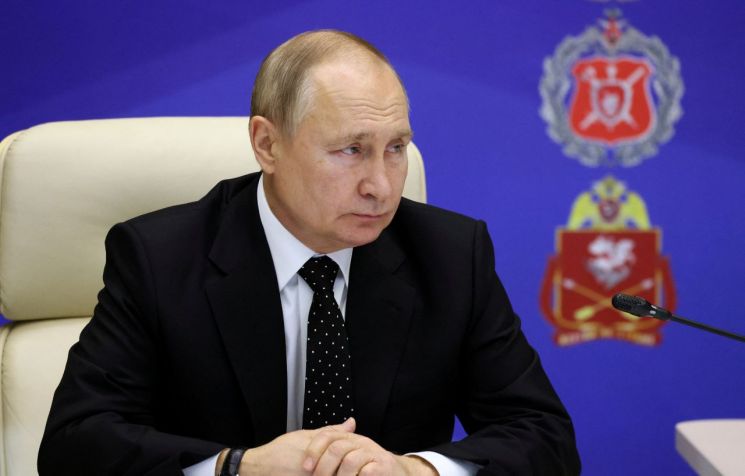
In Japan's case, it appears difficult to easily join the total export ban due to economic damage concerns. If a total sanction is implemented, Russia is likely to retaliate economically immediately. Japan depends heavily on Russian fossil fuels, having imported liquefied natural gas (LNG) worth 678 billion yen (6.7226 trillion won) from Russia last year alone. Currently, Japan is also unable to sell its shares in the Sakhalin Project, a Russian Far East energy development project, and thus cannot actively participate in the anti-Russia coalition.
Meanwhile, it is reported that the United States was the one to bring the total export sanction proposal against Russia to the negotiation table. Within the U.S. political sphere, dissatisfaction is growing over the loopholes in sanctions as recent cases of Russia circumventing Western regulations have been reported. According to a report by Nihon Keizai Shimbun, Russia is believed to have exported U.S.-made semiconductors worth about 1 trillion won last year via Hong Kong and China, bypassing U.S. government sanctions.
© The Asia Business Daily(www.asiae.co.kr). All rights reserved.


















