Naju City in Jeollanam-do has prepared a supplementary budget of 1.1119 trillion KRW for the first supplementary budget of 2023 and submitted it to the city council on the 24th.
According to the city, this first supplementary budget for this year was organized at 1.1119 trillion KRW, an increase of 115.8 billion KRW compared to the original budget.
The general account increased by 118.9 billion KRW to 1.0465 trillion KRW, while the special account decreased by 3 billion KRW to 72.7 billion KRW.
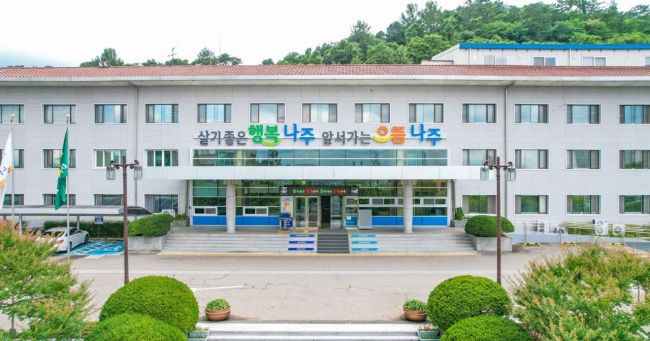
By sector (in order of budget size), 28.1 billion KRW was allocated to transportation and regional development, 23.2 billion KRW to agriculture and forestry, 20.5 billion KRW to general administration and safety, 17.3 billion KRW to social welfare and health, 12 billion KRW to industry, small and medium enterprises, and energy, 11.8 billion KRW to culture, tourism, and education, and 5.9 billion KRW to the environment.
The city allocated 2.1 billion KRW for discounts on the Naju Love Gift Certificates to stimulate consumption in local markets such as traditional markets and small business owners.
Excluding the existing Lunar New Year and Chuseok holiday discounts, the regular discount rate is 5% for paper and mobile certificates. Through this supplementary budget, a regular discount rate of 10% for mobile currency and 7% for paper certificates will be applied until the end of the year, expected to revitalize the local commercial district.
Additionally, a total of 16.1 billion KRW was allocated for livelihood stabilization in sectors such as agriculture and livestock farmers, small business owners, and vulnerable groups, including 2.1 billion KRW for the difference in increased electricity charges for agricultural use and tax-exempt diesel for agricultural machinery, 470 million KRW for traditional market revitalization, 310 million KRW for facility improvements and supplies for general restaurants, 1.4 billion KRW for AI livelihood and income stabilization funds, and 20 million KRW for a survey on vacancy rates of commercial buildings in the Innovation City.
The city plans to complete the distribution of standing tables and chairs to all 620 senior centers and village halls, which are the main living spaces for local seniors, within this year.
Although the distribution was originally scheduled to be phased annually until 2025, prioritizing the convenience and health of the elderly, 400 million KRW was allocated in this supplementary budget to provide standing tables and chairs to all senior centers and village halls.
Among the youth package projects to attract young population, 1.5 billion KRW was allocated for the “Free Rental of Shared Housing for Employed Youth” project. This year, a total of 30 rental-type shared housing units will be provided free of charge to promote housing stability for employed youth.
Other welfare budgets tailored to households and social classes amounting to 14.5 billion KRW include 440 million KRW for operating an emergency care center for people with developmental disabilities, 550 million KRW for shingles vaccination for those aged 65 and older, 160 million KRW for operating 100-year safe senior centers for dementia prevention, 40 million KRW for heating and cooling support for daycare centers, and 1 billion KRW for expanding childbirth incentives and supporting infertility diagnosis test fees.
The city allocated 230 million KRW to build a demand-responsive platform following the reorganization of city bus routes, 1.3 billion KRW to expand the 100-won taxi service, and 380 million KRW for a pilot operation budget for village taxis, accelerating a user-centered public transportation transformation in the 8th mayoral term.
Furthermore, a total of 36.3 billion KRW was allocated for expanding the social safety net and improving living conditions, including 6.1 billion KRW for projects proposed through dialogues with residents, 3.9 billion KRW for street and road environment improvements, 100 million KRW for replacing public institution automated external defibrillators and distributing fire extinguishers to fire-vulnerable households, and 50 million KRW for introducing mobile public alert devices.
Mayor Yoon Byung-tae said, “This first supplementary budget of the year was prepared focusing on revitalizing the local economy and stabilizing livelihoods amid high inflation, high interest rates, and weakened consumer sentiment, as well as fostering future growth engines for Naju in response to the era of local extinction, aiming to become a global energy international city and a top historical and cultural tourism destination.”
He added, “We will do our best to create a happy, customized welfare system and safe, livable urban infrastructure that directly affect citizens’ lives, including improving living conditions, protecting and supporting socially vulnerable groups such as the elderly, disabled, and pregnant women, and ensuring housing stability for youth.”
Meanwhile, the first supplementary budget bill for 2023 submitted by the city will undergo review by each standing committee and the special budget and accounts committee starting from the 25th, and will be approved and finalized through a plenary session on the 2nd of next month.
Naju = Asia Economy Honam Reporting Headquarters, Reporter Kim Yukbong baekok@asiae.co.kr
© The Asia Business Daily(www.asiae.co.kr). All rights reserved.
![Clutching a Stolen Dior Bag, Saying "I Hate Being Poor but Real"... The Grotesque Con of a "Human Knockoff" [Slate]](https://cwcontent.asiae.co.kr/asiaresize/183/2026021902243444107_1771435474.jpg)
















