Differences in Producer-Consumer 'Price Negotiation'
Bingsu Reflects 'Premium Experience' Value
"Gukbap Is Common Food... Expected to Be Affordable"
As the surge in prices continues, restaurant prices are also rising one after another. This applies to everything from luxury shaved ice at hotels to gukbap, a representative of affordable food for the common people.
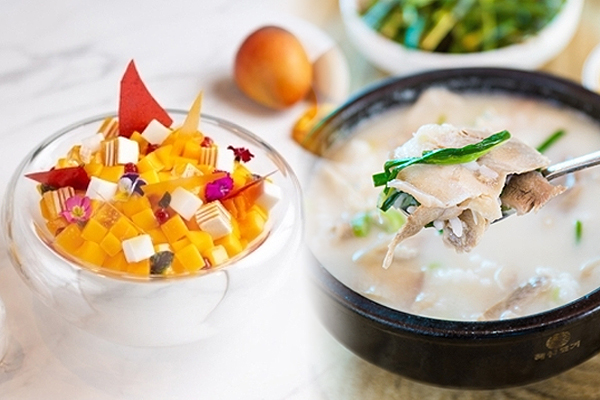
However, consumers' acceptance of price increases varies depending on the product. While luxury shaved ice priced over 120,000 won per bowl is expected to maintain high popularity, there is a relatively much stronger psychological resistance to gukbap priced at 10,000 won.
Why are consumers more tolerant of price increases for certain products compared to others?
Product Prices Are Determined by Producer-Consumer Agreement
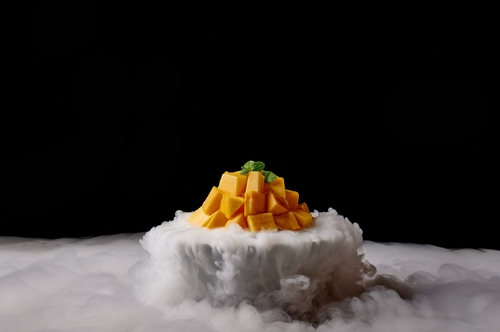 The premium bingsu sold at hotels continues to enjoy strong popularity despite successive price increases. The photo shows Lotte Hotel's Apple Mango Bingsu. [Image source=Lotte Hotel]
Experts explain that the reason for this difference lies in 'psychological price negotiation.' The price of a specific product or service is not determined solely by costs, labor, or supply and demand. Essentially, the selling price is established through a 'negotiation' between producers and consumers.
Professor Eunhee Lee of Inha University’s Department of Consumer Studies explained, "If you look at the price alone, 100,000 won for hotel shaved ice might seem excessive even for a luxury dessert, but in fact, hotel shaved ice is not just about 'eating shaved ice.'" She added, "Consumers who purchase hotel shaved ice gain an indirect opportunity to enjoy the highest-class hotel facilities, which they normally cannot access, for 100,000 won."
This also reflects the so-called panoply effect, the illusion that consuming a particular product makes the consumer part of the group that consumes that product.
Professor Lee said, "Consumers of hotel shaved ice show off by posting photos on social networking services (SNS) after eating it. The experience of eating shaved ice itself is a 'small luxury' because of this." She added, "This unique experience is differentiated from everyday meals. The 'premium' of shaved ice, which consumers cannot accept in gukbap, lies here."
There is also such an 'agreement' for affordable menus like gukbap. Consumers expect low prices and large portions for foods they consume regularly. Because of this, even if the rate of price increase is low, consumers inevitably resist the '10,000 won gukbap' immediately.
'The 1000 Yen Wall' in Japan
The 'price barrier' arising from these reasons is commonly found not only in Korea but also in affordable foods in many countries.
For example, in Japan’s ramen industry, there is a term called the '1000 yen (about 9,800 won) wall.' This theory states that no matter how much premium strategies are pursued, the price of one bowl of ramen should not exceed 1000 yen. Consumers hesitate to open their wallets once ramen prices go beyond 1000 yen.
In fact, when the famous Japanese ramen specialty store 'Iidashoten' announced last May that it would raise prices of some products to 1600 yen (about 15,700 won) and 2000 yen (about 19,600 won), it faced fierce backlash from local consumers.
120,600 Won per Bowl: The Era of 100,000 Won Shaved Ice
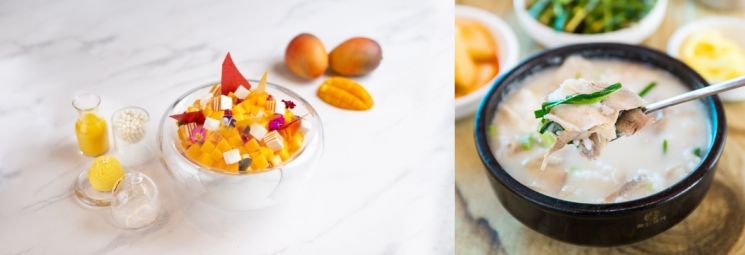
Meanwhile, the Four Seasons Hotel announced on the 18th that it will sell 'Jeju Apple Mango Garden Shaved Ice' from May 1 to September 30. The price is 120,600 won per bowl, about a 30% increase compared to the previous year. The era of '100,000 won shaved ice' has thus begun.
As energy prices, grains, and meat prices continue to surge, restaurants are raising prices one after another. This is not just a story about luxury shaved ice. According to data from the meal payment service 'Siksin,' the average price of soondae gukbap, a representative affordable food, increased to 9,633 won as of the end of last year. It is expected to reach 10,000 won this year.
© The Asia Business Daily(www.asiae.co.kr). All rights reserved.
![Clutching a Stolen Dior Bag, Saying "I Hate Being Poor but Real"... The Grotesque Con of a "Human Knockoff" [Slate]](https://cwcontent.asiae.co.kr/asiaresize/183/2026021902243444107_1771435474.jpg)


















