Shock Grows Over Gangnam 'Live Jump' Incident
Similar Cases Previously Reported in Japan and France
Concerns Over Imitation by SNS-Exposed 2030s and Youth
On the 16th, teenage girl A, who died after jumping from a high-rise building in Gangnam, Seoul, live-streamed her jump video on the internet. At the time, dozens of netizens watched the live video, and after the incident, the video spread on online communities and social networking services (SNS), causing controversy. (▶Related article)
The 'SNS jump video' has long been a social issue in developed countries. Due to the simultaneity and speed characteristics of SNS, once a video is released, its ripple effect grows uncontrollably, and there are concerns about imitative behavior since sensitive teenagers are exposed to it.
Live Broadcast of Extreme Choice on SNS
 In advanced countries such as Japan and France, 'live streaming of SNS extreme suicide attempts' has emerged as a social issue.
 [Image source=Yonhap News]
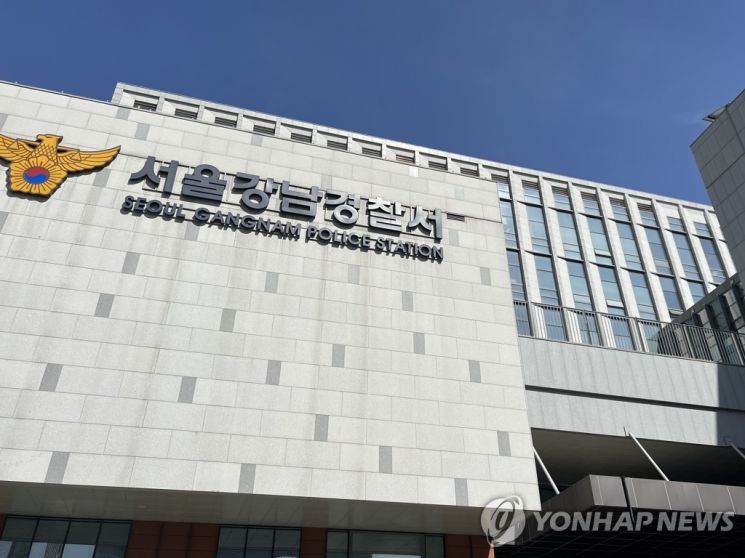
According to the Gangnam Police Station in Seoul on the 16th, at around 2:30 p.m. on the same day, teenage student A was found dead in a high-rise building in Yeoksam-dong, Gangnam-gu. A live-streamed the process through 'Instagram,' and some viewers who watched the broadcast reported it to the police. The police and fire authorities installed an air mattress on the road below the building and entered the rooftop, but ultimately A jumped.
There are claims that the online community 'DC Inside Depression Gallery' was behind A's extreme choice. There were posts suggesting that A conspired with a man she met in this community to make the extreme choice. The police are currently verifying the exact facts.
Even after the incident, A's video was shared among some SNS users, sparking controversy. On online communities, hateful expressions and malicious comments about A were also posted.
Already a Social Issue in Japan and France
This is not the first case where an extreme choice process was live-streamed on SNS. On SNS, where rapid information sharing is key, videos of jumps and extreme choice attempts have spread without filtering, causing multiple controversies.
In developed countries such as Japan, 'SNS jump videos' have long been a social issue. A representative case is the 'junior high school girl jump incident' that occurred in November 2013. In this case, a teenage minor who used the nickname 'RoRoChan' on SNS live-streamed her jump process online, causing a huge impact on Japanese society at the time.
Since then, there have been several attempts to live-stream extreme choices in Japan, seemingly imitating the RoRoChan case. Three days before the Gangnam incident, on the 13th (local time), two high school girls live-streamed their jump process on SNS.
This is not only a Japanese issue. In 2016, a girl in Paris, France, shocked the public by live-streaming her extreme choice on 'Twitter.' In the United States, between 2021 and 2022, a so-called 'challenge' trend spread on the short-form video platform 'TikTok,' where users imitated famous extreme choice videos, raising concerns among parents.
Unfiltered Video Spread, Vulnerable to Werther Effect
The spread of extreme choice videos may have negative ripple effects across society. This is known as the 'Werther effect.' The Werther effect refers to the phenomenon where when a famous person admired by the public makes an extreme choice, ordinary people attempt 'imitative extreme choices' following that person.
In the past, celebrity extreme choices triggered the Werther effect, but with the development of SNS and YouTube, internet celebrities now have enormous influence. There are concerns that emotionally sensitive teenagers and the active SNS-using 20s and 30s generations may be vulnerable to the Werther effect.
In fact, a research team led by Professor Kim Nam-guk of Seoul Asan Medical Center and Professor Hwang Jeong-eun of Ulsan Medical School analyzed the risk of imitative extreme choices by sex and age. The group with the highest intensity was women in their 20s → women in their 30s → men in their 20s, in that order. In particular, women in their 20s showed an imitative extreme choice intensity about 2.31 times higher than the overall average.
© The Asia Business Daily(www.asiae.co.kr). All rights reserved.


















