Amid Rising US-China Tensions,
Chinese Local Companies Accelerate Production Base Relocation
Local Chinese companies' 'China Exodus' is accelerating.
As US-China tensions escalate, not only global companies like Apple but also native Chinese companies are facing pressure from overseas clients to relocate production bases outside China.
According to major foreign media on the 17th, Guangdong Vanward New Electric, a leading Chinese water heater company, recently decided to move its factory located in southern China to Egypt and Thailand. This is because customers are demanding the relocation of production bases outside China following the US's tariff hikes on Chinese imports.
Lu Yukong, chairman of Guangdong Vanward New Electric, explained, "American companies are setting specific conditions that factories must be built outside China to continue cooperation," adding, "The main purpose of relocating production bases is to avoid the risks of US-China trade frictions." He also pointed out that although labor costs in Thailand, where the factory will be relocated, are low, the supply chain is not as comprehensive as in China. Essentially, he lamented that they are moving production bases outside China reluctantly under customer pressure.
Chinese textile company Lutai Textile and tire manufacturer Jiangsu General Science Technology are also currently promoting the construction of new production bases in Southeast Asia.
Previously, global companies such as US-based Apple and Spain's Mango led the relocation of Chinese factories overseas. However, recently, mainland Chinese companies with high export ratios have also joined the exodus from China. This is analyzed as a faster and more widespread overseas escape due to intensified US-China conflicts.
This trend is also confirmed by figures. According to the '2023 Business Environment Report' recently released by the American Chamber of Commerce in China, 24% of surveyed companies have either started or are considering relocating their production bases outside China. This response rate increased by 10 percentage points compared to the survey conducted a year ago.
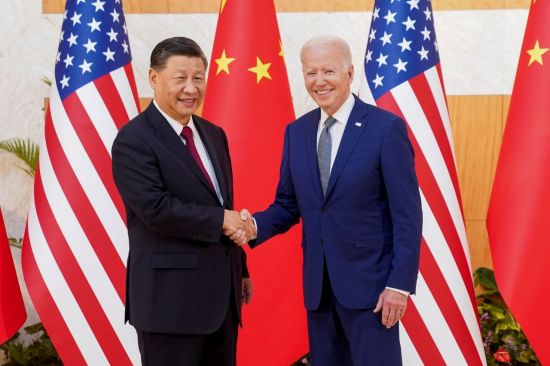
Companies have long been stepping on the pedal of de-Chinaization by relocating production bases to Southeast Asia, including Vietnam, due to risks related to the Chinese Communist Party and rising labor costs from economic development. Now, an additional risk has emerged. As the Biden administration raises the level of containment against China, 'Made in China' itself has become a risk for companies. The US is already reducing its dependence on Chinese products. According to The Wall Street Journal (WSJ), the share of Chinese imports in the US fell from 22% in 2017 to 17% in 2022. Meanwhile, imports from other Asian regions and Mexico have significantly increased. In particular, Vietnam's exports to the US rose from $10 billion in 2007 to $120 billion in 2022, and exports from the Philippines, Taiwan, Thailand, India, and Malaysia to the US are also rapidly increasing.
The US is also discussing raising tariffs on China in cooperation with allied countries. According to Japan's Nihon Keizai Shimbun, the US government proposed an agenda at the G7 working-level talks to discuss measures such as raising tariffs on China or providing financial support and tariff reductions to affected countries if China takes economic retaliation against friendly countries.
In this situation, a Chinese battery company is reportedly facing difficulties as some European clients recently reduced battery orders due to concerns over the close ties between China and Russia and US sanctions. As the US tightens its encirclement of China, the pressure felt by companies producing Chinese products inevitably increases.
A foreign media outlet reported, "Companies are reassessing their global management (strategies) to avoid geopolitical conflicts such as Russia's invasion of Ukraine, the COVID-19 pandemic, and rising US-China tensions," adding, "Western clients are also aggressively seeking to relocate supply chains outside mainland China, putting factories within China on the back burner."
© The Asia Business Daily(www.asiae.co.kr). All rights reserved.
![Clutching a Stolen Dior Bag, Saying "I Hate Being Poor but Real"... The Grotesque Con of a "Human Knockoff" [Slate]](https://cwcontent.asiae.co.kr/asiaresize/183/2026021902243444107_1771435474.jpg)
















