Increased Interest in Healthy Foods Amid COVID-19
Products with Reduced Sugar and Salt Launched as Consumer Trend
MSG Products Using Plant-Based Ingredients Also Released
As the number of consumers checking product ingredients before purchasing food increases, the so-called 'removal' trend of reducing or eliminating unhealthy ingredients in the food market is also gaining momentum.
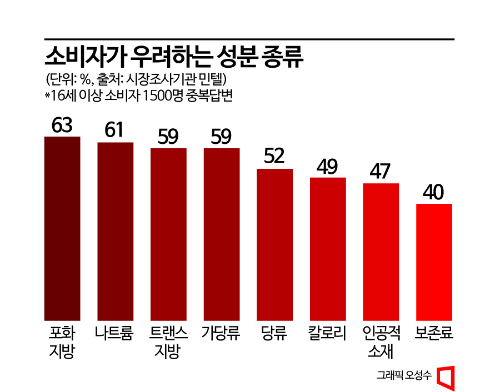
According to a survey conducted by global market research firm Mintel on 1,500 consumers aged 16 and over on the 18th, more than half of the respondents expressed concerns about ingredients such as saturated fat, sodium, trans fat, added sugars, and sugars in food products.
Since the COVID-19 pandemic, interest in health has increased, strengthening the tendency to reduce or eliminate ingredients that are harmful to health when consumed excessively, such as sugars and sodium. A representative movement is reducing sugars. With growing concerns about sugar intake due to the increase in diabetes patients and the rapid rise in obesity rates, various sugar-free products are being launched, especially targeting younger generations.
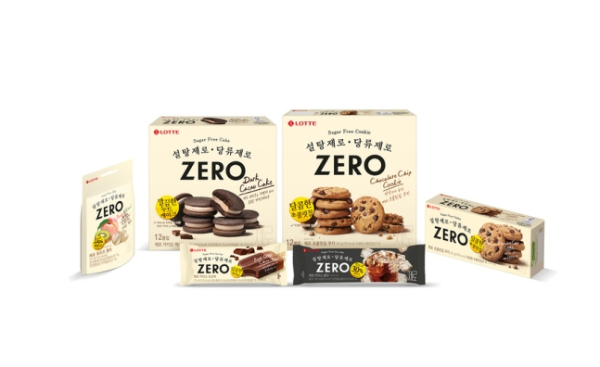
In South Korea, products that reduce sugar or add natural sugars or sugar substitutes are increasing across various food sectors. Lotte Wellfood introduced the sugar-free dessert brand 'Zero' in May last year in response to growing interest in sugar-free products using alternative sweeteners instead of sugar, and it is estimated to have achieved sales of about 20 billion KRW by the end of last year. In addition, the release and consumption of so-called zero-calorie beverages and alcoholic drinks, such as Lotte Chilsung Beverage's 'Chilsung Cider Zero' and Hite Jinro Beverage's 'Hite Zero 0.00,' have become a trend throughout the industry.
Along with sugars, interest in products with reduced sodium is also increasing. Shin Song Food's traditional fermented soybean paste, which reduces saltiness through low-sodium fermentation, is a representative example. Globally, awareness of the need to reduce sodium intake has spread due to concerns that COVID-19 is more fatal to patients with hypertension and other underlying conditions. In October 2021, the U.S. Food and Drug Administration (FDA) also announced voluntary sodium reduction guidelines for 163 food items, including baby food, snacks, and processed foods.
The seasoning market, commonly known as MSG, is also growing alongside sugar- and sodium-reduced products. MSG (monosodium glutamate) is a non-essential amino acid naturally found in cheese, tomatoes, seafood, and meat, and it enhances the flavor of food, making it a food additive used in processed foods. Although MSG has faced safety controversies due to negative perceptions of chemical seasonings, the FDA classifies MSG as "generally recognized as safe" as a food additive, and in South Korea, the Ministry of Food and Drug Safety recognizes it as a "safe additive with no usage restrictions."
Recently, in South Korea, MSG products mainly using plant-based ingredients have been released due to consumer concerns, and the use of MSG has increased as the frequency of home cooking has risen since COVID-19, enhancing umami flavor. According to the Korea Agro-Fisheries & Food Trade Corporation (aT), domestic seasoning sales reached 95.6 billion KRW in the first half of last year, a 6.1% increase compared to 90.1 billion KRW in the same period the previous year.
CJ CheilJedang introduced the plant-based seasoning 'Vegan Dasida' last year. It is the first time CJ CheilJedang has launched a seasoning that smells like beef made from soybeans, not the existing plant-based seasonings made from vegetable broth and mushroom powder. Sempio Foods also sells 'Yeondu,' a seasoning made only from fermented soybean liquid and vegetable extracts.
© The Asia Business Daily(www.asiae.co.kr). All rights reserved.
![Clutching a Stolen Dior Bag, Saying "I Hate Being Poor but Real"... The Grotesque Con of a "Human Knockoff" [Slate]](https://cwcontent.asiae.co.kr/asiaresize/183/2026021902243444107_1771435474.jpg)

















