Jeju Island Prepares Draft Legislation in First Half
Average Charge per Tourist is 8,170 Won
It is reported that the draft legislation for the introduction of the 'Environmental Conservation Contribution Fee (Environmental Conservation Charge)' promoted by Jeju Special Self-Governing Province is nearing completion. This is the so-called 'Entry Tax.' However, attention is focused on whether it can be introduced by overcoming challenges such as regional equity and gaining national consensus regarding the entry tax.

Jeju Special Self-Governing Province announced on the 16th that it is preparing a draft bill for the Environmental Conservation Contribution Fee imposed on tourists visiting Jeju.
Previously, Jeju Province commissioned the Korea Environment Institute (KEI) in August last year to conduct a research project on the 'Implementation Plan for the Introduction of Jeju Environmental Conservation Contribution Fee.' The research budget is 200 million KRW, and the research period is one year. Jeju Province aims to prepare legislation for the introduction of the Environmental Conservation Contribution Fee in the first half of the year before the research results are out and to submit it to the National Assembly within the year.
Currently, Jeju Province is reportedly reviewing amendments to the 'Special Act on the Establishment of Jeju Special Self-Governing Province and the Creation of an International Free City,' the 'Act on the Conservation and Use of Biodiversity,' and the 'Basic Act on Contribution Fee Management.'
In particular, the Environmental Conservation Contribution Fee in Jeju has gained renewed attention as the U.S. state of Hawaii recently legislated a plan to sell a tourist permit valid for one year to tourists aged 15 and over who do not reside in Hawaii for a fee of 50 dollars (66,000 KRW).
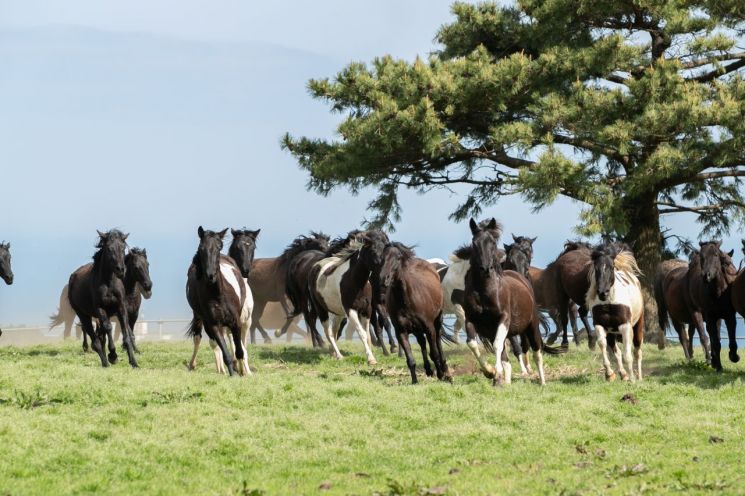 Jeju Special Self-Governing Province announced on the 16th that it is preparing a draft bill for an environmental conservation contribution fee to be imposed on tourists visiting Jeju. The photo is not related to the specific content of the article. [Photo by Nongchon Jinhungchon]
Jeju Province has been promoting the introduction of the 'Environmental Conservation Contribution Fee' system since 2016
Due to the rapid increase in tourists, the carrying capacity of Jeju society and natural environment has reached its limit, and the amount of household waste and sewage has increased. As a solution, Jeju Province has been promoting the introduction of the 'Environmental Conservation Contribution Fee' system based on the 'polluter pays principle' since 2016.
From September 2017 to May 2018, Jeju commissioned the Korean Local Finance Association to conduct a 'Feasibility Study on the Introduction of the Jeju Environmental Conservation Contribution Fee System.' The research team proposed a charge of 1,500 KRW per person per night for accommodation, 5,000 KRW per day for rental cars (10,000 KRW for vans, with a 50% discount for compact and electric cars), and 5% of the fare for charter buses as the Environmental Conservation Contribution Fee.
The average charge per tourist is 8,170 KRW. The annual collection amount was estimated to start at 140.7 billion KRW in the first year of introduction, 154.3 billion KRW in the third year, and 166.9 billion KRW in the fifth year.
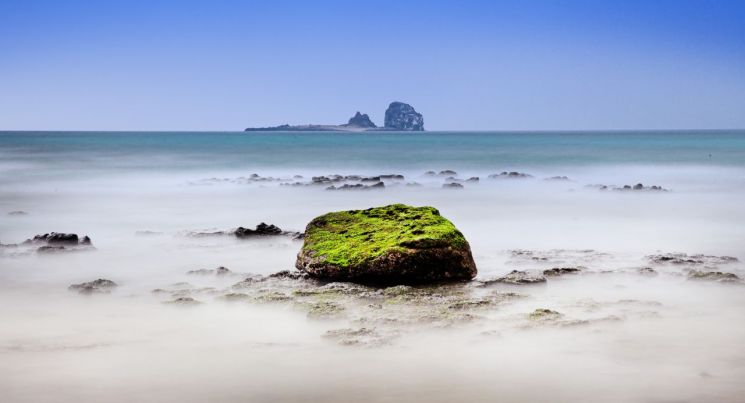 Grand Prize of the 14th Jeju International Photography Contest, "Looking at the Hyungje Island" (by Kim Eun-joo).
 [Photo courtesy of Jeju World Heritage Headquarters]
Governor Oh Young-hoon: "It is possible only with national consensus; the process will not be simple"
Jeju Province believes that national consensus and government persuasion are necessary for the introduction of the Environmental Conservation Contribution Fee. In fact, Jeju Province attempted to introduce the 'Environmental Asset Conservation Cooperation Fee' through a five-step system improvement task in 2012, but it was scrapped due to controversy over the 'Entry Tax.'
Therefore, in the ongoing implementation plan research project, the focus is on legislation based on the feasibility study results of the Environmental Conservation Contribution Fee, with plans to supplement the legal basis and rationale. They also intend to highlight the distinctiveness through comparative analysis with existing systems.
In particular, a major goal is to secure persuasive power to understand the validity of the system from the perspective of the National Assembly, related ministries, and the public who will actually pay the contribution fee, rather than from the viewpoint of residents or Jeju Province.
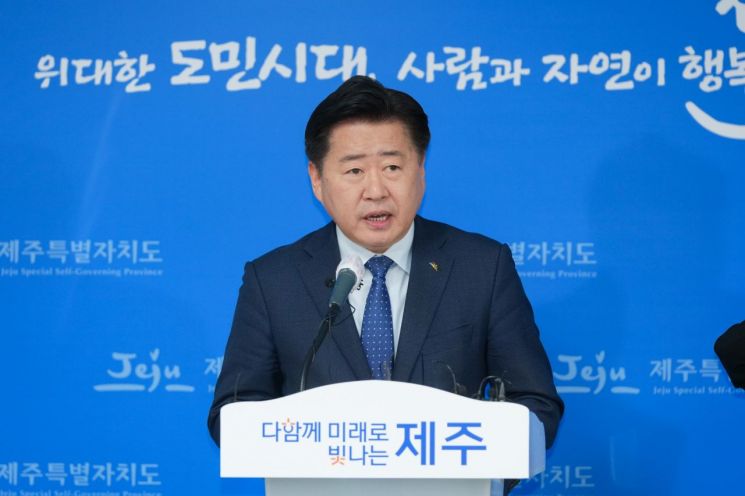
Governor Oh Young-hoon of Jeju said during a provincial government question session on the 13th, "(The introduction of the Jeju Environmental Conservation Contribution Fee) is possible only when supported by national consensus, so we are approaching it cautiously with meticulous planning and strategy," adding, "It is not all optimistic; we need to consider the movements of central government ministries, some members of the National Assembly, the industrial economy sector, and the media. The process will not be simple."
Additionally, Democratic Party lawmaker Wi Seong-gon (Seogwipo City) proposed amendments to the 'Jeju Special Act' and the 'Basic Act on Contribution Fee Management' for the introduction of the Jeju Environmental Conservation Contribution Fee in December last year, but they are currently pending due to regional equity issues.
© The Asia Business Daily(www.asiae.co.kr). All rights reserved.
![Clutching a Stolen Dior Bag, Saying "I Hate Being Poor but Real"... The Grotesque Con of a "Human Knockoff" [Slate]](https://cwcontent.asiae.co.kr/asiaresize/183/2026021902243444107_1771435474.jpg)


















