Proposal for 'Focused Support' to Lower Classes at Pension Special Committee Expert Public Hearing
At the National Assembly's Special Committee on Pension Reform, an expert suggested raising the basic pension, which currently provides up to 323,180 KRW per month to the bottom 70% income elderly, to 400,000 KRW, but narrowing the eligibility to the bottom 40% income group. This recommendation emphasizes the need for focused support on lower-income groups as aging progresses rapidly.
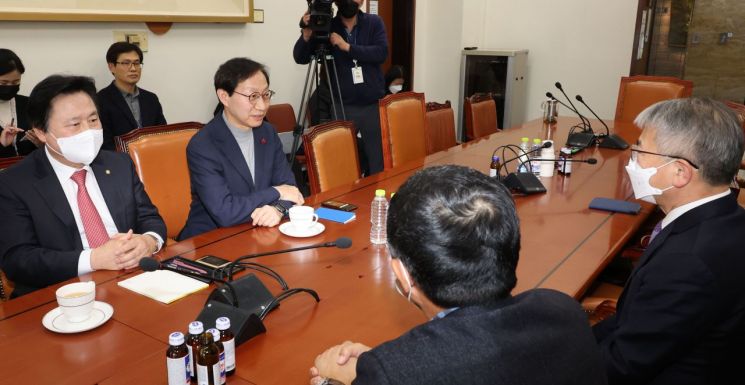
The Pension Reform Special Committee held a public hearing on the "Development Direction of the Basic Pension" at the National Assembly on the 12th to gather expert opinions. Professor Kim Su-wan of Gangnam University, who participated as a presenter, stated, "While the necessity to raise the basic pension amount to 400,000 KRW is recognized, rather than a uniform increase, it is necessary to consider a method of 'giving more to the lower-income groups' to reduce the poverty gap."
He proposed a differentiated and gradual increase by income group in the medium to short term. He explained, "In 2024, 350,000 KRW could be provided to the bottom 70% income group, in 2025, 400,000 KRW to the bottom 40%, and in 2026, 500,000 KRW to the bottom 40% income group."
He cited the gap between reality and the system as the reason for adjusting the eligibility criteria for basic pension recipients. In particular, he explained that the number of recipients and the required budget have been increasing annually due to the rapid progress of population aging. He said, "When the basic pension was introduced in 2014, the number of recipients was 4.35 million, but by 2022, it increased by more than 40% to 6.12 million."
Accordingly, he pointed out cases where lower-income groups give up applying for the basic pension in order to receive benefits from the National Basic Livelihood Security. Professor Kim said, "Lower-income groups choose National Basic Livelihood Security benefits instead of the basic pension, so the actual eligibility criteria are higher than the bottom 70% income line," and suggested, "The eligibility for the basic pension should be adjusted considering the rate at which the relative level of elderly income and assets improves compared to the total population in the future."
Regarding the linked reduction system to prevent overlapping benefits with the National Pension, he argued that it is desirable to abolish it. This is because as the National Pension contribution rate increases and intergenerational transfers decrease, the original purpose of introducing the linked reduction becomes less relevant. However, for the 20% spousal reduction, he proposed not abolishing it due to potential issues such as the benefit gap between basic pension recipients and non-recipients and long-term fiscal burdens.
At the hearing, Ryu Jae-rin and Lee Da-mi, associate researchers at the Korea Institute for Health and Social Affairs, who participated as designated discussants, also expressed overall agreement with Professor Kim's proposed improvements to the basic pension system.
© The Asia Business Daily(www.asiae.co.kr). All rights reserved.
![Clutching a Stolen Dior Bag, Saying "I Hate Being Poor but Real"... The Grotesque Con of a "Human Knockoff" [Slate]](https://cwcontent.asiae.co.kr/asiaresize/183/2026021902243444107_1771435474.jpg)











