Seasonal Management System to Include Private Coal Power Plants
Currently, Seasonal Management System Applies Only to Public Institutions for Fine Dust Control
Kim Hoe-jae, a member of the Democratic Party of Korea (Yeosu City Eul, Jeonnam), on the 12th (Wednesday) took the lead in proposing the 「Partial Amendment to the Special Act on the Reduction and Management of Fine Dust (Fine Dust Reduction Act)」, which adjusts the operating rate of private coal-fired power plants and other coal-fired power plants during periods of high fine dust concentration, such as the fine dust seasonal management period.
Recently, due to the 'worst fine dust' caused by yellow dust from China, the air quality index nationwide has remained at its worst state. Accordingly, the need for fine dust reduction measures is increasing.
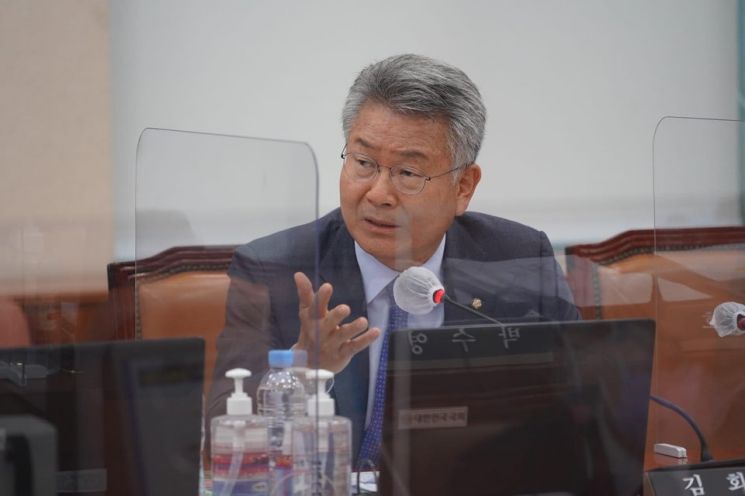
Rep. Kim Hoe-jae stated, “The current law limits the fine dust seasonal management system for coal power generation to facilities operated only by public institutions,” and added, “It is necessary to actively prepare measures by expanding the scope.” He took the lead in proposing the Fine Dust Reduction Act.
Through the amendment, Rep. Kim made it possible to take measures such as adjusting the operating rate and changing operating hours for private thermal power facilities using coal as a raw material when fine dust management is necessary. This allows for more active measures by reducing emissions from private thermal power facilities when fine dust conditions worsen.
This 「Partial Amendment to the Special Act on the Reduction and Management of Fine Dust (Fine Dust Reduction Act)」 was jointly proposed by Rep. Kim Hoe-jae along with Jeon Hye-sook, Seo Young-kyo, Ki Dong-min, Kim Jung-ho, Shin Jeong-hoon, Jeon Jae-soo, Kim Hong-gul, Lee Byung-hoon, and Lee Yong-seon.
South Korea is pursuing carbon neutrality by 2050, but it is still considered one of the OECD countries with high fine dust emissions, with coal-fired power plants highlighted as a major cause.
Accordingly, the government announced a reduction in coal power plant operation through the fine dust seasonal management system, and in December 2020, the reduction of coal power generation resulted in a 36% decrease in fine dust emissions, among other achievements.
According to the Global Carbon Project (GCP) and South Korea’s Greenhouse Gas Inventory and Research Center, South Korea’s carbon dioxide emissions significantly decreased in 2019, with the reduction of coal power generation being a decisive factor.
Rep. Kim Hoe-jae said, “Adjustment of thermal power generation is necessary to reduce fine dust and achieve carbon neutrality,” and added, “In addition, expanding renewable energy and creating an eco-friendly energy ecosystem should reduce fine dust and support the 2050 carbon neutrality goal.”
Yeosu = Choi Cheol-hoon, Honam Reporting Headquarters, Asia Economy, hss79@asiae.co.kr
© The Asia Business Daily(www.asiae.co.kr). All rights reserved.

![Clutching a Stolen Dior Bag, Saying "I Hate Being Poor but Real"... The Grotesque Con of a "Human Knockoff" [Slate]](https://cwcontent.asiae.co.kr/asiaresize/183/2026021902243444107_1771435474.jpg)















