Agreement Between Japanese Sushi Chain and Aviation Fuel Company for Waste Cooking Oil Supply
Gaining Attention as Eco-Friendly Fuel for Carbon Dioxide Reduction
Japanese conveyor belt sushi franchise Sushiro is attracting attention both inside and outside Japan by announcing that it will recycle discarded waste cooking oil into airplane fuel. The company revealed plans to increase waste cooking oil processing to cover 10% of total aviation fuel demand in the future, with expectations for benefits such as low carbon emissions and cost reduction from recycled aviation fuel.
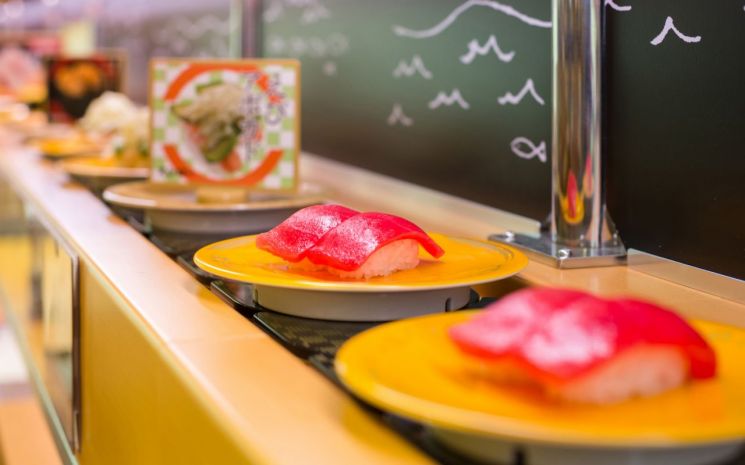
According to the Asahi Shimbun on the 12th, Food & Life Company (F&LC), which operates Sushiro and the izakaya franchise Sugidama, announced on the 5th that it will supply waste cooking oil from its stores as raw material for "Sustainable Aviation Fuel (SAF)." This is the first agreement of its kind in the food service industry.
SAF is aviation fuel made from raw materials such as household waste, waste cooking oil, and seaweed. Compared to conventional aviation fuel based on fossil resources like petroleum and coal, it can reduce carbon dioxide emissions by up to 80%, making it an eco-friendly fuel.
F&LC plans to supply waste cooking oil used for frying from over 680 stores nationwide to related companies. Waste oil recycling company Revo International will collect it, JGC Holdings will transport it to the SAF manufacturing plant, and Sapphire Sky Energy will be responsible for SAF production.
According to F&LC, after processing, 900,000 liters of waste cooking oil annually will be reborn as 750,000 liters of SAF. Full-scale production will begin next year, with the goal of supplying Japanese airlines by 2025.
This project aligns with Japanese government policies. The Japanese government has announced plans to replace 10% of the fuel used by domestic airlines with SAF by 2030. However, most SAF currently is imported from overseas. Japan exports about 100,000 tons of waste cooking oil, the raw material for SAF, annually abroad, but the proportion of domestically produced SAF is known to be less than 1%. Because of this, there are increasing demands in Japan to establish a supply chain for domestic SAF production.
Yuki Nishimura, SAF Business Manager at JGC Holdings, said, “Cooperation is essential to supply SAF produced domestically. Efforts across industries are very important from the perspective of resource reuse.”
© The Asia Business Daily(www.asiae.co.kr). All rights reserved.

















