Gwanak-gu installs ‘Green Curtains’ and ‘Cool Roofs’ in daycare centers and senior centers to prepare for heatwaves
Approximately 101 million KRW invested this year to install at 10 additional locations... Enhances energy efficiency and helps reduce fine dust
Gwanak-gu (Mayor Park Junhee) is installing ‘Green Curtains’ and ‘Cool Roofs’ at facilities used by children and the elderly who are vulnerable to the climate crisis, aiming to prevent heat-related illnesses and improve comfortable indoor environments during summer.
The district was selected for the Ministry of Environment’s ‘2023 Climate Change Vulnerable Groups and Regional National Subsidy Project’ and plans to invest a total budget of 101 million KRW this year to install ‘Green Curtains’ and ‘Cool Roofs’.
‘Green Curtains’ are an eco-friendly technique where annual climbing plants such as sword beans grow on nets attached to the exterior walls in a curtain form, lowering indoor temperatures by nearly 5℃ during summer and effectively purifying the air by absorbing surrounding fine dust.
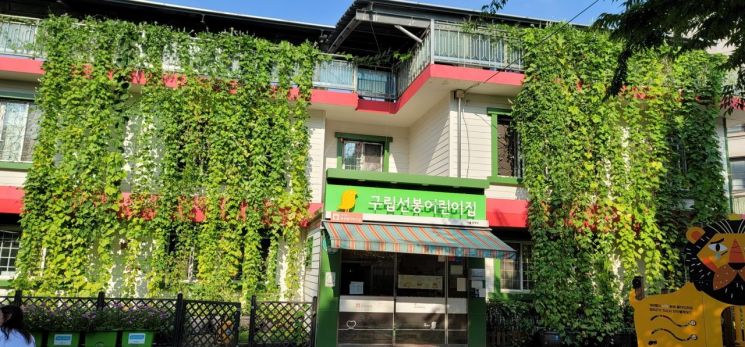
By June, installation work of ‘Green Curtains’ will be completed at a total of 8 locations including daycare centers, youth centers, and senior centers, followed by operation and management to fully prepare for the heatwave. In winter, barley will be planted to maintain urban aesthetics.
Additionally, a ‘Cool Roof’ will be installed on the rooftop of one senior center to protect the elderly from heatwaves and help reduce energy consumption.
‘Cool Roofs’ involve painting rooftops with special paint that reflects sunlight and radiates heat, lowering indoor temperatures and reducing cooling energy use by about 20% during summer.
Waterproofing work will also be carried out alongside the ‘Cool Roof’ installation to prevent leakage damage.
A district official stated, “We will continue to promote various eco-friendly projects to respond to climate change, protecting the health of not only vulnerable groups but all residents, while striving to reduce greenhouse gases and achieve carbon neutrality.”
Jungnang-gu begins operation of 107 heatwave shade shelters
Early operation of a total of 107 heatwave shade shelters starts from the 10th
Smart shade shelters with automatic opening/closing based on weather detection and LED security lighting also provided
10 additional shade shelters planned for installation at crosswalks this year
Jungnang-gu (Mayor Ryu Kyung-gi) started operating heatwave shade shelters from the 10th of this month, taking a proactive step to prepare for the heatwave.
This is about a month earlier than the usual heatwave countermeasure period from May 20 to September 30, aiming to provide pedestrians with a resting space from strong spring UV rays and prepare for early heat.
This year, a total of 107 shade shelters including folding, roof-type, and smart types are being operated. They are located at busy crosswalks and traffic islands, and the district plans to install 10 additional shade shelters at heavily trafficked crosswalks.
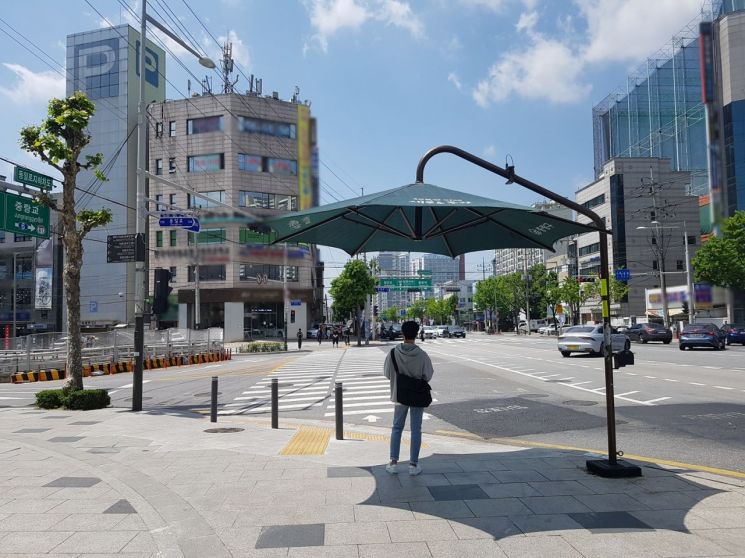
The recently introduced smart shade shelters incorporate IoT and solar power technology, with sensors analyzing external temperature and wind strength to automatically open and close the shelters. They are spacious enough to accommodate many people and feature LED lights at night serving as security lighting.
Additionally, 48 shade shelters are equipped with chairs for the elderly and pregnant women to rest, providing convenience to residents. The 10 newly installed shade shelters this year will also include chairs.
Mayor Ryu Kyung-gi of Jungnang-gu said, “I hope pedestrians passing through various parts of Jungnang-gu can take a break from the sun under the heatwave shade shelters.”
Gangseo-gu leads carbon neutrality by adding ‘Eco Mileage QR Code’ to apartment management fee bills, first among Seoul autonomous districts
Eco Mileage QR codes included on management fee bills of 94 apartment complexes
Mileage can be exchanged for traditional market Onnuri gift certificates or converted to cash
Expected to spread energy-saving culture without additional promotional budget
“Reduce the burden of living expenses increased by electricity and city gas bills through practicing Eco Mileage.”
Gangseo-gu, Seoul (Mayor Kim Tae-woo) is leading the spread of a carbon-neutral culture by becoming the first Seoul autonomous district to include ‘Eco Mileage subscription QR codes’ on apartment management fee bills starting this month.
This initiative links apartment management fee bills, which residents pay close attention to, with Eco Mileage to reduce greenhouse gas emissions and promote an energy-saving culture.
Eco Mileage is a compound word combining ‘eco’ meaning environmentally friendly and ‘mileage’ meaning accumulated points. It is a citizen participation energy-saving campaign that provides mileage points based on the reduction rate when electricity, water, city gas, and other energy usage are decreased.
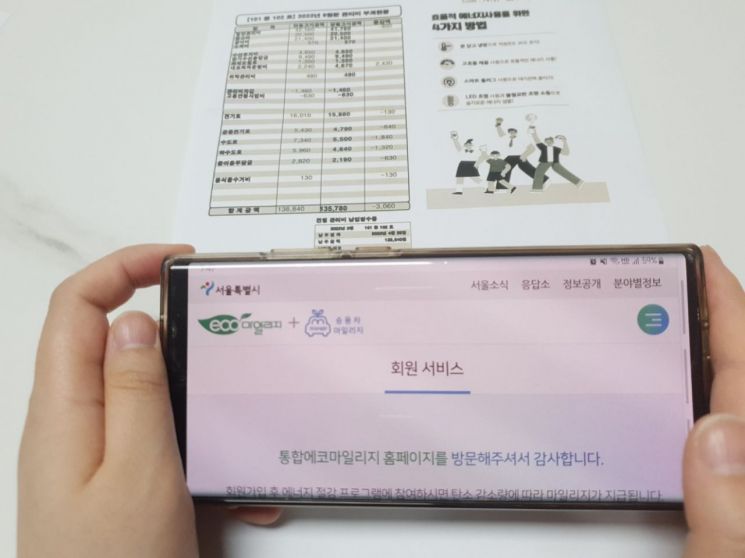
Residents can easily access the Eco Mileage website membership registration page through the QR codes printed on the management fee bills of 94 apartment complexes in Gangseo-gu.
After registering as members and adding electricity, water, and city gas information, they can receive up to 50,000 mileage points from the following month based on the amount of energy saved compared to the previous six months.
Accumulated mileage can be exchanged for traditional market Onnuri gift certificates or book and cultural gift certificates, converted to cash via ETAX (Seoul tax payment system), or used to pay Seoul local taxes.
Without additional promotional budget, the district coordinated with Easy Enterprise, a company handling collective housing management fee collection, to achieve a twofold effect of reducing residents’ energy bills and accumulating mileage.
The district plans to pilot this program for 9 months until December targeting 94 complexes, then review its effectiveness and expand to more apartment complexes.
Mayor Kim Tae-woo said, “This Eco Mileage subscription via QR code is an idea that increases resident accessibility without budget input and is expected to dramatically increase participants in energy-saving projects. We will continue to do our best to spread a carbon-neutral culture through various policy developments and active promotional activities.” For more details, contact the Green Environment Division.
© The Asia Business Daily(www.asiae.co.kr). All rights reserved.
![Clutching a Stolen Dior Bag, Saying "I Hate Being Poor but Real"... The Grotesque Con of a "Human Knockoff" [Slate]](https://cwcontent.asiae.co.kr/asiaresize/183/2026021902243444107_1771435474.jpg)


















