As the Monetary Policy Committee of the Bank of Korea is expected to keep the base interest rate unchanged tomorrow (the 11th), the won-dollar exchange rate has shown some instability, surpassing 1,320 won. This is analyzed to be due to the slight rise in the dollar's value on the day, driven by strong U.S. employment data and supply-demand factors. However, since expectations for the end of the U.S. Federal Reserve's (Fed) tightening continue, a sharp rise in the won-dollar exchange rate is expected to be limited.
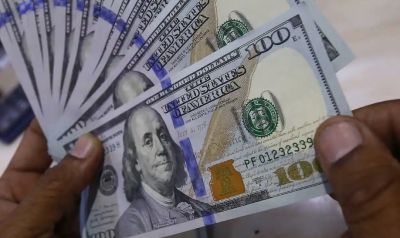
On the 10th, in the Seoul foreign exchange market, the won-dollar exchange rate opened at 1,316.5 won, down 0.2 won from the previous trading day. Shortly after opening, it turned upward, rising to the 1,319 won level, then dropped to the 1,318 won level after 10 a.m., but showed an upward trend again, surpassing 1,320 won.
Experts predict that the won-dollar exchange rate will test high levels for the time being amid solid U.S. employment. This is because the U.S. nonfarm payrolls announced last week increased by 236,000 compared to the previous month, showing a robust trend. If the labor market does not cool down, wage increases could negatively impact inflationary trends. This acts as a factor for the Fed to raise the base interest rate further.
If the Bank of Korea keeps the base interest rate at around 3.5% annually at the Monetary Policy Committee meeting on the 11th, this would also, in principle, be a factor causing exchange rate instability. According to the Chicago Mercantile Exchange (CME) FedWatch on the day, the probability that the Fed will raise rates by 0.25 percentage points next month in the federal funds (FF) futures market is 66%. If the Bank of Korea freezes rates this time and the Fed raises rates, the interest rate differential between Korea and the U.S. will widen from the current 1.50 percentage points to a record high of 1.75 percentage points.
However, the general view is that the dollar is unlikely to return to a sharp upward trend despite this. Given the high market uncertainty, volatility in the won-dollar exchange rate may continue, but in the medium to long term, once the Fed's tightening ends, the dollar is bound to weaken. The dollar index, which shows the value of the dollar against six major currencies, has been on a continuous downward trend from 105.3 on the 2nd of last month to 102.15 on the day.
The main reason for the dollar's weakness is the expectation that the U.S. economy will enter a full-fledged recession. Bloomberg said the day before, "With financial stability risks and signs of demand cooling, once the Fed's rate hike cycle ends, it will ease the pressure for dollar strength in external finance and reduce the attractiveness of the U.S. dollar as a safe haven," adding, "This could help by concentrating funds in Asian countries."
Recently, the decision by the Organization of the Petroleum Exporting Countries (OPEC) and the non-OPEC oil-producing countries alliance, OPEC+, to cut production has increased domestic and international price instability, but the market also analyzes that this will accelerate the U.S. economic recession. The Bank of Korea's New York office stated in a local report last week, "there are concerns that the possibility of a (U.S.) economic recession has increased due to high oil prices and the Fed's continued tightening in response to inflation."
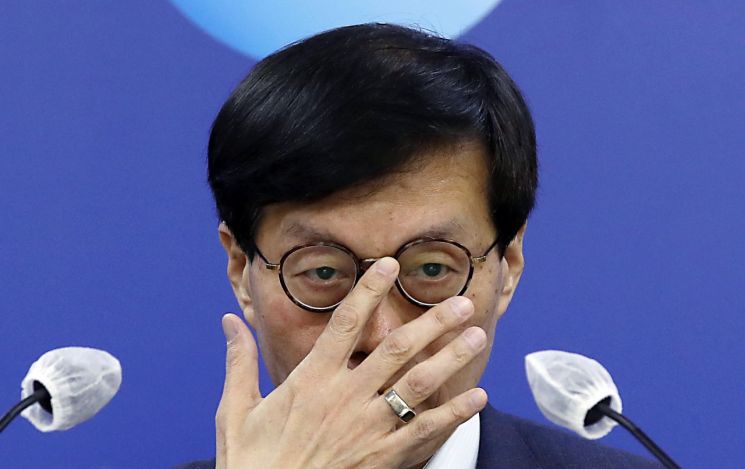
If the dollar's weakness continues and the won-dollar exchange rate stabilizes, the Bank of Korea's rationale for raising interest rates will also weaken. Lee Chang-yong, Governor of the Bank of Korea, said at a press conference after the Monetary Policy Committee meeting in February, "There was psychological pressure regarding a freeze, but since the exchange rate has been working well so far, I somewhat felt relieved thinking, 'As expected, the exchange rate is influenced more by the U.S. than by our decisions.'"
Park Sang-hyun, a researcher at Hi Investment & Securities, explained, "Amid renewed concerns about a U.S. economic recession, the March U.S. consumer price results will play a significant role in deciding whether the Fed will halt its rate hike cycle in May," adding, "If consumer prices meet or fall below market expectations, the dollar's further weakening is expected to expand."
© The Asia Business Daily(www.asiae.co.kr). All rights reserved.

![A Woman with 50 Million Won Debt Clutches a Stolen Dior Bag and Jumps... A Monster Is Born [Slate]](https://cwcontent.asiae.co.kr/asiaresize/183/2026021902243444107_1771435474.jpg)
















