Economist Analysis... "Falling at a Steeper Rate Than Expected"
Causes Include Improved Education Levels and Increased Childcare Costs
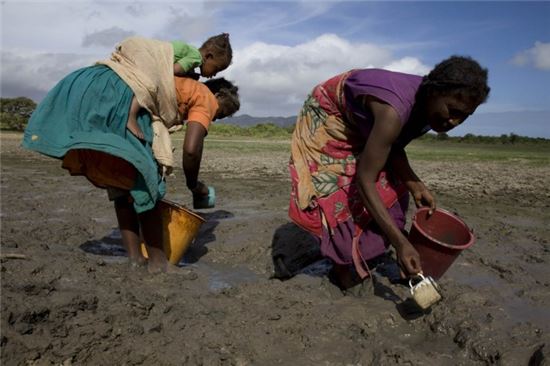 Women in Kenya, Africa, searching for water
In recent years, the birth rate in the African region has been sharply declining. As a result, there is an analysis suggesting that the global population peak may be lower than initially expected.
According to the British current affairs weekly The Economist on the 5th (local time), the United Nations projects that Africa's population will nearly triple from the current 1.2 billion to 3.4 billion by 2100.
However, The Economist noted that Africa's birth rate is falling faster than previously predicted.
There is a significant difference between the UN's projections from 10 years ago and the recent forecasts. For example, the UN recently estimated Nigeria's population to reach 429 million by 2060, which is over 100 million less than the estimate from 10 years ago.
According to The Economist, the actual population decline rate is much steeper. Nigeria's total fertility rate in 2021 (the expected number of children a woman will have in her lifetime) was 4.6, down more than one from 5 years ago when it was 5.8.
In the Republic of Mali, the total fertility rate has decreased from 6.3 to 5.7 over the past six years, and in Senegal, it dropped from 4.9 to 3.9 over ten years. Gambia also saw a decline from 5.6 in 2013 to 4.4 in 2020, and Ghana's rate fell rapidly from 4.2 to 3.8 in just three years.
The Economist explained that Niger, the country with the highest birth rate, also experienced a decline from 7.6 in 2012 to 6.2 in 2021.
The Economist offered various analyses regarding the sharp decline in Africa's birth rate.
Firstly, it is estimated that the increased education level of women has had a considerable impact on the birth rate. Economic factors such as rising child-rearing costs and the fading belief that children should support their parents were also identified as causes.
Meanwhile, if Africa's population growth rate slows down more than initially expected, the global population peak is also expected to be lower.
Last year, the United Nations predicted that the world population, which surpassed 8 billion in November 2022, would reach 9.7 billion by 2050 and 10.4 billion in the 2080s.
However, the British media outlet The Guardian recently forecasted that if the current trend continues, the global population will peak at 8.8 billion around 2046 and then sharply decline to 7.3 billion by 2100.
© The Asia Business Daily(www.asiae.co.kr). All rights reserved.
















