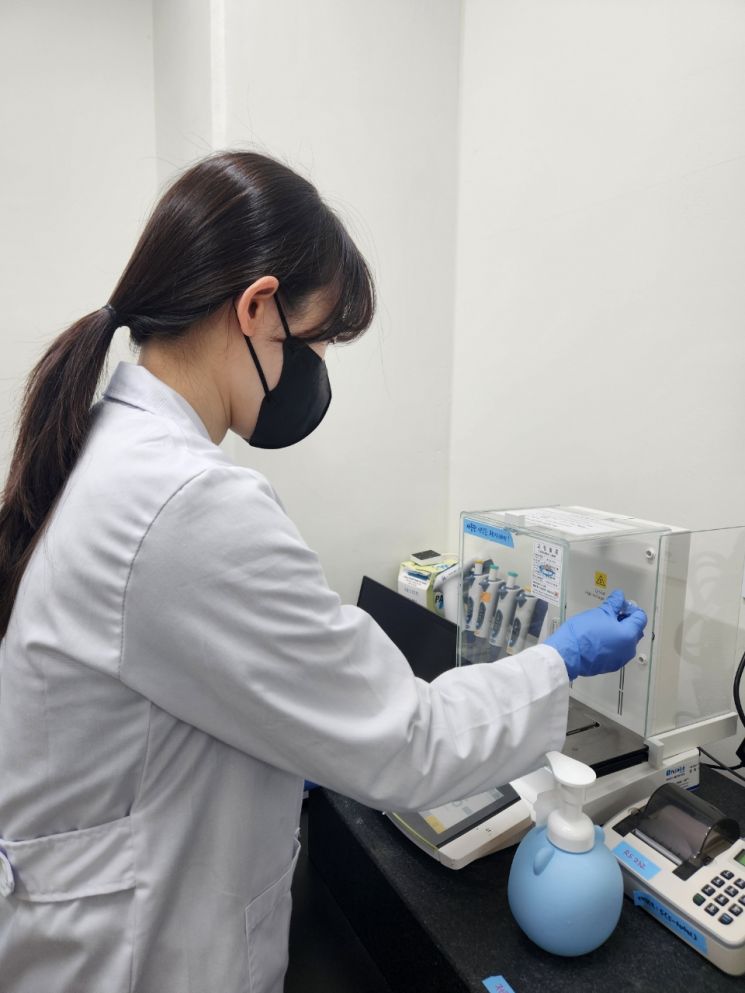
A safety investigation on heavy metals in cleansing cosmetics distributed within Gyeonggi Province found all products to be compliant.
The Gyeonggi-do Institute of Health and Environment announced on the 7th that all cleansing cosmetics, whose consumption increased due to the impact of COVID-19, met the standards after a heavy metal safety investigation.
From November to December last year, the institute collected a total of 90 cleansing cosmetic products distributed in large retail stores within the province, including 42 for human cleansing, 27 for infants, 11 for hair, 5 for eye makeup, and 4 for basic cosmetics, and conducted safety tests for five heavy metals: lead, nickel, arsenic, antimony, and cadmium.
Test results showed that among the 90 cleansing cosmetics, 16 products detected nickel in 10 cases, lead in 4 cases, and arsenic and antimony in 1 case each; however, the detected concentrations did not exceed the standard limits.
According to the current "Regulations on Safety Standards for Cosmetics," the allowable limits for heavy metals are as follows: lead 20㎍/g or less, nickel 10㎍/g or less (35㎍/g or less for eye makeup products), arsenic 10㎍/g or less, antimony 10㎍/g or less, and cadmium 5㎍/g or less.
A representative from the Gyeonggi-do Institute of Health and Environment stated, "To ensure the safety management of cosmetics in distribution, we proactively collect and test products reflecting consumer trends and social issues," and emphasized, "We will do our best to protect the safety of residents by strengthening inspections for harmful substances in cosmetics."
© The Asia Business Daily(www.asiae.co.kr). All rights reserved.
![Clutching a Stolen Dior Bag, Saying "I Hate Being Poor but Real"... The Grotesque Con of a "Human Knockoff" [Slate]](https://cwcontent.asiae.co.kr/asiaresize/183/2026021902243444107_1771435474.jpg)











