Placement of Professional Personnel at All BPs
Over 1,000 Valid Patents
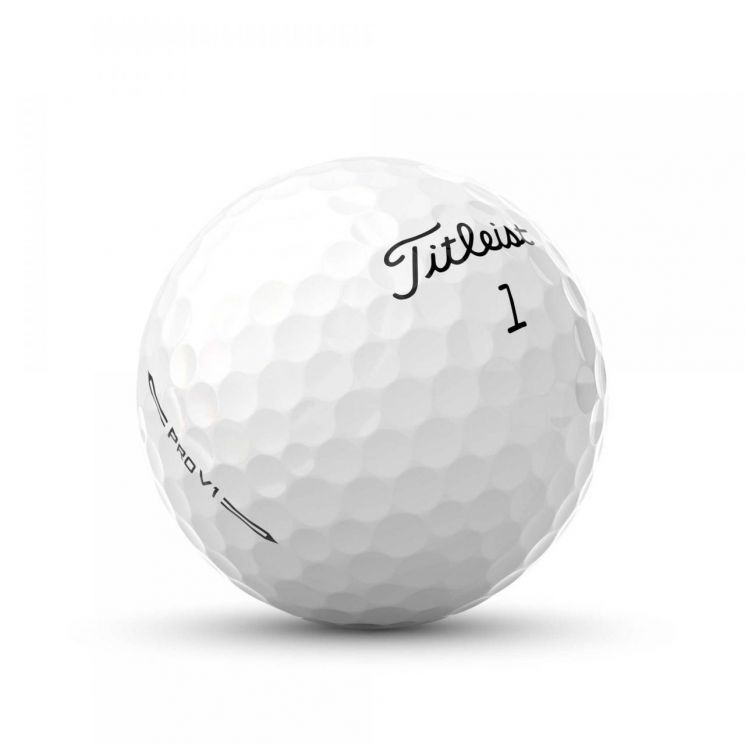
The representative golf balls of Titleist, 'pro V1' and 'pro V1x,' hold an unshakable position as the industry leader. Last year, their usage rate in major tours worldwide was 73%, maintaining the number one spot for 74 years since the 1949 US Open. This means that three out of four players in major tours around the world competed using pro V1 and pro V1x. The secret behind this unparalleled record lies in the Titleist "Ball Plant (BP)," which resembles a semiconductor factory. It is a place where over 300 steps are involved in creating a single ball.
There are three Titleist BPs worldwide. Among them, the factories producing the flagship products pro V1 and pro V1x are 'BP3' located in New Bedford, Massachusetts, USA, and 'BP4' in Rayong, Thailand. Both plants operate identically in terms of production systems, equipment, and operational know-how, ensuring consistent product quality regardless of location. The greatest feature of Titleist BP is its solid professional workforce. All staff working at BPs worldwide are experts who have undergone long-term training at BP2 and BP3 in Bedford, USA, and must complete a US QA (Quality Assurance) program once a year. The BP production team consists of about 1,100 employees, with an average tenure of over 21 years.
Golf ball manufacturing involves 12 major steps and about 300 detailed steps, including core production, casing layer molding, core finishing, molding, and cavity preparation. First, various materials, rubber, and colorants are mixed according to Titleist’s blending principles, then extruded and processed under precise temperature and pressure. This forms the core of the pro V1 and pro V1x. Next, the casing layer is created through injection molding. The casing layer surrounds the golf ball core, protecting it from moisture, increasing ball speed, and controlling spin. Afterward, urethane is molded onto the core, followed by painting, coating, and thorough inspection, completing the manufacturing process. Finally, the produced balls undergo a final inspection to ensure they meet Titleist standards and the criteria set by the United States Golf Association (USGA).
All manufacturing processes conducted at BP are patented and managed accordingly. Currently, Titleist holds patents related to core production, cover composition, manufacturing methods, aerodynamics, production processes, paint, ink, and coating, totaling around 1,000 valid patents. Moreover, Titleist is known to acquire 50 to 100 new patents annually. Through this process, the golf balls produced at BP4 in Thailand reach about 270,000 units per day (22,500 dozen). These are supplied to Asia, including Korea and Japan, as well as Europe and other regions.
A Titleist representative stated, "Titleist pro V1 and pro V1x are the result of Titleist’s unique technology, containing numerous patented technologies within a small golf ball," adding, "From the core, which is the key element of the golf ball manufacturing process, to the cover composition and manufacturing methods, every step is carried out under strict standards, maintaining the unrivaled number one position in usage rate and winning rate."
© The Asia Business Daily(www.asiae.co.kr). All rights reserved.

















