Counterattack on Criticism of Twitter Verification Mark Policy
NYT "Will Not Spend Money on Twitter Verification"
Musk "NYT Is Not Worth Reading"
On the 2nd (local time), the verification checkmark suddenly disappeared from the Twitter account of the prominent American daily, The New York Times (NYT).
This occurred after NYT published a critical article about Twitter's new paid verification policy, prompting Elon Musk to declare that he would remove the verification mark from the NYT account.
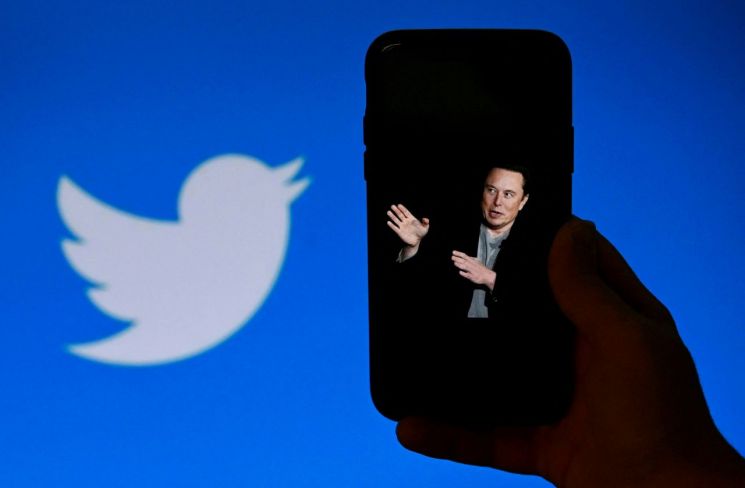
As Twitter's paid verification policy was being shunned by major U.S. media outlets and institutions, Elon Musk, CEO of Twitter, launched a counterattack by removing the verification mark from the NYT account.
In December last year, Twitter announced its monetization policy, stating that corporate accounts would have to pay $1,000 per month (approximately 1.31 million KRW) to receive a gold verification badge, while individuals would pay $8 per month (approximately 10,000 KRW) for blue verification.
On the 27th of last month, Twitter announced plans to remove existing "check" verifications from free users and, starting from the 15th, only paid verified accounts would be shown in recommendation feeds and allowed to participate in surveys.
On the 30th of last month, NYT stated in an article introducing Twitter's policy changes, "With about 55 million followers on Twitter, NYT will not pay to receive a verification badge for its official account."
Furthermore, they added that they would not support costs for paid verification of their reporters' accounts unless absolutely necessary for news reporting.
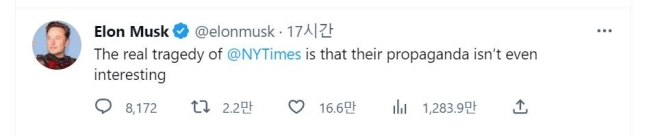
Musk responded immediately, tweeting, "Then we will remove it (the verification mark)," adding, "The real tragedy of NYT is that their propaganda is not even interesting. Their feed is like diarrhea on Twitter. It is unreadable."
He repeatedly criticized Twitter that day, saying, "NYT is aggressively forcing everyone to pay 'their' (newspaper) subscription fees and is incredibly hypocritical here."
Twitter's monetization policy has drawn criticism not only from media outlets but also from some celebrities and government agencies.
Twitter's checkmark system began in 2009, but with the introduction of this paid policy, concerns arose that even scam sites or fake accounts could receive official Twitter verification simply by paying.
When Twitter attempted to switch to paid verification last November, basketball star LeBron James, who suffered from account impersonation, posted on Twitter on the 1st, "I won't pay, so the blue checkmark seems like it will disappear soon."
Courtney Spritzer, co-founder and CEO of Socialfly, pointed out, "If social media companies do not verify users' identities before approving the 'blue check' mark, authenticity is granted to fake accounts," adding, "Impersonation accounts collect money from real account followers and spread fake news."
© The Asia Business Daily(www.asiae.co.kr). All rights reserved.


















