Funding Blocked After Bank Collapse
SVB, $4 Billion Annual Loans
Support Unclear Despite First Citizens Acquisition
Connor McMahon, who runs a winery in Paso Robles, California, USA, fell into a panic on the 10th (local time) upon hearing the news of the bankruptcy of Silicon Valley Bank (SVB). McMahon had been keeping the winery's assets in SVB's checking account. After dozens of calls, he finally connected with a bank loan officer at 7 a.m., but SVB had already ceased loan and transaction operations due to the bank's takeover by U.S. regulators.
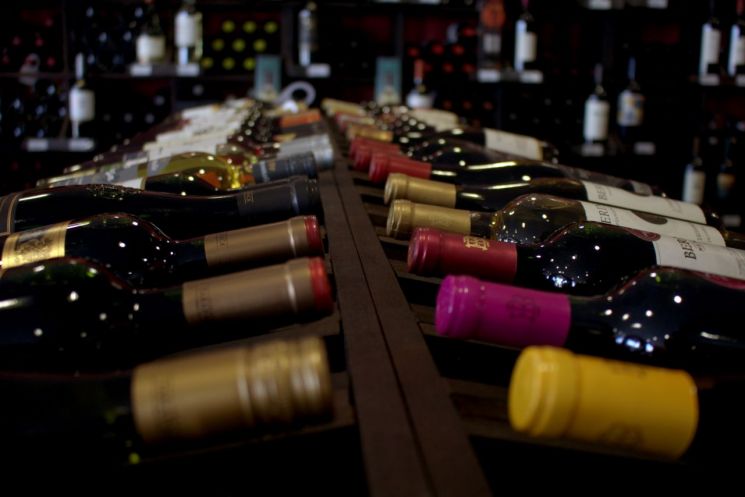
The ripple effects of the bankruptcy of Silicon Valley Bank (SVB), a major funding source for U.S. startups, have reached the wine industry in San Francisco, USA.
On the 26th (local time), Bloomberg reported that brewers around San Francisco are struggling to secure funding due to SVB's bankruptcy.
◆SVB Lent $4 Billion to U.S. Wineries...Key Business Partner
Since 1990, SVB has been a primary funding source for the wine industry, lending over $4 billion to wineries across California. According to Wine America, the U.S. wine industry association, as of last year, there are a total of 4,795 wineries in California, with vineyard acreage totaling 36,373 hectares. Wine America stated that 10% of these are SVB customers. Additionally, SVB operated a wine division and annually published reports on the status of the U.S. wine industry, serving as a key business partner in the sector.
With the Federal Deposit Insurance Corporation (FDIC) promising to guarantee all deposits, wine companies were able to secure the assets they had deposited with SVB. However, they now face a crisis in securing business funding. Last year, SVB lent $1.2 billion, accounting for 2% of its loan balance, to premium winery businesses. Since wineries face unpredictable management conditions such as natural disasters, there are few suitable lenders for loans of this scale outside of banks.
Moreover, California wineries have lost a business ally that significantly contributed to regional business revitalization. For wineries in California, SVB meant more than just a funding channel. SVB not only provided loan transactions but also received wine supplies from these wineries and sent them as gifts to their core loan customers, startups. In effect, SVB acted as a bridge connecting California wineries and local startups. Furthermore, SVB supported various programs to revitalize the wine industry, including credit loan programs for long-term real estate purchases and sapling acquisitions.
◆Acquisition by First Citizens Confirmed...Operation of Wine Division Uncertain
SVB was revived through acquisition by First Citizens 17 days after bankruptcy, but it is uncertain whether the wine division will be operated as before. Major foreign media explained, "Companies with low understanding of this industry structure may not be interested in acquiring the wine division."
Bloomberg stated, "Large wineries will likely have no difficulty obtaining new loans elsewhere, but there are few places that provide loans to small, emerging wineries like SVB's wine division," adding, "Wine producers are concerned that other banks will not invest as much time and attention in the wine industry as SVB did."
© The Asia Business Daily(www.asiae.co.kr). All rights reserved.
![Clutching a Stolen Dior Bag, Saying "I Hate Being Poor but Real"... The Grotesque Con of a "Human Knockoff" [Slate]](https://cwcontent.asiae.co.kr/asiaresize/183/2026021902243444107_1771435474.jpg)

















