U.S. President Joe Biden has once again ordered the strengthening of bank regulations and supervision that had been loosened during the previous Donald Trump administration. This decision aims to restore regulations on banks with assets ranging from $100 billion to $250 billion to prevent a recurrence of incidents like the recent collapses of Silicon Valley Bank (SVB) and Signature Bank. The core measures include increasing liquidity and capital ratios for these banks and subjecting them to annual stress tests by authorities. U.S. Treasury Secretary Janet Yellen also supported this regulatory tightening, criticizing the Trump administration for "decimating" financial oversight. She mentioned not only banks but also money market funds (MMFs), hedge funds, and virtual assets.
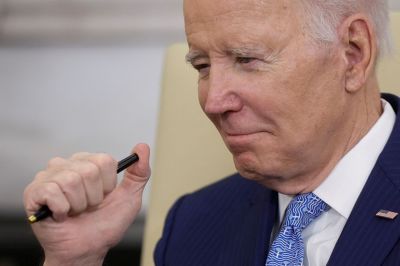
◆Biden Orders Regulatory Strengthening... Lowers Asset Threshold to $100 Billion
On the 30th (local time), the White House announced in a press release that "President Biden believes that the regulatory easing measures on regional banks implemented during the Trump administration must be reversed to strengthen the financial system and protect American jobs and small businesses." Accordingly, President Biden directed an expansion of supervision over regional banks within the existing regulatory framework without separate legislative action.
First, President Biden mandated that regional banks with assets exceeding $100 billion increase their liquidity and capital ratios to prepare for crisis situations and undergo annual reviews by authorities. By lowering the asset threshold from the previous $250 billion, the scope of regulation and supervision has been expanded. Additionally, these banks must submit comprehensive resolution plans, known as 'living wills,' which include self-help measures to prevent harm to the rest of the system during crises. The White House explained, "The failures of SVB and Signature Bank clearly demonstrated that bank failures within the $100 billion to $250 billion range can pose systemic risks," adding, "Beyond these rule changes, work remains to fully implement capital rules established after the financial crisis."
Previously, the U.S. strengthened regulations by enacting the Dodd-Frank Act, which required banks with assets over $50 billion to undergo annual stress tests following the global financial crisis. However, the Trump administration, which campaigned on repealing Dodd-Frank, significantly reduced the threshold to banks with assets over $250 billion in 2018, effectively weakening these regulations. While this deregulation caused little change for the largest banks like JPMorgan Chase in Category 1, most regional banks were excluded from capital and liquidity regulations. This background explains the recent accountability debates and political disputes surrounding financial authorities following the SVB incident.
President Biden judged that legislative efforts to strengthen regulations would face resistance from the House majority Republicans, who had previously supported deregulation, and thus decided to expand requirements within the existing regulatory framework. A senior official explained, "There are measures that can be taken under the current legal system," adding, "Legislative action is not necessary to strengthen financial authorities' supervisory powers."
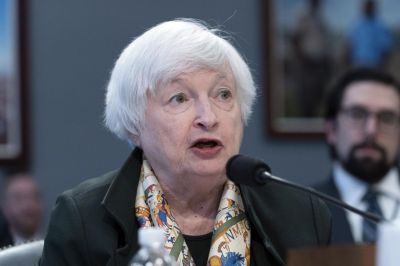
◆"Need to Review if Deregulation Went Too Far" Yellen Also Highlights Need for Shadow Banking Regulation
On the same day, Secretary Yellen raised her voice about the need to strengthen bank regulation and supervision in light of the SVB collapse. At an event hosted by the National Association for Business Economics, she said, "This incident reminded us of the urgency to complete unfinished work," adding, "We must finalize post-financial crisis reforms, review whether deregulation went too far, and repair regulatory gaps revealed by recent shocks."
She noted that it is noteworthy that the failures of SVB and Signature Bank did not escalate into a worst-case scenario like the 2008 global financial crisis, attributing this to "mostly the reforms we implemented after the crisis." However, she emphasized, "In both cases, the government had to intervene substantially to alleviate specific pressures on the financial system," meaning "more work needs to be done in the regulatory area."
Secretary Yellen also criticized the previous Trump administration for "decimating" the strengthened financial regulations and supervision established after the global financial crisis. She pointed out, "When President (Joe Biden) and I took office in January 2021, we inherited a Treasury Department's financial stability apparatus that had been decimated," noting that the Financial Stability Oversight Council (FSOC) under the Treasury was "less than one-third of its size five years ago." She added, "Every bank failure causes serious concern," and said, "Regulatory requirements have been eased in recent years. It is appropriate to assess the impact of these deregulation decisions and take necessary actions in response."
While acknowledging that regulations impose costs on businesses, Yellen stressed, "These costs are minimal compared to the tragic costs of a financial crisis." She also broadly mentioned the need to regulate so-called "shadow banking," including MMFs, hedge funds, and virtual assets. She reaffirmed that if signs of further contagion from the SVB incident appear, the government is prepared to use tools to protect depositors once again.
© The Asia Business Daily(www.asiae.co.kr). All rights reserved.
![Clutching a Stolen Dior Bag, Saying "I Hate Being Poor but Real"... The Grotesque Con of a "Human Knockoff" [Slate]](https://cwcontent.asiae.co.kr/asiaresize/183/2026021902243444107_1771435474.jpg)

















