POSCO Notifies 27 Partners of Subsidiary Establishment
Priority Hiring of Partner Workers for Subsidiaries Planned
"Core Talent Poaching" Backlash... Impact on Local Economy

Since 2005, Company A, a specialized firm that has been maintaining mechanical equipment at the Pohang Steelworks, is facing the prospect of disappearing in two months. POSCO is pushing to establish a maintenance subsidiary, putting Company A at risk of losing both its business and employees. The CEO of Company A lamented that the trust built with POSCO over decades vanished overnight. He said, "We are on the verge of losing all the employees we have nurtured so far."
As POSCO moves forward with establishing a maintenance subsidiary, the partner companies that have been responsible for maintenance work are effectively facing closure. They criticize this move as being far removed from the 'corporate citizenship' management emphasized by Choi Jeong-woo, chairman of POSCO Holdings. Following the partner companies, small-scale suppliers are also suddenly at risk of losing their livelihoods, which could potentially harm the local economy.
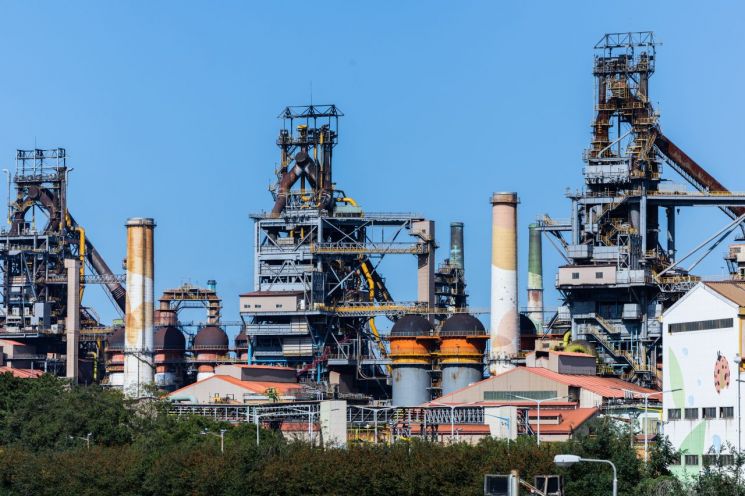
POSCO plans to establish six maintenance subsidiaries specializing in mechanical and electrical fields in Pohang and Gwangyang by June. The rationale is to create large-scale specialized subsidiaries within POSCO to conduct maintenance safely and systematically, thereby securing maintenance expertise.
On the 20th, POSCO notified the representatives of 27 partner companies (13 in Pohang, 14 in Gwangyang) that have been performing equipment maintenance and upkeep about the plan to establish subsidiaries. POSCO explained that if the partners wish, they can participate in the subsidiaries, and if not, POSCO will contract with the subsidiaries to continue the existing work.
The method of participating in the subsidiary is through asset acquisition, where an external agency evaluates the partner company's assets before transferring them to the subsidiary. The problem is that the goodwill of the partner companies is unlikely to be recognized. The representatives of the partner companies are in a position where they might have to hand over their entire company at a bargain price.
The CEO of maintenance and upkeep company B said, "Because of the nature of maintenance and upkeep, people are extremely important," and added, "We have been nurturing our workforce, but it is incomprehensible that only assets will be acquired without recognizing that value."
In particular, on the 28th, POSCO held an open recruitment briefing session for the maintenance subsidiary targeting partner company employees. During the recruitment scheduled for April, POSCO announced that those who joined partner companies before March 20 of this year and have no criminal record will be given priority hiring without interviews.
It is obvious that many employees of POSCO's partner companies will move en masse to POSCO subsidiaries. Companies that cannot offer better treatment than POSCO inevitably lose their employees. Each of the 27 partner companies employs between 150 and 200 workers, totaling approximately 45,000 people.
The CEO of Company A sighed, saying, "Employees think that POSCO subsidiaries offer better treatment and welfare, so most are inclined to apply," and added, "Since they are promised good treatment, I cannot even blame the employees; it is a frustrating situation."
A representative of electrical equipment maintenance company C appealed, "If workers move to the subsidiary, the partner companies will have no personnel and will be unable to work even if they want to," and said, "We have trusted and endured with POSCO for decades, but that trust has completely collapsed."
The establishment of POSCO maintenance subsidiaries will also have repercussions on the local economy. Companies that supply work clothes, safety shoes, office supplies, and others to partner companies will lose their clients. POSCO procures consumables through its group affiliate N2V, and local small businesses complain that they cannot compete with large companies. Each partner company has about 20 to 50 suppliers, estimated to total around 400.
The communities in Pohang and Gwangyang are also voicing opposition to the push for establishing maintenance subsidiaries. The Gwangyang City Council issued a statement on the 30th opposing the unilateral push for the maintenance subsidiary establishment.
The Pohang Chamber of Commerce and Industry held a meeting with partner company representatives on the 28th and conveyed their opinions to POSCO. A Pohang Chamber official said, "POSCO is also a local company, but if the maintenance subsidiaries are created, significant damage to the local economy is expected," and added, "We conveyed opinions to minimize such impacts."
POSCO stated that it will continue to consult with partner companies going forward. A POSCO official explained, "We will ensure that contracts are made after fair evaluations by credible institutions," and added, "Partner companies that do not participate in the subsidiaries can maintain their existing status and roles."
© The Asia Business Daily(www.asiae.co.kr). All rights reserved.
![User Who Sold Erroneously Deposited Bitcoins to Repay Debt and Fund Entertainment... What Did the Supreme Court Decide in 2021? [Legal Issue Check]](https://cwcontent.asiae.co.kr/asiaresize/183/2026020910431234020_1770601391.png)


















