Attracting Additional Foreign Tourists by Improving Visa Policies and Expanding Flight Services
Over 50 Mega Events and Major Discount Campaigns Held Throughout the Year
The government plans to inject a total of 60 billion won into the tourism sector to revitalize domestic demand, including a 30,000 won discount on accommodation reservations and expanding the number of workers eligible for the holiday support program by 100,000. To attract more foreign tourists, it will provide convenient entry and travel conditions through visa improvements and expanded flight routes.
On the 29th, the government held an 'Emergency Economic and Livelihood Meeting' chaired by President Yoon Suk-yeol and announced a 'Domestic Demand Revitalization Plan' jointly prepared by related ministries. This came about a month after President Yoon ordered the preparation of 'drastic measures.'
Lee Hyung-il, Deputy Minister of Strategy and Finance, explained, "Under the price stabilization policy, we are promoting 'customized domestic demand revitalization' focusing on vulnerable sectors such as tourism, local neighborhood markets, and small business owners." He added, "We also plan to implement measures to support coexistence between the local economy and small business owners and to reduce the burden of living expenses, spreading warmth throughout the low-income economy."
Spreading the Tourism Boom through Accommodation Discounts and Large-scale Sales Events
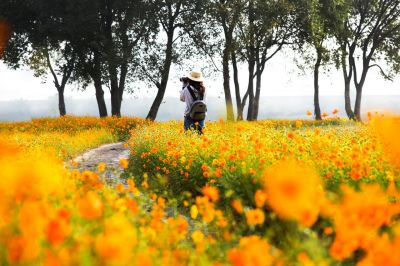
The core of this domestic demand revitalization plan is to spread a tourism boom both domestically and internationally. First, to activate domestic tourism, the government will provide up to 60 billion won in financial support. When booking accommodation through lodging platforms, customers will receive a 30,000 won discount coupon, and a 10,000 won discount coupon for amusement facilities. For travel convenience, up to 50% discounts on regional tourism combined KTX tickets and a 10,000 won discount on the Naeilro Pass will be promoted. Air tickets arriving at regional airports will be discounted by up to 20,000 won. The target for the Worker Holiday Support Program (which provides 100,000 won for domestic travel expenses), initially aimed at 90,000 people, will be increased by an additional 100,000 people.
The government plans to combine these various travel discount supports with over 50 mega-events held throughout the year to spread the domestic tourism boom. It will also conduct large-scale discount events linked to various events and holidays, such as the Korea Summer Sale in July and the Korea Sale Festa in November, at department stores, fashion outlets, electronics stores, duty-free shops, and rest areas.
The government is also strengthening the domestic consumption base, as consumption recovery is essential for revitalizing domestic demand. Deputy Minister Lee said, "Due to prolonged high inflation and economic slowdown, employment and wage growth have slowed, gradually weakening households' real purchasing power." However, he added, "As the inflation rate gradually slows, accumulated household savings are expected to supplement consumption."
To improve consumption conditions, the government will temporarily increase the income deduction rate for cultural expenses and traditional market spending by 10 percentage points from April to December this year. It will also add amusement facilities and cable cars to the list of recognized corporate cultural business expenses, which currently only include performance and exhibition tickets and music purchases. To create favorable conditions for travel, the government will promote the use of annual leave for public officials (in April and July), utilize discretionary school holidays and off-campus experiential learning in spring, and actively encourage vacation use in both public and private sectors. Additionally, the last weekend of every month will be designated as a 'Weekend with Travel' to promote short weekend trips through campaigns.
The government will actively pursue attracting 10 million foreign tourists by strengthening incentives for foreigners to visit Korea. For 22 countries, including Japan, Taiwan, Hong Kong, the United States, Canada, and the United Kingdom, which have high numbers of arrivals but very low refusal rates, the electronic travel authorization system (K-ETA) will be exempted until next year. The visa-free system, which applies when Chinese group tourists enter through Incheon and transfer to Jeju Airport, and when visa holders from 34 countries in Europe and the United States transit through Korea, will also be restored.
Up to 30% Discounts on Agricultural, Livestock, and Fishery Products and 5G Mid-tier Plans to Reduce Living Expenses
This plan also includes measures to alleviate the management burden on small business owners and reduce key living expenses such as food, telecommunications, and finance. To expand the sales base for small business owners, a special provision will be introduced to additionally recognize corporate business expense limits spent at traditional markets within the existing 10% range. The monthly individual purchase limit for Onnuri gift certificates will be raised year-round from 1 million won to 1.5 million won for cards and from 500,000 won to 1.5 million won for mobile.
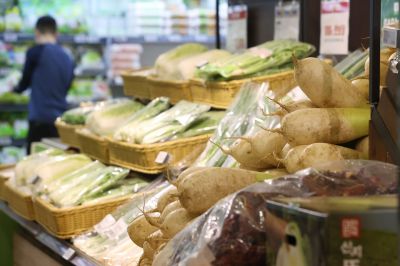
Support will also be provided for discounts of up to 30% on major agricultural, livestock, and fishery products with high consumer burdens. Discount support totaling 17 billion won will be provided from April to June, with a limit of 10,000 won per person (20,000 to 40,000 won at traditional markets). Additionally, the government plans to expand consumer choice by introducing affordable 5G senior plans, diversifying mid-tier plans, and launching youth plans specialized for data usage. It will also establish specific standards for discounts allowed in alcohol transactions through National Tax Service guidelines to encourage discounts that consumers can feel.
However, there are concerns that the plan, which focuses on revitalizing the travel and service industries, lacks specific projections of its effects. Since it is difficult to accurately estimate the expected effects, there are worries that the plan may end up being overly optimistic or fizzle out. The temporary exemption of K-ETA for the 22 major countries as a measure to revitalize inbound tourism is a representative example. Kim Jeong-do, head of the Immigration Policy Division at the Ministry of Justice, said at a briefing the day before, "Considering the recovery of group tours and flights, we are opening the way for travel," but added, "It is difficult to immediately estimate how much the number of tourists will increase."
The feasibility of plans to increase flights on major routes to improve travel convenience is also uncertain. The government plans to restore the transit visa-free system, which was suspended due to COVID-19, to attract tourists such as Chinese visitors. However, as of last month, the recovery rate of Chinese routes was only 5.7% compared to 2019 (63 flights per week versus 1,100 flights per week). The government aims to raise the Chinese route recovery rate to 86.7% (954 flights per week) by September this year through consultations with authorities. However, it cannot confirm how effective incentives such as airport facility fee reductions and flexible flight increase approvals will be. Professor Kang Sung-jin of Korea University’s Department of Economics said, "If Chinese authorities lift restrictions on group tours, it is expected that tourist arrivals can return to pre-COVID levels, but considering domestic tourists traveling abroad, there will be limits to using this as a major growth engine for domestic demand recovery."
Concerns were also raised about the appropriateness of measures to reduce the management burden on small business owners. The government relaxed the initial and subsequent inspection periods for light and small vans and cargo vehicles mainly used by small business owners from one year to two years, but there are concerns that this could increase accident risks as it is directly related to safety. The government responded, "This relaxation has already been reviewed by the Regulatory Reform Committee," and maintains that there is no problem.
© The Asia Business Daily(www.asiae.co.kr). All rights reserved.


















