James Bullard, president of the Federal Reserve Bank of St. Louis and a prominent 'hawk' within the U.S. Federal Reserve (Fed), recently argued that although financial stress has increased due to concerns over a banking crisis sparked by Silicon Valley Bank (SVB), this can be contained through regulatory policies rather than interest rate adjustments.
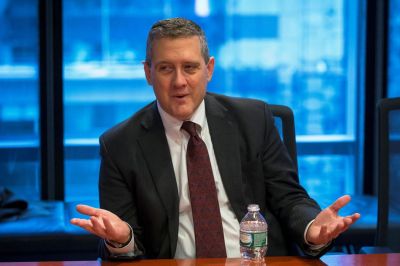
According to Bloomberg News and others, Bullard stated in a St. Louis Fed publication released on the 28th (local time), "In my view, a sustained and appropriate macroprudential policy can address the current financial stress environment, while at the same time, an appropriate monetary policy can continue to exert downward pressure on inflation."
Bullard noted, "Financial stress has increased recently due to bank failures and turmoil," and assessed that "the policy response was swift and appropriate." He added, "Authorities have used some of the tools developed or utilized in response to the 2007-2009 financial crisis to prevent damage to the macroeconomy," and "are prepared to take additional measures if necessary."
Bloomberg analyzed these remarks as an effort to separate the Fed's recent challenges of 'financial stability' and 'price stability' responses. This emphasized that distinct policy tools exist to address financial stability and inflation respectively. The macroprudential policy Bullard mentioned refers to policies aimed at suppressing systemic risk to maintain financial stability and prevent financial risks from spreading throughout the real economy.
Following the SVB collapse, the Fed raised its benchmark interest rate by 0.25 percentage points at the first Federal Open Market Committee (FOMC) meeting, signaling its determination to continue the fight against inflation. Last week, Bullard also raised his year-end rate forecast by 0.25 percentage points to 5.625%, citing a strong economy. With concerns over the banking crisis somewhat eased due to swift actions by authorities, he placed more weight on the possibility of further rate hikes. At that time, he described the SVB failure as an anomaly, stating, "Most banks are not close to that situation. The U.S. banking system remains very strong and resilient."
© The Asia Business Daily(www.asiae.co.kr). All rights reserved.

















