The conviction of a middle school teacher who leaked personal information of a student victim of school violence to the parents of the perpetrator has been finalized.
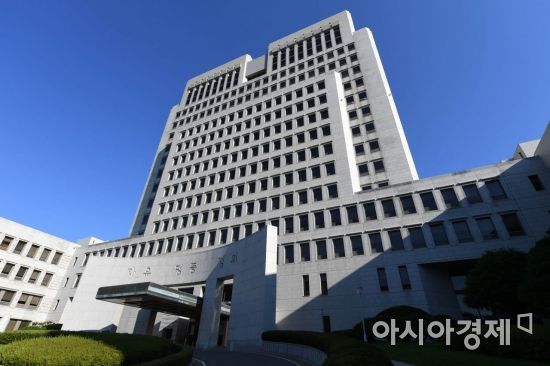
The Supreme Court's First Division (Presiding Justice Oh Kyung-mi) announced on the 29th that it upheld the lower court's ruling sentencing Park Mo (60), who was indicted for violating the Personal Information Protection Act and the School Violence Prevention and Countermeasures Act, to a fine of 3 million won.
Park, who worked as a teacher at a middle school in Seoul from February 2015 to February 2017 and served as the head of the school life guidance department in February 2016, delivered a file titled "Opinion on the Petition Case," which the principal had prepared to submit to the National Human Rights Commission, to the parents of the perpetrator students. However, the opinion letter contained the name of the student victim of school violence and the results of the "Student Emotional and Behavioral Characteristics Test." The prosecution indicted Park for violating the Personal Information Protection Act and other charges.
The incident began as follows.
In 2015, a first-year middle school student, A, was assaulted by two classmates. However, the School Violence Autonomous Committee encouraged reconciliation without disciplining the perpetrators and dismissed the charges against them. Following A's side's request for a retrial, the Seoul Metropolitan School Violence Countermeasure Regional Committee issued a retrial decision ordering the perpetrators to submit a written apology and prohibiting contact, threats, and retaliation against the victim student. In response, the parents of the perpetrators filed an administrative appeal with the Central Administrative Appeals Commission, disputing the retrial decision.
Meanwhile, A's side filed a complaint with the National Human Rights Commission, claiming that the school's measures for the student victim of school violence were inadequate. Subsequently, the principal prepared the "Opinion on the Petition Case" to submit to the National Human Rights Commission and handed it over to Park, who was in charge of school violence affairs. The opinion letter included the fact that A scored a total of 34 points (indicating suicidal thoughts and school violence victimization) on the "Student Emotional and Behavioral Characteristics Test" conducted by the Seoul Metropolitan Office of Education in April 2015.
After receiving requests from the parents of the perpetrators for materials to submit to the administrative appeal and the School Safety Mutual Aid Compensation Review Committee, Park emailed the file containing the opinion letter he had received from the principal.
The first trial court found that Park's actions constituted a violation of the Personal Information Protection Act, as he disclosed personal information he had learned in the course of his duties as a personal information handler.
During the trial, Park claimed that he was not a personal information handler, but this was not accepted.
The court cited the broad definition of "processing" in the Personal Information Protection Act, stating, "The Personal Information Protection Act does not limit 'processing' to specific acts. Considering the legislative intent, 'duties' here should be broadly interpreted to include all tasks directly or indirectly related to the original duties."
Park also denied the fact that he sent the opinion letter via email.
However, the court recognized that Park leaked the opinion letter based on a text message he sent to the parents of the perpetrators stating, "I will also send the school's opinion letter," and the opinion letter submitted by the perpetrator parents' lawyer during the investigation for the violation of the Personal Information Protection Act.
The lawyer's opinion letter detailed how the perpetrator parents came to call Park, the types of opinion letters Park sent by email, and the form of the opinion letter prepared by the principal. The court judged that it was highly unlikely that the lawyer fabricated unfavorable content against his client.
The court also found that Park, who was responsible for school violence prevention and countermeasures, violated his duty not to disclose secrets or materials related to the victim student learned in the course of his duties. By leaking A's personal information, which could clearly cause disputes among the parties involved if leaked externally, Park violated the School Violence Prevention and Countermeasures Act.
Although Park was found guilty of violating both the Personal Information Protection Act and the School Violence Prevention and Countermeasures Act, the sentencing applied the statutory penalty for the more severe Personal Information Protection Act violation. Under criminal law, when one act constitutes two crimes simultaneously (ideal concurrence), the heavier penalty applies.
Disclosing personal information learned in the course of duties is punishable under Article 71, Clause 5 of the Personal Information Protection Act by imprisonment of up to five years or a fine of up to 50 million won. Disclosing secrets or materials related to the victim student by a person performing school violence-related duties is punishable under Article 22 of the School Violence Prevention and Countermeasures Act by imprisonment of up to one year or a fine of up to 10 million won.
The first trial court sentenced Park to a fine of 3 million won.
Regarding the sentencing, the court stated, "The leakage of the personal information to the parents of the perpetrators caused significant disadvantages to the victim (even mentioned in civil litigation), and the defendant still does not acknowledge the objective facts, which are unfavorable sentencing factors. However, the defendant did not leak the test results themselves, nor did he leak the opinion letter for personal gain or improper purposes, and he has no prior criminal record, which are mitigating factors."
The appellate court and the Supreme Court also agreed with this judgment.
© The Asia Business Daily(www.asiae.co.kr). All rights reserved.
![Clutching a Stolen Dior Bag, Saying "I Hate Being Poor but Real"... The Grotesque Con of a "Human Knockoff" [Slate]](https://cwcontent.asiae.co.kr/asiaresize/183/2026021902243444107_1771435474.jpg)











