Steel Big 3, Q1 Profit Forecast
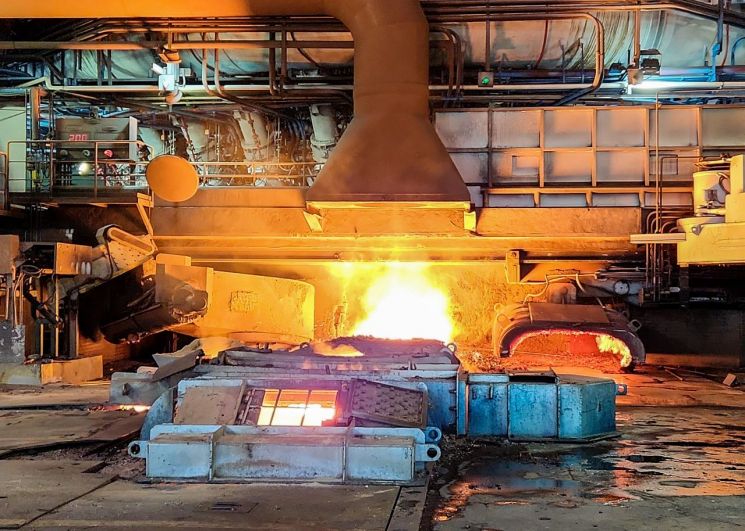 Molten steel is flowing from the No. 2 blast furnace at Pohang Steelworks. The photo is not directly related to the article. Photo by POSCO
The steel industry is expected to recover from internal and external setbacks, including production disruptions caused by Typhoon Hinnamnor in the second half of last year, and return to profitability within the first quarter.
All of the 'Big 3' steelmakers are projected to turn a profit in the first quarter of this year. POSCO Holdings is forecasted to achieve sales of 20.1831 trillion KRW and an operating profit of 753.4 billion KRW in Q1. Hyundai Steel is also expected to return to profitability with sales of 6.7239 trillion KRW and an operating profit estimate of 252.7 billion KRW, marking a turnaround from the previous quarter. Dongkuk Steel is anticipated to record sales of 1.8803 trillion KRW and an operating profit of 111.6 billion KRW. (Estimates by FnGuide)
Last year, steelmakers experienced production setbacks due to Typhoon Hinnamnor. The damage was particularly severe for industry leaders POSCO and Hyundai Steel. The Pohang Steelworks was unable to operate its hot-rolling mill, through which more than 40% of steel products pass. Other steelmakers that produce steel products by receiving intermediate steel materials from POSCO and Hyundai Steel also faced production halts. These two companies not only produce final steel products but also supply semi-finished products such as slabs to other steelmakers. As a result, steelmakers that had posted large profits until the first half of last year suffered performance declines.
However, a turnaround is likely in the second half of this year. There has been a variable in the global economy, which was expected to contract this year. The Chinese economy, which had been subdued due to the zero-COVID policy, is now recovering with the reopening of economic activities. Chinese local governments plan to invest approximately 2.8 trillion yuan (about 527.996 trillion KRW) in major infrastructure projects this year. There is also expected to be significant demand for steel in T?rkiye, which suffered large-scale earthquake damage, and Ukraine, affected by war. Domestic steelmakers are also likely to benefit. As of last year, the overseas export ratios of domestic steelmakers were ▲POSCO 48.2% ▲Hyundai Steel 13.4% ▲Dongkuk Steel 26.8%, respectively.
With the recovery in global construction demand, prices of iron ore and coking coal have also fluctuated. The price of scrap metal, a raw material for steel, rose from 450,000 KRW per ton in December last year to 520,000 KRW this month, while coking coal for steelmaking increased from 245.25 USD per ton (about 318,334 KRW) in November to 320 USD (about 415,360 KRW). Industry insiders expect the steel sector to show an 'unexpected boom amid overall recession' in the second half of this year.
However, the domestic electricity rate hike could negatively impact earnings. Electricity costs account for about 20% of production costs for steelmakers using electric furnaces. Hyundai Steel, which has a high proportion of electric furnace usage, estimates that a 1 KRW increase per kWh in electricity rates would result in an annual cost burden of approximately 10 billion KRW. With the second-quarter electricity rate hike by Korea Electric Power Corporation (KEPCO) expected to be announced on the 31st of this month, the steel industry’s burden is likely to increase. Ironically, steelmakers that chose electric furnaces to achieve carbon neutrality are now facing increased cost pressures.
© The Asia Business Daily(www.asiae.co.kr). All rights reserved.
![Clutching a Stolen Dior Bag, Saying "I Hate Being Poor but Real"... The Grotesque Con of a "Human Knockoff" [Slate]](https://cwcontent.asiae.co.kr/asiaresize/183/2026021902243444107_1771435474.jpg)
















