Population Special Committee Holds De Facto First Meeting on 31st
Ruling and Opposition Parties Agreed on Special Committee Formation in November Last Year
Late Start After Three Months
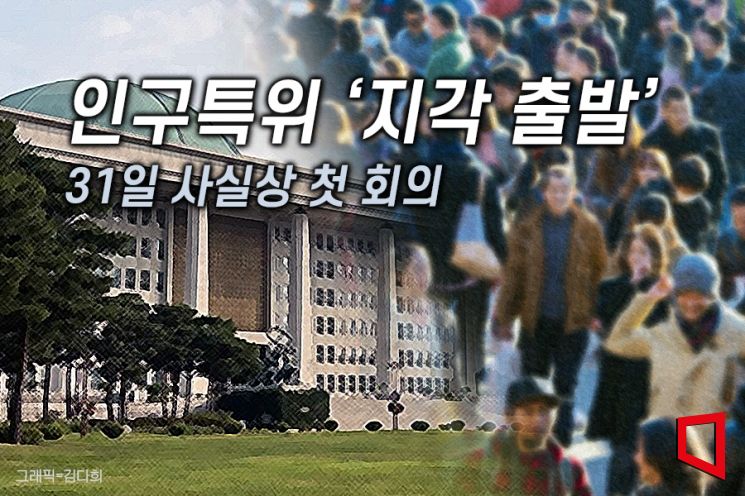
The National Assembly's Special Committee on the Population Crisis will hold its first meeting on the 31st. Launched last November through bipartisan agreement to devise solutions for low birth rates, the Population Special Committee has been idling for over three months, marking a delayed start.
According to the National Assembly on the 29th, the Population Special Committee was originally scheduled to hold a meeting that day to receive reports from the Ministry of Economy and Finance, Ministry of Land, Infrastructure and Transport, Ministry of Justice, Ministry of National Defense, and others. However, as all the ministers from the relevant departments requested to be represented by their vice ministers, the meeting was postponed by about a week. A committee official explained, "The Minister of Justice originally intended to attend but had to change the schedule due to urgent circumstances," adding, "When it was decided that none of the ministers would attend the initially planned first meeting, the meeting was eventually postponed to next week."
The first agenda item at the meeting scheduled for the end of this month is the formation of an advisory committee. However, the ruling and opposition parties have yet to finalize the list of advisory committee members. The bipartisan secretaries of the Population Special Committee agreed on the phrase 'to form an advisory committee,' but since the special committee members have not recommended anyone, it is highly likely that no concrete appointments will be made.
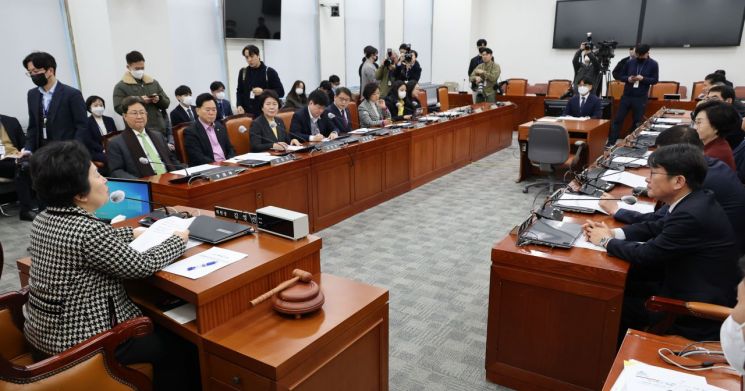
Earlier, in November last year, the ruling and opposition parties agreed to form the Population Special Committee alongside the Advanced Industry Special Committee and the Climate Crisis Special Committee to support the semiconductor industry and other sectors, planning to operate them for one year. Last month, Kim Young-seon of the People Power Party was appointed chairperson of the Population Special Committee, and 17 lawmakers from both parties were appointed as committee members. The committee's operation period is until November 30 this year, but with nearly four months of inactivity already, doubts are being raised about whether effective measures will emerge. Since its inception, the Population Special Committee has faced criticism for lacking legislative authority to review and approve bills, rendering it largely symbolic.
The same applies to other special committees. Currently, the National Assembly has seven special committees, including the Busan World Expo Special Committee, the Criminal Justice System Reform Special Committee (Sagai Special Committee), the Political Reform Special Committee (Jeonggae Special Committee), and the Pension Reform Special Committee (Yeongeum Special Committee). The Climate Crisis Special Committee and the Advanced Strategic Industry Special Committee, which were launched around the same time as the Population Special Committee, completed member appointments last month and are beginning full-scale activities.
The Climate Crisis Special Committee plans to hold a meeting on the 11th of next month. However, since the first National Carbon Neutrality and Green Growth Basic Plan is expected to be finalized at the Cabinet meeting scheduled for that day, questions are being raised about the committee's effectiveness. A committee official said, "Bills must go through standing committees before being submitted and reviewed, and I don't see the point of reporting to the special committee after the Cabinet has already handled it."
The Pension Reform Special Committee is also failing to produce results. Its activity period ends on the 30th of next month, and the committee's private advisory group plans to submit only a progress report rather than a draft pension reform plan. Given the urgency of pension reform as the depletion of the National Pension Fund is accelerating, it is highly likely to conclude empty-handed. The Criminal Justice System Reform Special Committee, established in July last year, has been inactive since the Ministry of Justice filed a constitutional dispute with the Constitutional Court against the National Assembly over the 'Complete Removal of Prosecutorial Investigation Rights' law. In response, Jeong Seong-ho, chairperson of the Criminal Justice System Reform Special Committee and a member of the Democratic Party, stated, "I cannot accept salary without doing work," and announced he would return about 40 million won in salary paid to him over six months as chairperson.
© The Asia Business Daily(www.asiae.co.kr). All rights reserved.


















