As the US and European financial sectors face crises, raising concerns about an economic recession, even the global initial public offering (IPO) market is freezing up. The turmoil in the financial sector is adding uncertainty to the future path of interest rate hikes, rapidly shrinking the IPO market that had shown signs of recovery earlier this year.
According to Bloomberg on the 26th (local time), global companies have raised $19.7 billion (approximately 25.62 trillion KRW) through IPOs so far this year. This represents a 70% decrease compared to the same period last year, marking the lowest level in four years since 2019. In particular, the US market saw IPO proceeds amounting to only $3.2 billion, showing the steepest decline year-over-year.
The global IPO market enjoyed a record boom during the COVID-19 pandemic due to abundant liquidity, but turned to the largest downturn ever last year as liquidity dried up amid high-intensity tightening by countries worldwide. The US IPO market shrank to its lowest level in 20 years last year, sinking into a recessionary quagmire.
Early this year, the reopening of China’s economy and expectations of an end to tightening sparked a rally in the stock market, seemingly giving the IPO market a chance to rebound. However, the unprecedentedly rapid bank run at Silicon Valley Bank (SVB) in the US once again hindered progress. Although the US banking-related financial instability has entered a lull, the collapse of Credit Suisse (CS), with its 167-year history, and the sharp rise in credit default swaps (CDS) of Germany’s largest bank Deutsche Bank have stirred fears of systemic risk across European banks, adding uncertainty to the path of interest rate hikes.
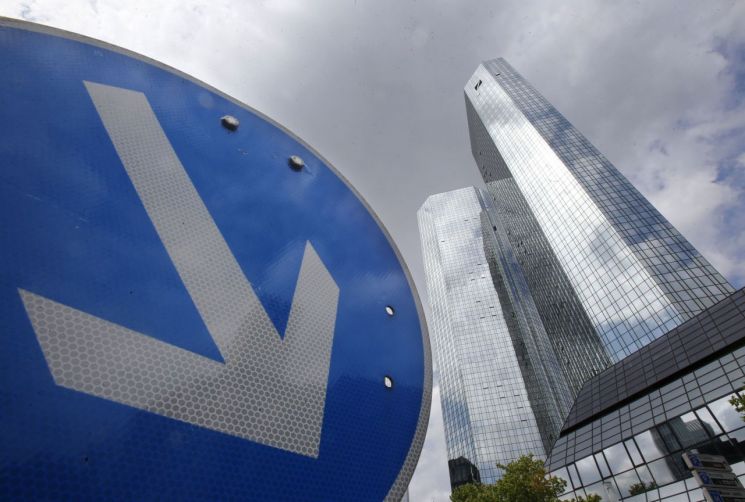
The fear of bank insolvency is spreading rapidly worldwide like the COVID-19 pandemic, fueling anxiety over a "Bankdemic" (a portmanteau of bank and pandemic), which is escalating concerns about an economic recession. This irrational transmission of fear is acting as a major negative factor for both the stock and IPO markets. Stephanie Niven, portfolio manager at Ninety One, said, "The uncertainty about what else might happen in the global financial markets this year is overwhelming investors," adding, "Now is an uncomfortable time to invest funds in new businesses (companies)."
Companies blocked from raising funds through IPOs due to market conditions are turning to convertible bonds (CB) issuance. CBs offer the advantage that issuing companies can raise quick funds at relatively low interest rates, while investors can enjoy a 'two birds with one stone' effect of bond interest and capital gains from stock price increases.
German food delivery company Delivery Hero and US electric vehicle company Rivian have raised funds this year through CB issuance. As funding costs rise with high interest rates in the CB market, which was a funding channel for low-credit companies with weak financial structures, even high-quality companies are flocking to it. Bloomberg estimates that the global CB issuance amount will reach $6.4 billion (approximately 8.32 trillion KRW) this year due to the increase in CB issuance by such global companies.
© The Asia Business Daily(www.asiae.co.kr). All rights reserved.
![Clutching a Stolen Dior Bag, Saying "I Hate Being Poor but Real"... The Grotesque Con of a "Human Knockoff" [Slate]](https://cwcontent.asiae.co.kr/asiaresize/183/2026021902243444107_1771435474.jpg)
















