Sharp Increase in Defense Budget and Weapon Acquisition Budget Since the Russia-Ukraine War
The Russia-Ukraine war marked the beginning of a 'defense industry gold rush era,' with defense budgets and weapons acquisition budgets soaring. To take the lead in a market where K-Defense is experiencing its greatest boom since World War II, experts advise strategies such as expanding regional defense export hub countries and discovering new key export products.
On the 27th, the Korea Institute for Industrial Economics and Trade (KIET) stated in its report titled "Changes and Implications in the Global Defense Market After the Ukraine War" that over the next decade (2023?2032), the global defense budget (cumulative) is expected to increase by $2 trillion (2,600 trillion KRW) and the weapons acquisition budget by more than $600 billion (780 trillion KRW) compared to previous forecasts. Countries worldwide?from Eastern and Northern Europe adjacent to Ukraine, to North America, Asia-Pacific, and the Middle East?are competing to increase their defense budgets. If the Russia-Ukraine war prolongs, the defense budget could reach $2.5 trillion by 2032, with the weapons acquisition budget expanding to $750 billion. While war is a tragedy, it simultaneously presents an unprecedented opportunity.
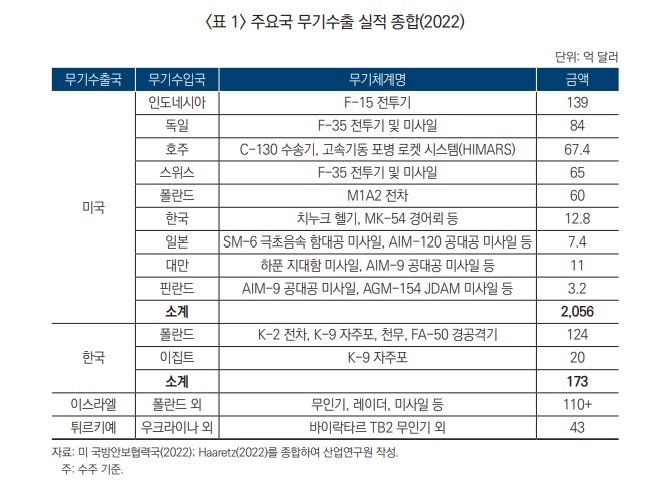
In fact, weapons demand has surged since the Russia-Ukraine war. Poland, Romania, Taiwan, Japan, Australia, India, and Middle Eastern countries such as Saudi Arabia, the UAE, and Egypt have begun stockpiling weapons. However, only a handful of countries, including South Korea, can meet the high performance and quality, reasonable pricing, rapid delivery capabilities, stable logistics support, technology transfer, and industrial cooperation (offset trade) demanded by weapon purchasers. The United States is struggling with shortages of ammunition and missile stockpiles. Major weapon-exporting countries such as Germany, the United Kingdom, France, and Italy are unable to fully meet the demands of existing buyers due to the need to replenish their own forces after supporting Ukraine with weapons.
KIET assessed that this environment offers a once-in-a-lifetime opportunity for emerging weapon-exporting countries like South Korea and T?rkiye. It also anticipates intensified competition among major weapon-exporting countries to secure the 'global defense industry's gold rush era' in the coming years.
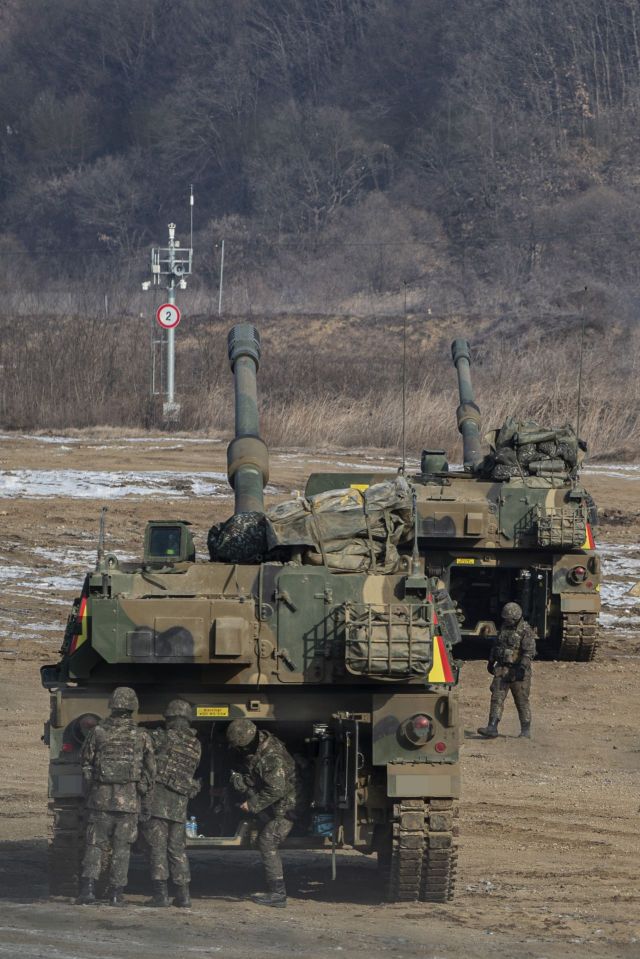
South Korea, which recorded its highest-ever defense exports last year with $17.3 billion (on an order basis), has emerged as the most notable weapon-exporting country in the global defense market since the Russia-Ukraine war. However, it is still in its infancy stage. Given the nature of defense exports, where weapon systems are used for over 30 years including field deployment and operational maintenance once deployed, Korean companies must now devise strategies to maximize the 'lock-in' effect characteristic of defense exports.
Jang Won-jun, a research fellow at KIET's Growth Engine Industry Research Division, said, "To achieve the goal of entering the top four global defense exporters by 2027, a more challenging and proactive market entry strategy is needed to maximize the benefits of the upcoming 'global defense gold rush era' over the next few years." He advised, "We must strengthen our global status as the 'arsenal of liberal democracy' by expanding regional defense export hub countries, discovering new key export products, targeting niche markets, enhancing defense supply chain cooperation with allied countries and establishing early risk response systems, preparing support measures for export offset trade, and reinforcing a control tower at the level of advanced countries."
© The Asia Business Daily(www.asiae.co.kr). All rights reserved.
![Clutching a Stolen Dior Bag, Saying "I Hate Being Poor but Real"... The Grotesque Con of a "Human Knockoff" [Slate]](https://cwcontent.asiae.co.kr/asiaresize/183/2026021902243444107_1771435474.jpg)

















