Bloomberg reported on the 27th (local time) that the U.S. First Citizens BancShares will acquire Silicon Valley Bank (SVB), which went bankrupt this month due to a bank run (massive withdrawal of deposits).
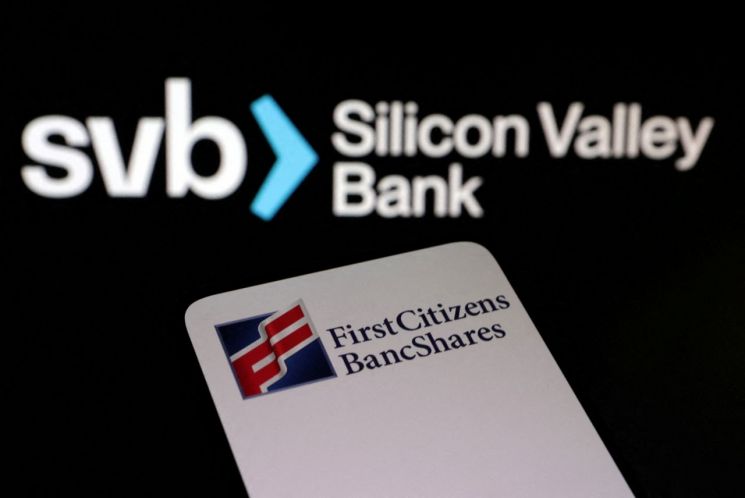
The U.S. Federal Deposit Insurance Corporation (FDIC) issued a statement on the same day announcing that First Citizens, based in North Carolina, has signed a contract to acquire all deposits and loans of SVB.
First Citizens is reported to acquire SVB's assets worth $72 billion (approximately 93.6 trillion KRW) at a discounted price of about $16.5 billion (approximately 21.4 trillion KRW).
Among the assets seized by the FDIC from SVB, some assets including stocks worth $90 billion (approximately 117 trillion KRW) will not be transferred to First Citizens but will remain under receivership for FDIC disposition. The FDIC also obtained stock valuation rights over First Citizens, valued at about $500 million (approximately 650 billion KRW). The loss amount to the deposit insurance fund caused by the U.S. financial authorities protecting all SVB deposits is estimated at about $20 billion (approximately 26 trillion KRW), and the exact loss amount is expected to be determined after the receivership ends.
Frank Holding Jr., CEO of First Citizens, said in a statement, "This deal, made in cooperation with the FDIC to instill confidence in the banking system, is a truly remarkable transaction."
Earlier, the FDIC seized SVB, which had been under crisis rumors since the 9th, and searched for a buyer for about two weeks. First Citizens and Valley National Bancorp competed to acquire SVB, and First Citizens ultimately decided to acquire SVB. First Citizens' market value is $8.4 billion (approximately 11 trillion KRW), higher than Valley National Bancorp's $4.7 billion (approximately 6.1 trillion KRW).
SVB, which is being acquired by First Citizens BancShares about 40 years after its establishment, is the largest U.S. bank to fail in the past 10 years. The bank went bankrupt just 48 hours after announcing plans to raise capital amid continuous corporate deposit withdrawals. SVB suffered significant losses by selling bonds whose prices fell due to interest rate hikes by the U.S. Federal Reserve (Fed), and ultimately could not withstand the bank run, disappearing into history.
© The Asia Business Daily(www.asiae.co.kr). All rights reserved.
![Clutching a Stolen Dior Bag, Saying "I Hate Being Poor but Real"... The Grotesque Con of a "Human Knockoff" [Slate]](https://cwcontent.asiae.co.kr/asiaresize/183/2026021902243444107_1771435474.jpg)
















