Uninsured Deposits Reach $8 Trillion
Growing Size Emerges as New Risk
Increase in Commercial Real Estate Loan Share
Concerns Over Crisis Spillover to Small Banks
Private Equity Funds Also Possible Next Target
The fear of bank insolvency is rapidly spreading worldwide like the COVID-19 pandemic, creating a phenomenon dubbed the "Bankdemic" (a portmanteau of bank and pandemic). The panic over bank failures, which began with the collapse of the U.S. Silicon Valley Bank (SVB), has spread through Credit Suisse (CS) to Germany's largest investment bank, Deutsche Bank. Additionally, the high proportion of uninsured deposits, commercial real estate, and private equity fund domino failures have been identified as new epicenters of the crisis.
Increase in Uninsured Deposits... A New Crisis Trigger
On the 26th (local time), The Wall Street Journal (WSJ) reported that the spread of the Bankdemic could trigger a bank run (massive withdrawal of deposits) on uninsured deposits, which constitute a large portion of total deposits in the U.S. According to a joint paper by economists from the University of Southern California, Northwestern University, Columbia University, and Stanford University, if only half of the uninsured deposits were withdrawn, about 200 banks could be exposed to the risk of failure.
According to a report obtained by WSJ from the U.S. Federal Deposit Insurance Corporation (FDIC), the amount of uninsured deposits not covered by deposit insurance reached approximately $8 trillion (?1,398 trillion) as of the end of last year. This represents a sharp increase of about 41% compared to the end of 2019. During the COVID-19 pandemic, U.S. households and businesses locked up excess liquidity in bank deposits, accumulating over $2.3 trillion in deposits between 2020 and 2021. In this process, the amount of deposits exceeding the FDIC insurance limit of $250,000 also increased significantly.
Since last year, mortgage-backed securities (MBS), whose prices have plummeted due to rapidly rising interest rates, have become another trigger. Like SVB, U.S. banks concentrated their pandemic-era surging deposits into MBS investments. As of the end of last year, banks’ MBS investments amounted to $2.8 trillion, accounting for more than half (53%) of their total securities investments.
Unrealized losses in the MBS sector due to price declines are estimated to reach $368 billion. If liquidity crises occur in small and medium-sized banks, as seen in the SVB case, the resulting fire sales of MBS could inevitably spread turmoil in financial markets. If some banks urgently sell off their MBS holdings to secure liquidity, further depressing MBS prices, it could act as a spark for the crisis.
Asset Deterioration Including Commercial Real Estate Loans
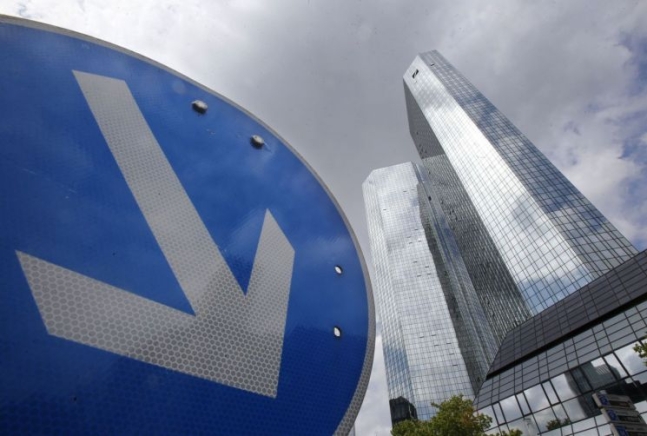
Concerns about crisis contagion are also growing for banks with high proportions of commercial real estate loans. Despite Deutsche Bank’s sound financial health, its stock price plunged 14.8% on the 24th (local time) due to the full write-off of CS’s CoCo bonds (AT1) and its high exposure to commercial real estate loans. Since the SVB collapse, Deutsche Bank’s stock has fallen nearly 30% in two weeks, wiping out €7 billion (approximately ?9.8 trillion) in market capitalization.
Currently, Deutsche Bank’s market capitalization stands at €16.5 billion (approximately ?23 trillion). The surge in Deutsche Bank’s credit default swap (CDS) premium, which indicates default risk, has dragged down its stock price. The CDS premium on Deutsche Bank’s 5-year bank bonds rose from 1.34 percentage points on the 22nd to 2.2 percentage points on the 24th. A high CDS premium means a higher risk of default on the bonds.
Fear surrounding Deutsche Bank could translate into a crisis for smaller banks with relatively high proportions of commercial real estate loans compared to total assets. For small banks, commercial real estate loans amount to $2.3 trillion, accounting for 80% of their total loans. Due to the spread of remote work during the pandemic and concerns about economic recession, commercial real estate vacancy rates remain at their highest levels since the 2008 global financial crisis.
Martin Gruenberg, Chairman of the FDIC, warned, "If the situation of low returns and high funding costs in office real estate continues, the deterioration of commercial real estate loans could lead to bank failures," adding that it is "an area requiring continuous supervision." Global integrated real estate services firm CBRE expects office real estate vacancy rates to continue rising through 2024.
WSJ pointed out that private equity funds and the high-yield bond market could become black holes that increase the risk level of the global financial system. Following the collapse of the U.S. SVB and the domino failures of European banks like CS, private equity funds could be the next target. According to McKinsey, assets flowing into the private equity market have surged since the pandemic, with private equity assets under management reaching $11.7 trillion as of the end of June last year.
While economic experts and authorities generally analyze that the current fear of bank insolvency is unlikely to spread into a full-blown crisis across the financial sector, WSJ noted that the "ghost of credit tightening originating from the financial sector" is indeed heightening risks to global economic growth.
© The Asia Business Daily(www.asiae.co.kr). All rights reserved.
![Clutching a Stolen Dior Bag, Saying "I Hate Being Poor but Real"... The Grotesque Con of a "Human Knockoff" [Slate]](https://cwcontent.asiae.co.kr/asiaresize/183/2026021902243444107_1771435474.jpg)











