As the price of cobalt, a key material for electric vehicle batteries, has plummeted over the past year, China is increasingly likely to take control of its supply. If China fully reopens its economy in the second quarter of this year, it is expected to become a turning point for price rebounds amid rising global demand for raw materials. The domestic battery industry plans to strengthen supply chain diversification to reduce dependence on Chinese cobalt imports and respond to demand.
According to the Korea International Trade Association on the 28th, their recently published Global Supply Chain Insights analyzed that China is poised to strengthen control over global cobalt supply. This comes as the price of key metals for electric vehicle batteries hit a 32-month low due to a surge in production. According to the Korea Mineral Information Service (KOMIS), as of the 23rd, the international cobalt price traded on the London Metal Exchange (LME) was $33,765 per ton, a 58.7% plunge compared to $81,860 per ton in the same period last year.
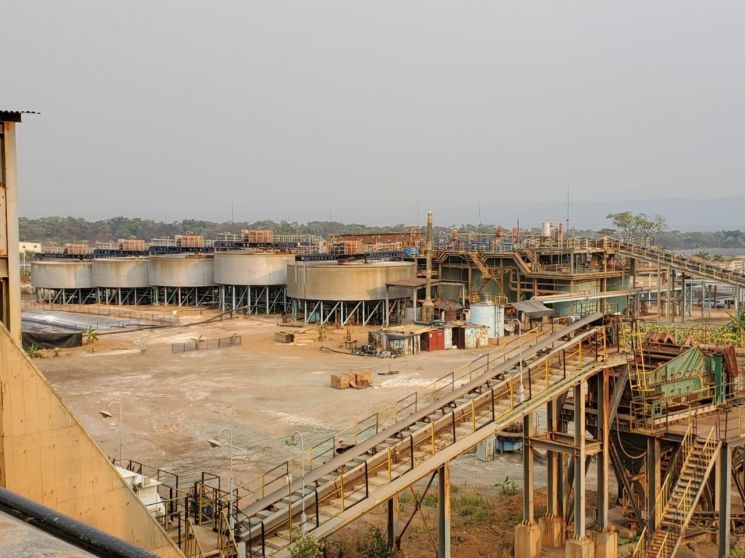
The association cited a report from Dalton Commodity, a cobalt trader headquartered in the UK, predicting that China’s share of cobalt production will rise from the current 44% of global output to half within the next two years. Cobalt is a byproduct of copper and nickel mines, and its supply does not easily decrease even when prices fall. Last year, global cobalt production increased by 23% year-on-year to 35,000 tons, with the supply growth rate more than doubling that of demand, triggering a price collapse. China holds a 77% global market share in cobalt refining capacity, so it plans to control supply and adjust prices accordingly. Furthermore, if China fully reopens in the second quarter, the global recovery in raw material demand could also contribute to price increases.
The domestic battery industry plans to respond to China’s supply control by reducing dependence on Chinese cobalt imports. While falling cobalt prices reduce production cost burdens for the battery industry, the problem lies in the European Union’s recent move to restrict imports of critical minerals from China through the Critical Raw Materials Act (CRMA). According to the CRMA draft, the goal is to reduce dependence on third-country strategic raw materials to less than 65% of total regional consumption by 2030. Strategic raw materials include 16 items such as rare earths, lithium, cobalt, nickel, graphite, and manganese.
The battery industry’s move away from cobalt is also gaining momentum. Although cobalt, along with manganese, is a key raw material used to enhance stability in high-nickel cathodes, the industry has been developing products with reduced cobalt content to alleviate past price burdens and reduce dependence on China. The three major domestic battery makers?LG Energy Solution, Samsung SDI, and SK On?have traditionally focused on producing ternary NCM (nickel-cobalt-manganese) batteries but have recently started producing LFP (lithium-iron-phosphate) batteries. A representative example is LG Energy Solution’s plan announced on the 24th to invest 7.2 trillion won in Queen Creek, Arizona, USA, to build new cylindrical battery and ESS (energy storage system) LFP battery plants.
Kang Cheon-gu, an invited professor in the Department of Energy Resources Engineering at Inha University, said, "It cannot be ruled out that China will take the lead by controlling prices as it begins to actively regulate cobalt refining supply chains from the second quarter. Our companies also need to diversify raw material procurement by passing the Supply Chain Basic Act and respond to the global supply chain restructuring."
© The Asia Business Daily(www.asiae.co.kr). All rights reserved.
!["The Woman Who Threw Herself into the Water Clutching a Stolen Dior Bag"...A Grotesque Success Story That Shakes the Korean Psyche [Slate]](https://cwcontent.asiae.co.kr/asiaresize/183/2026021902243444107_1771435474.jpg)
















