Court: "Punishment Should Not Be Excessive According to the UN Refugee Convention"
The Supreme Court has ruled that if a person falsely obtains a visa by pretending to be invited to South Korea for business purposes and then applies for refugee status after entering the country, it constitutes a violation of South Korea's Immigration Control Act but cannot be punished under the United Nations Refugee Convention.
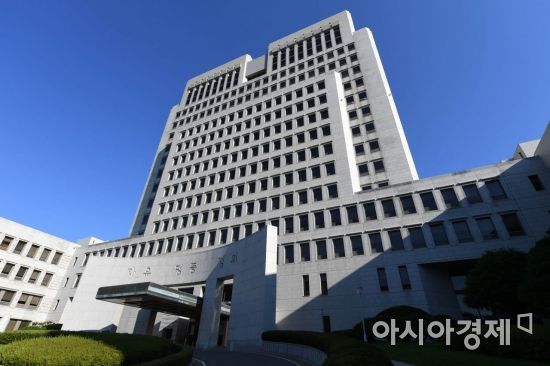
The Supreme Court's Second Division (Presiding Justice Cheon Dae-yeop) announced on the 27th that it upheld the lower court's decision to exempt Mr. A, an Iranian charged with obstruction of official duties by deception and violation of the Immigration Control Act, from punishment.
In 2016, Mr. A applied for a short-term business visa at the South Korean Embassy in Iran, stating that he was invited by a Korean fabric wholesale trading company to visit South Korea to look at fabrics. However, the invitation letter Mr. A submitted to the embassy was fake, purchased from a visa broker for $4,700.
Using the visa obtained this way, Mr. A entered South Korea and applied for refugee status in March 2016. Although the Ministry of Justice rejected his refugee application, after an administrative lawsuit, in 2020, the Supreme Court recognized his refugee status on the grounds that he faced persecution in Iran due to his conversion to Christianity.
The prosecution indicted Mr. A in 2018 for deceiving the Korean embassy with a false invitation letter to obtain a visa, and the first trial court sentenced him to one year in prison with a two-year probation.
On the other hand, the second trial court exempted Mr. A from punishment, considering that he was recognized as a refugee through an administrative lawsuit in Korea. The second trial court cited the United Nations Refugee Convention, which states that refugees should not be punished for illegal entry or illegal stay.
The Supreme Court also agreed with the second trial court's judgment. The court stated, "The United Nations Refugee Convention is a treaty ratified with the consent of the National Assembly and thus has the same effect as domestic law, so it can serve as a direct judicial norm depending on the case." South Korea joined the Refugee Convention in 1992, and it has been effective domestically since March of the following year.
The court added, "The provisions of the Refugee Convention serve as grounds for exemption from punishment in criminal trials in our country, which has acceded to and ratified the Refugee Convention," and clarified that "illegal entry subject to exemption from punishment includes entering without a visa or entering with a visa obtained illegally."
© The Asia Business Daily(www.asiae.co.kr). All rights reserved.

















