Neel Kashkari, President of the Federal Reserve Bank of Minneapolis and a voting member of the U.S. Federal Reserve's (Fed) monetary policy decision-making committee, stated on the 26th (local time) that although the recent banking system crisis triggered by Silicon Valley Bank (SVB) has increased the risk of a recession, it is still too early to determine how it will affect the overall economy and monetary policy going forward.
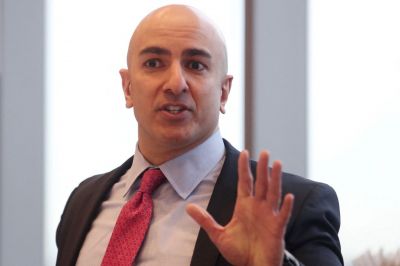
In an interview with CBS Face the Nation on the 26th (local time), President Kashkari said regarding the possibility that the recent banking crisis could lead to a recession, "We are definitely closer (to a recession)."
He noted, "What is unclear is how broadly this banking stress is leading to a credit crunch," adding, "As pointed out, a credit crisis will slow down the economy." On the other hand, he mentioned that this situation could lower inflation, explaining, "At the moment, it is uncertain how much impact the banking stress will have on the economy. This is something that must be observed very carefully."
Regarding analyses suggesting that the Fed might pause interest rate hikes at the next Federal Open Market Committee (FOMC) meeting, Kashkari took a cautious stance, saying, "Only a few weeks have passed, so we need to watch a bit longer."
He first evaluated, "Positive signs include a slowdown in deposit withdrawals and some restoration of confidence in small and regional banks." However, concerns remain. He pointed out that the financial markets have been broadly closed over the past two weeks, stating, "There is still tension in the lending sector, which will have a greater impact on the economy." He added, "It is too early to predict the next FOMC meeting, but these factors will be the focus."
When asked whether he was confident that risks like the SVB collapse do not exist in other U.S. banks, Kashkari responded, "It is not that all stress has passed. This process will take more time," but also said, "Fundamentally, the banking system is sound." While acknowledging concerns that other banks are also exposed to U.S. Treasury investments and commercial real estate loans, which were major causes of SVB's collapse, he assessed that "the banking system has the capital to withstand these pressures."
Regarding questions about confidence in the Fed's monetary policy, he said, "The interest rate risk that brought down SVB is something we have all been very focused on," adding, "There is still uncertainty and stress in the economy. We will continue to base decisions on data."
Earlier, following the SVB incident, the Fed took a 'baby step' by raising the benchmark interest rate by 0.25 percentage points at the March FOMC, its first rate decision since the crisis. The accompanying dot plot showed a year-end rate forecast of 5.1% (median), unchanged from December last year. Accordingly, the market is increasingly expecting a rate hold next month. According to the Chicago Mercantile Exchange (CME) FedWatch tool, as of the afternoon of the day, federal funds futures markets reflect an over 88% probability that the Fed will hold rates steady at the May FOMC, up from 54% a week ago.
© The Asia Business Daily(www.asiae.co.kr). All rights reserved.

















