As the decline in jeonse prices continues, it was found that more than 67% of Seoul apartment jeonse transactions in the first quarter of this year were contracted at prices lower than the previous quarter. Due to the impact of the reverse jeonse crisis, the proportion of contract renewal claims recorded the lowest level since August 2020.
On the 27th, Real Estate R114 compared the prices of pure jeonse transactions of Seoul apartments in the fourth quarter of last year and the first quarter of this year using the Ministry of Land, Infrastructure and Transport's actual transaction system. Among the 5,138 cases surveyed, 67.3% (3,459 cases) were transactions with prices lower than before. This compares the highest prices of jeonse (excluding monthly rent with deposit) contracts signed at least once in the same complex and same area between the fourth quarter of last year and the first quarter of this year.
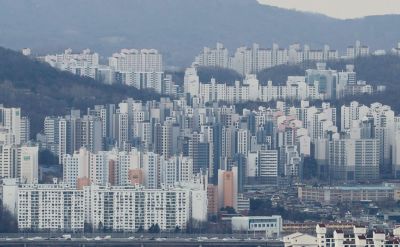
Amid the ongoing reverse jeonse crisis where landlords have to return part of the deposit to tenants due to recent jeonse price declines, the trend of falling transaction prices was particularly evident in areas with many newly occupied complexes.
By region, Gangnam-gu had the highest proportion of falling transactions in Seoul at 74.5% compared to the fourth quarter of last year. Yangcheon-gu, where reconstruction projects centered around Mok-dong have been in full swing, was second highest at 73.9%, followed by Dongjak-gu (71.8%), Seongdong-gu (71.4%), Gwanak-gu (71.1%), and Dongdaemun-gu (71.0%). On the other hand, Gangbuk-gu had the lowest at 51.3%, followed by Jongno-gu at 52.0%.
Low-priced jeonse transactions increased. Among the 29,668 jeonse transactions of Seoul apartments in the first quarter of this year, the proportion of transactions with deposits of 400 million KRW or less was 45.5%. This is an increase of 7.8 percentage points compared to the previous fourth quarter (37.7%). Mid-priced apartment jeonse transactions with deposits exceeding 600 million KRW up to 900 million KRW decreased by 4.3 percentage points from 21.0% in the fourth quarter of last year to 16.7% in the first quarter of this year, and high-priced apartments with deposits exceeding 900 million KRW decreased by 4.2 percentage points from 10.2% to 6.0%. This is interpreted as an increase in low-priced apartment transactions due to the decline in jeonse prices compared to last year and the impact of interest rate hikes reducing loan burdens.
Ye Kyung-hee, senior researcher at Real Estate R114, said, “With new apartments moving in, a flood of affordable jeonse listings appeared in newly built complexes, and nearby apartment jeonse prices also showed weakness.” She added, “In particular, cases contracted at lower prices than before, centered on older apartments with renewal contracts or reconstruction promotion complexes, seem to have had an impact.”
Meanwhile, due to the decline in jeonse prices, the proportion of contract renewal rights usage has been steadily decreasing. Among 14,082 renewal transactions of Seoul apartment jeonse and monthly rent in the first quarter of this year, transactions using the contract renewal claim accounted for 33.4% (4,704 cases), marking the lowest quarterly level since the introduction of the contract renewal claim in August 2020.
© The Asia Business Daily(www.asiae.co.kr). All rights reserved.
![Clutching a Stolen Dior Bag, Saying "I Hate Being Poor but Real"... The Grotesque Con of a "Human Knockoff" [Slate]](https://cwcontent.asiae.co.kr/asiaresize/183/2026021902243444107_1771435474.jpg)
















