Ministry of Agriculture, Food and Rural Affairs Announces Position Immediately After Grain Management Act Passes National Assembly Plenary Session
Minister Jeong Hwang-geun of the Ministry of Agriculture, Food and Rural Affairs proposed a request for reconsideration regarding the amendment to the Grain Management Act, which passed the National Assembly plenary session on the 23rd. If the president exercises the veto power following Minister Jeong's proposal, the bill must be approved again with at least two-thirds of the votes from a majority of the total members present to pass. This means that it is practically difficult to reapprove the amendment.
Minister Jeong expressed this position on the passage of the Grain Management Act at the Government Seoul Office on the same day. He said, "The revised bill, which was unilaterally passed under the opposition party's leadership, only partially changed the mandatory purchase conditions, but the essential content that the government is most concerned about?'the government being obligated to compulsorily purchase surplus rice'?remains unchanged. As the minister in charge, I deeply regret and feel disheartened by the unilateral handling of the revised bill, and I clearly state once again that it is difficult to accept."
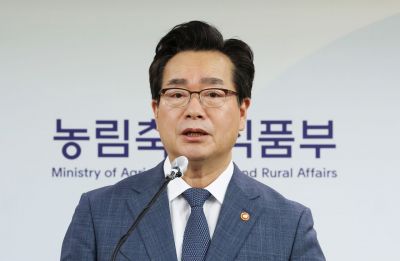
Minister Jeong proposed a request for reconsideration regarding this. He emphasized, "The government should respect the will of the National Assembly regarding the passed bill, but the side effects of this bill are too obvious. As the Minister of Agriculture, Food and Rural Affairs, I will propose a request for reconsideration as stipulated in the Constitution of the Republic of Korea."
The amendment to the Grain Management Act was passed in the National Assembly plenary session with 169 votes in favor, 90 against, and 7 abstentions out of 266 members present. The amendment mandates that when the surplus production exceeds 3-5% of the production (or budgeted production), causing a sharp drop or expected drop in rice prices, or when the rice price during the harvest season falls by 5-8% or more compared to the average price, agricultural cooperatives and others must compulsorily purchase the surplus production during the harvest season.
© The Asia Business Daily(www.asiae.co.kr). All rights reserved.

















