Members of the National Assembly Visiting Brussels
Ha Tae-kyung: "Should Study Nuclear Sharing More"
Hong Hyun-ik: "North Korea Threatens to Fire at South if Provoked"
Amid North Korea's tactical nuclear weapon live-fire training, voices pointing out the threat of North Korea's nuclear attack are growing louder. There are calls not only for constant nuclear extended deterrence but also for NATO-style nuclear sharing beyond strengthening extended deterrence.
Next week, our National Assembly will visit Brussels, where NATO headquarters is located, to discuss NATO-style nuclear sharing, drawing attention to whether nuclear sharing is possible in South Korea. However, regarding nuclear sharing, the NATO chief has directly drawn a line, and there are many opinions that it is realistically impossible.
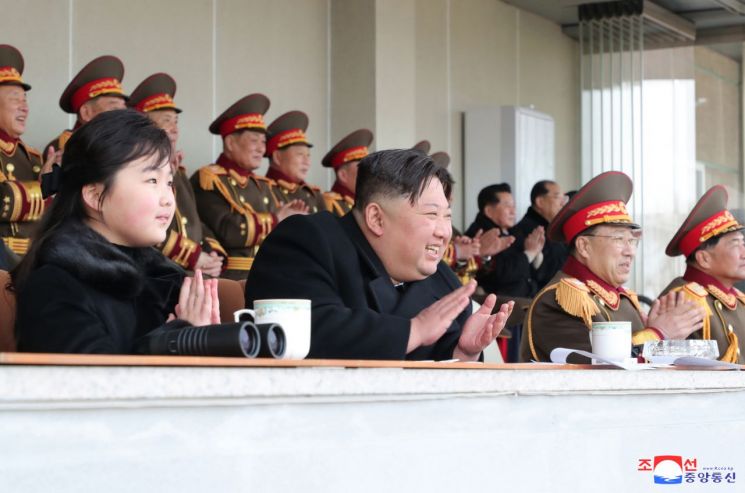
Ha Tae-kyung, a member of the National Assembly's Foreign Affairs and Unification Committee from the People Power Party, said on the 23rd on KBS's "Choi Kyung-young's Strongest Current Affairs," "We will go to NATO headquarters next week. The most important purpose is nuclear sharing," adding, "We will study (NATO-style) nuclear sharing and meet with officials on-site to hear what implications it has for our country." NATO-style nuclear sharing is a system in which six NATO countries without nuclear weapons share tactical nuclear weapons with the United States.
The reason for discussing NATO-style nuclear sharing is that North Korea's nuclear threat is becoming a reality. He said, "North Korea's nuclear tests and missile tests have reached a level that militarily poses a real threat to us," and added, "The fact that they recently conducted an explosion test at 800m altitude means that if it explodes over Seoul at 800m altitude, hundreds of thousands of people would die. Because of this situation, the United States' nuclear extended deterrence policy needs to be further advanced."
Hong Hyun-ik, former director of the Korea National Diplomatic Academy and an official from the Moon Jae-in administration, also warned of the risk of North Korea's nuclear attack. On KBS radio the day before, he said, "We did not develop nuclear weapons for international trust, but North Korea developed them and is ready to fire at South Korea anytime if necessary. One shot would kill one million people," adding, "Strategic bombers come and go, but since we always feel threatened in peacetime, we need to obtain a capability for constant extended deterrence."
The risk of North Korean nuclear attack has been pointed out for quite some time. The U.S.-based North Korea specialist media 38 North published a study in 2017 estimating that if North Korea fired a 250kt nuclear missile targeting Seoul, it could cause 780,000 deaths. The 250kt blast yield was assumed because the nuclear yield of the sixth nuclear test conducted at that time was estimated to be about 250kt. With the seventh nuclear test approaching, it cannot be ruled out that the scale has increased. There is also a 2010 estimate by the RAND Corporation that a smaller 10kt nuclear bomb could cause up to 235,000 deaths.
Unlike the past when only nuclear tests were conducted, North Korea has succeeded in conducting tests that simulate nuclear missile explosions over major cities, making the nuclear threat feel more tangible than before. On the 21st, Daegu Mayor Hong Joon-pyo expressed concern through his social media, saying, "North Korea has even carried out a nuclear warhead test exploding at 800m altitude above our heads," and warned, "If that becomes a reality and a nuclear bomb explodes at 800m altitude over Yongsan, more than half of Seoul's citizens would die instantly," proposing NATO-style nuclear sharing as an alternative.
However, if tactical nuclear weapons are deployed in South Korea like NATO, there is a dilemma that North Korea must also be recognized as a nuclear-armed state. The goal of North Korea's "denuclearization" would also be out of reach. The United States is also focusing on extended deterrence rather than South Korea's independent nuclear armament. Regarding NATO-style nuclear sharing, Jens Stoltenberg, NATO Secretary General, who visited Korea in January, stated, "Extended deterrence by the United States has been working for years," effectively drawing a line on the issue.
© The Asia Business Daily(www.asiae.co.kr). All rights reserved.

















