Apartment prices in Seocho-gu and Gangdong-gu, Seoul, have stopped declining. Meanwhile, Songpa-gu experienced a brief rise followed by two consecutive weeks of decline. Among the 17 cities and provinces nationwide, Sejong, which recorded the largest drop until last month, was the only area to switch to an increase.
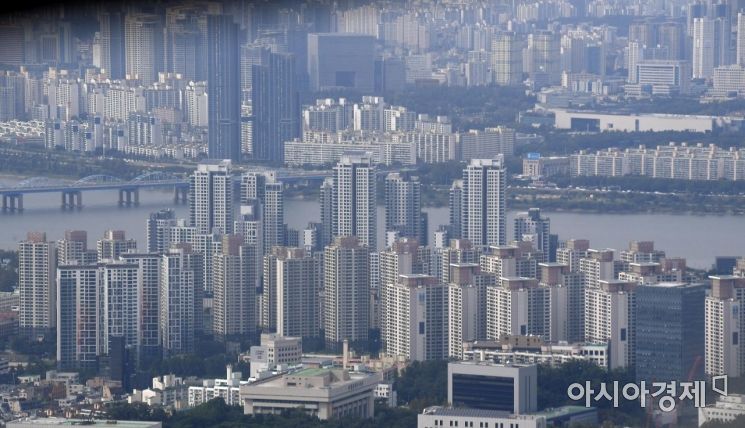
According to the weekly apartment price trend announced by the Korea Real Estate Board on the 23rd, Seoul apartment prices fell by 0.15% in the third week of March (as of the 20th), narrowing the decline compared to the previous week (-0.16%).
The Real Estate Board explained, "The sharp price drops in urgent sales properties have been exhausted, and a mild price increase trend appeared mainly in preferred complexes. However, since purchase inquiries did not lead to actual transactions, the downward trend continued."
By district, Seocho-gu (0.00%) recorded a flat trend with mixed movements, including slight increases mainly in some reconstruction and major complexes. Gangdong-gu (0.00%) halted the price decline with large complexes in Sangil and Godeok-dong, which have favorable living conditions. Following were Dongjak-gu (-0.02%), Songpa-gu (-0.06%), Yangcheon-gu (-0.07%), and Gangnam-gu (-0.11%) with relatively smaller declines. Areas with relatively larger drops included Gwangjin-gu (-0.35%), Gangseo-gu (-0.34%), and Geumcheon-gu (-0.31%).
Gyeonggi Province (-0.27%) also continued its decline with a reduced drop compared to the previous week. In Ilsanseo-gu, Goyang (-0.57%), prices fell in major complexes in Ilsan and Tanhyeon-dong, and in Danwon-gu, Ansan (-0.57%), the decline was notable around Wa, Singil, and Gojan-dong. In Cheoin-gu, Yongin (-0.02%), the decline narrowed due to increased purchase inquiries mainly in Namsa-myeon, where development prospects exist.
Incheon (-0.16%) saw a reduced decline as urgent sales properties were cleared amid cautious buyer sentiment. Bupyeong-gu (-0.36%) experienced price drops mainly in older complexes in Ilsin, Sangok, and Bugae-dong, while Michuhol-gu (-0.18%) saw declines centered around Gwankyo, Yonghyeon, and Hakik-dong.
In the provinces, the five major metropolitan cities showed a 0.31% decline: Busan (-0.32%), Daegu (-0.37%), Gwangju (-0.23%), Daejeon (-0.29%), and Ulsan (-0.33%). In contrast, Sejong rose by 0.09%. Sejong, which had the largest annual decline last year (-17.12%), saw a sharp reduction in the drop this month. The Real Estate Board stated, "This appears to be due to the government's regulatory easing policy and the lowering of market loan interest rates, which exhausted urgent sales properties and increased purchase inquiries in major complexes such as Saerom and Dajeong-dong."
Apartment jeonse (long-term lease) prices nationwide fell by 0.36%, narrowing the decline from the previous week (-0.41%). By region, Sejong (-0.05%), Gyeongbuk and Gyeongnam (each -0.10%), and Gangwon (-0.11%) had relatively smaller declines. Jeonse prices in six areas?Seoul (-0.41%), Gyeonggi (-0.47%), Busan (-0.44%), Daegu (-0.50%), Daejeon (-0.38%), and Ulsan (-0.54%)?fell more than the national average.
The Real Estate Board reported, "Although jeonse inquiries slightly increased, they did not lead to transactions, and prices declined mainly in complexes affected by older buildings or supply and move-in volumes."
© The Asia Business Daily(www.asiae.co.kr). All rights reserved.
![Clutching a Stolen Dior Bag, Saying "I Hate Being Poor but Real"... The Grotesque Con of a "Human Knockoff" [Slate]](https://cwcontent.asiae.co.kr/asiaresize/183/2026021902243444107_1771435474.jpg)











