Ministry of Gender Equality Analyzes Child and Adolescent Sexual Crime Verdicts
91.2% of Victims Female, Average Age 14.1 Years
More than 60% of sexual crime perpetrators against children and adolescents were found to be 'acquaintances.' Among these, victims of rape, sex purchasing, and sexual exploitation materials were most often harmed by 'people met through internet chatting.'
On the 23rd, the Ministry of Gender Equality and Family announced the analysis results of trends and patterns in sexual crimes against children and adolescents. Based on court rulings of offenders convicted of sexual crimes against children and adolescents in 2021 and registered for personal information, commissioned by the Korea Institute of Criminology and Justice Policy, the analysis covered crime patterns and characteristics, victim-related matters, and final sentencing outcomes.

In 2021, the number of offenders registered for personal information due to sexual crimes against children and adolescents was 2,671, and the number of victims was 3,503.
The proportion of offenders who were acquaintances was 60.9%, complete strangers 23.4%, and family and relatives 9.2%. The percentage of offenders who were acquaintances increased from 35.9% in 2014, 50.2% in 2019, to 60.9% in 2021, while the proportion of complete strangers decreased from 41.8%, 34.8%, to 23.4% over the same period.
Among victims of rape, sexual exploitation materials, and sex purchasing, the highest proportion of harm came from 'people met through internet chatting' among acquaintances. For rape victims, 35.3%, for sexual exploitation material victims, 66.5% were victimized by people met online. The rate was as high as 81.3% for sex purchasing victims.
When the offender was someone met through internet chatting, the initial contact route between victim and offender was most commonly a chatting app (44.7%), and 48.9% of these chats led to actual offline meetings.
By crime type based on offenders, forced molestation accounted for the largest share at 35.5%, followed by rape (21.1%) and child and adolescent sexual exploitation materials (15.9%).
Offenders under the age of 19 accounted for 14.1%, and 12.9% of offenders were repeat offenders with prior convictions of the same type.
Regarding the gender of child and adolescent victims, females accounted for 91.2%, with an average victim age of 14.1 years, and 25.6% of victims were under 13 years old.
Compared to the overall average, victims of filming using cameras or similar devices (16.0 years) and victims of sex trade mediation or business (15.4 years) had higher average ages.
Victims of child sexual abuse (13.0 years), quasi-rape victims (13.3 years), and forced molestation victims (13.6 years) were generally younger on average.
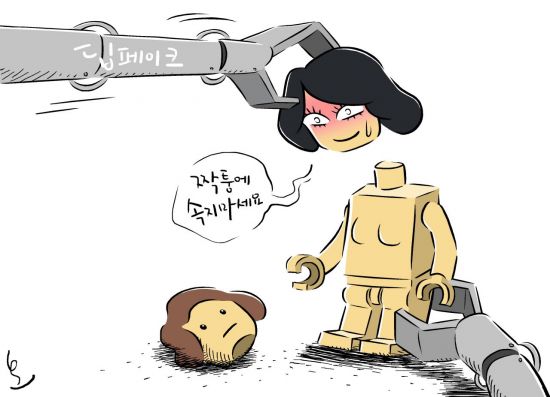
In digital sexual crimes, the form of victim images was 51.6% photos, 44.2% videos, and 3.1% were synthetic images.
Cases involving threats of distribution accounted for 20.0%, and actual distribution cases were 18.9%, both higher than in 2019. The most common coercion during distribution threats was 'demand for high-intensity sexual image filming or transmission' at 60.8%.
The most frequently used medium for distribution was general messengers (32.7%). Cases where victims could be identified from distributed images due to face or personal information exposure increased to 49.7%, compared to 25.4% in 2019.
Final sentencing for offenders showed that probation accounted for more than half at 52.3%. Imprisonment was 39.5%, and fines were 7.9%. Compared to 2014, the imprisonment rate increased from 33.0%, while the fine rate decreased from 22.1%.
Crime types with higher imprisonment rates included sex trade mediation/business (69.7%) and rape (65.7%). Notably, the imprisonment rate for sexual exploitation material crimes rose from 2.0% in 2014 to 40.8% in 2021, while the fine rate dropped from 72.0% (108 cases) in 2014 to 0.0% (0 cases) in 2021.
The average fixed-term imprisonment was 3 years and 10.3 months. Rape averaged 5 years and 0.8 months, quasi-rape 4 years and 4.8 months, and sexual exploitation materials 3 years and 11 months, all higher than the overall average sentence.
In particular, the average fixed-term imprisonment for sexual exploitation materials increased by 2 years and 6.3 months, from 1 year and 4.7 months in 2014 to 3 years and 11 months in 2021.
Sexual violence offenders sentenced to electronic monitoring devices accounted for 3.8%, with an average attachment period of 11 years and 5.7 months. Special compliance measures showed high rates of treatment program completion (91.0%) and prohibition of access to victims (86.6%).
Meanwhile, the Ministry of Gender Equality and Family operates the Digital Sexual Crime Victim Support Center (DiSeong Center), opened in April 2018, providing 24-hour counseling and proactive deletion support services for child and adolescent sexual exploitation materials, as well as regional specialized counseling offices to support early recovery of victims.
The DiSeong Center provided 188,000 services in 2021 and 235,000 in 2022, with proactive deletion support of 33,000 cases in 2021 and 35,000 cases in 2022.
This year, the Ministry plans to conduct the first survey on the actual conditions of child and adolescent sexual exploitation materials, support cyber counseling, and strengthen cooperation with related agencies such as the Korea Communications Commission to guarantee victims' 'right to be forgotten' online.
© The Asia Business Daily(www.asiae.co.kr). All rights reserved.