Korea Tourism Organization's Recommended 'Top 100 Tourist Spots' Mokpo
Well-Preserved Circular Modern Historical and Cultural Space from Japanese Colonial Era
Popular Sites Tracing Footsteps of Singers Inan-young and Kim Sisters
Scenic Views of Korea's Longest Over-Sea Cable Car Between Sky and Sea
“A place where the dead children (死兒) have accumulated, flowing along the desolate riverbank (江岸) / Passing through the harbor of gods who lost their songs, washed away every rainy season.”
Poet Choi Harim referred to Mokpo, the pier at the tip of the peninsula, as “the harbor of gods who lost their songs” in his poem ‘The Meager Recollection of Orpheus.’ Perhaps it was because the city’s anchorage, as seen through the eyes of the poet who spent his formative years in Mokpo, felt lonely. The songs lost by the gods naturally passed on to people, giving birth to a singer who captivated the era. The subject was, of course, Mokpo. At nineteen, singer Lee Nan-young sang the sorrow of a fallen nation in ‘Tears of Mokpo,’ which transcended the grief of Joseon and became a representative song of Honam and Mokpo. Her mournful voice still often echoes throughout the city. Drawn by that melody, the journey to Mokpo begins, as if destined, from Mokpo’s original downtown area.
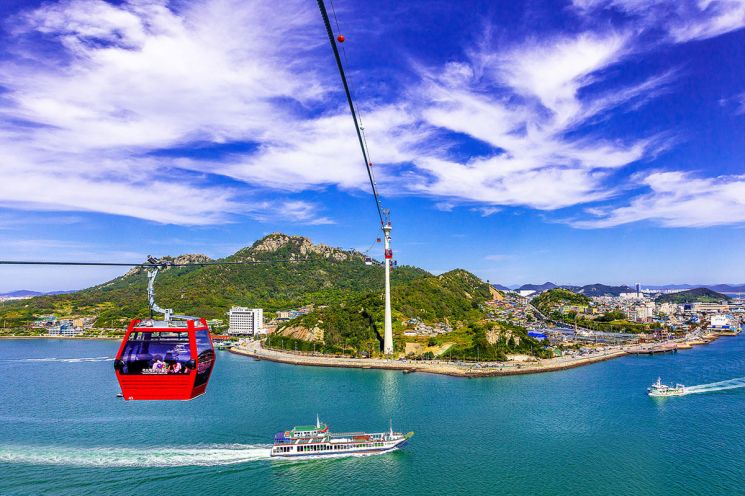 Mokpo Marine Cable Car departs from Bukhang Station, makes a 'ㄱ'-shaped turn at the summit of Yudalsan Mountain, crosses the sea, and reaches Bandalseom Gohado Island. It is the longest cable car in Korea, stretching 3.23 km. Visitors can enjoy the golden sunset and night view of the Dadohae Sea, making it a popular attraction in Mokpo. Photo by Mokpo City Hall
In 1897, the Korean Empire declared the opening of Mokpo Port. It was the first port opening carried out by the government’s voluntary will rather than foreign pressure. Japan expanded the city by undertaking land reclamation projects in Mokpo, and the urban planning carried out at that time gave the old downtown area of Mokpo the characteristics of a planned city centered on a grid road system, which remains to this day.
‘National Pride’ Preserved by Establishing Banks and Shops Against Japanese Exploitation in Colonial Reality
Due to Japan’s focus on exploiting Joseon’s resources, banks established with Japanese capital opened one after another in Mokpo during the Japanese colonial period. The First Bank, Shiksan Bank, and 18 Bank were among the first to settle in Mokpo. In 1929, the Honam Bank Mokpo branch, established with national capital, opened in the city center. The founding members of Honam Bank, established in 1920 by Honam capitalists, included Hyun Jun-ho, grandfather of Hyundai Group Chairwoman Hyun Jeong-eun, and Kim Byung-ro, the first Chief Justice of the Supreme Court of Korea. Although it was a branch of a national capital bank, the Honam Bank Mokpo branch building boasted a scale and completeness comparable to the Oriental Development Company Mokpo branch (now Mokpo Modern History Museum 2). Today, this building has transformed into the Hall of Popular Music in Mokpo, sharing stories about the opening of Mokpo Port, Lee Nan-young and the Kim Sisters, playwright Kim Woo-jin, and soprano Yoon Sim-deok with visitors. Starting here, visitors can walk to the former Japanese Consulate, Oriental Development Company, Japanese colonial houses, shops, warehouses, and air-raid shelters. Especially, the Japanese Consulate building, which was a filming location for the drama ‘Hotel Del Luna,’ has become a popular spot where young travelers come to capture its beauty both on screen and in photographs.
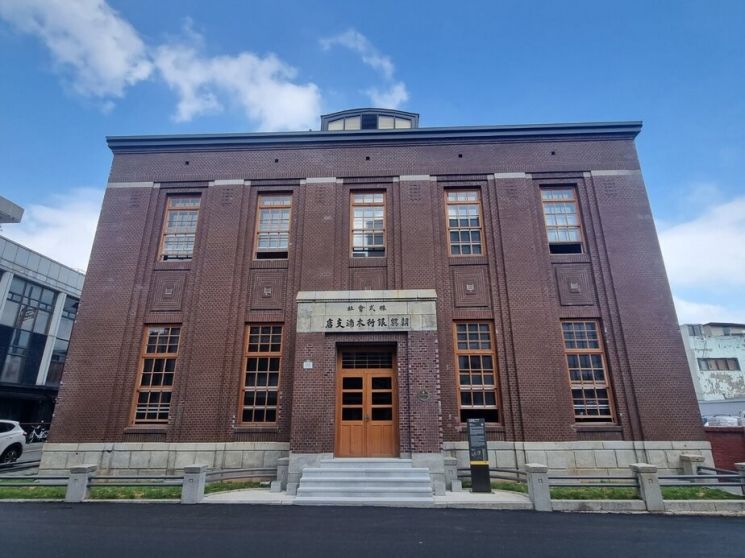 The building of the Mokpo branch of Honam Bank, established with national capital, was opened last year as the Mokpo Hall of Popular Music, showcasing various modern and contemporary historical contents of Mokpo.
 [Photo by Mokpo City Hall]
Lee Nan-young, the First Girl Group Member and Producer of Korea’s First Hallyu Girl Group, the Kim Sisters
The opening port of Mokpo attracted massive capital and people, creating an atmosphere of cultural enjoyment throughout the city. Perhaps because of this influence, Mokpo was the hometown of numerous modern and contemporary cultural artists, including Western painter Kim Whanki, playwright Kim Woo-jin, novelist Park Hwa-seong, essayist Kim Jin-seop, poet Kim Ji-ha, literary critic Kim Hyun, playwright Cha Beom-seok, novelist Cheon Seung-se, and dancer Lee Mae-bang, among many others. Born in 1916 in Yangdong, Mokpo, Lee Ok-rye, better known as Lee Nan-young, is still remembered as a leading figure. In 1932, at age 16, she debuted as a singer after being selected as a member of the Samcheon Theater Troupe following a performance on the troupe’s intermission stage. Two years later, she skyrocketed to stardom with the release of ‘Tears of Mokpo.’ After marrying composer Kim Hae-song in 1936, she gained fame with songs like ‘Mokpo is a Harbor’ and ‘The Blue Dream of the Coffeehouse.’ She also formed the ‘Jokori Sisters’ with contemporaries such as Park Hyang-rim of ‘My Brother is a Peddler,’ Jang Se-jung of ‘The Ferry Has Left,’ and Lee Hwa-ja of ‘Springtime of the Red-Light District,’ becoming Korea’s first girl group members in history.
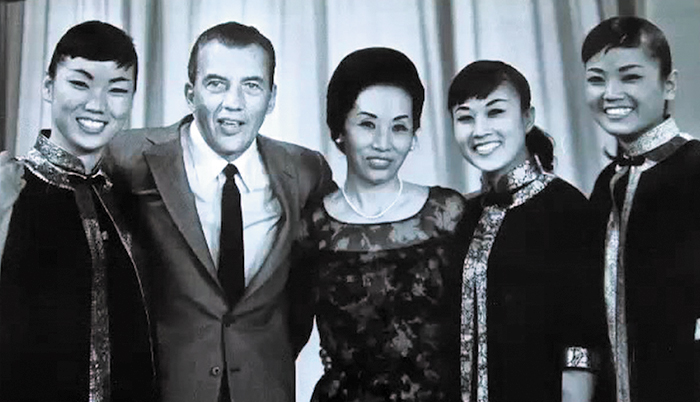 Debuting in 1953, the 'Kim Sisters' were active in the United States for 14 years starting in 1959. Pictured are Inan Young (center), who produced them, Ed Sullivan (to her left), the host of the famous American TV program 'The Ed Sullivan Show,' and members of the Kim Sisters.
 [Photo by Indiline]
After the outbreak of the Korean War, her husband Kim Hae-song went missing, and she personally trained her daughters Kim Sook-ja and Kim Ae-ja, along with her niece Lee Min-ja, who resembled her greatly. They debuted in 1953 on the stage of the US 8th Army base. This was the beginning of the Kim Sisters. The young girls, who dominated the US 8th Army stage, gained such popularity that in 1959 they became the first Korean girl group to enter the United States. They appeared 33 times on the popular TV show ‘The Ed Sullivan Show,’ more than The Beatles, earning fame as musicians. During their US activities, their weekly pay was an astonishing $15,000, ranking them fourth in high tax payments in Las Vegas at the time, showcasing their popularity. The ‘Painter’s House’ located in Mokwon-dong, Mokpo’s original downtown, houses various stage costumes and performance materials from Lee Nan-young and the Kim Sisters’ US activities, attracting many visitors.
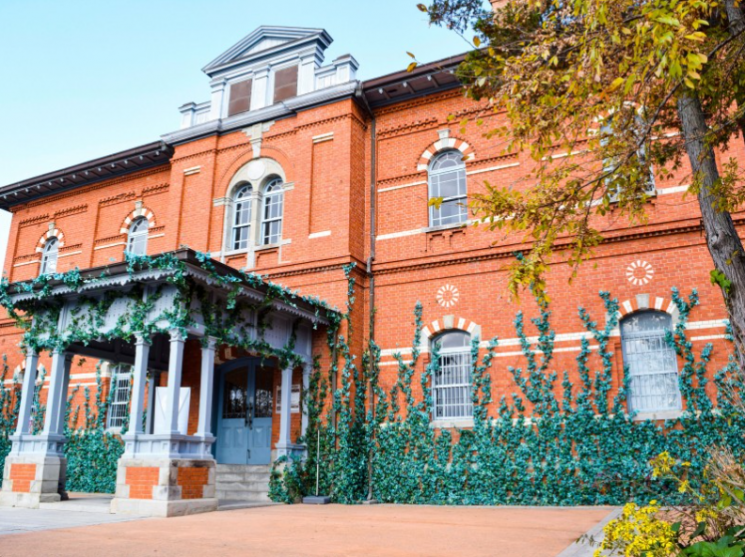 The former Japanese Consulate, currently used as Mokpo Modern History Museum Building 1. Built in 1900, it is the first Western-style building in Mokpo and is also well known as a filming location for the drama "Hotel Del Luna."
 [Photo by Mokpo City Hall]
Mokpo Marine Cable Car: A Place to See Mokpo’s Past, Present, and Future at a Glance with Sunset and Night Views
Starting from the North Port, the Mokpo Marine Cable Car passes by Yudalsan Mountain, a symbol of Mokpo, and continues to Gohado Island, where Admiral Yi Sun-sin repaired Panokseon warships during the Japanese invasions. The cable car offers a scenic connection between Mokpo’s past, present, and future. With a total length of 3.23 km, it boasts the longest distance among domestic marine cable cars and is an essential course for travelers to see hidden attractions around Mokpo New Port, Mokpo Bridge, and various spots on Yudalsan Mountain. Behind the Gohado station, a tranquil walking trail leads to the island’s summit observatory.
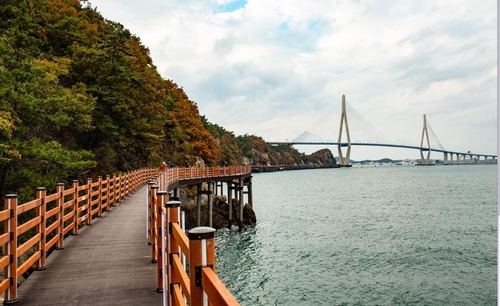 Mokpo Gohado Marine Deck Road. The Mokpo Bridge can be seen in the distance.
 [Photo by Mokpo City Hall]
Below the observatory, shaped like the 13 Panokseon warships said to have been repaired by Admiral Yi Sun-sin here, is a beach deck path extending under Mokpo Bridge, allowing visitors to enjoy both mountain and sea views while walking. After the ‘Mokpo Modern History and Culture Space’ in the original downtown area was designated as a cultural heritage site, Mokpo was selected last year as one of the ‘Top 100 Korean Tourist Destinations’ along with the Mokpo Marine Cable Car, drawing attention as a distinctive travel destination that fully embraces the traces of the old city and the source of cultural arts.
© The Asia Business Daily(www.asiae.co.kr). All rights reserved.
![Clutching a Stolen Dior Bag, Saying "I Hate Being Poor but Real"... The Grotesque Con of a "Human Knockoff" [Slate]](https://cwcontent.asiae.co.kr/asiaresize/183/2026021902243444107_1771435474.jpg)













