Considering recent indicators and policy credibility,
it is deemed appropriate to continue the rate hike stance
Jerome Powell, Chairman of the U.S. Federal Reserve (Fed), revealed that he had "considered temporarily pausing interest rate hikes" in response to the fallout from the Silicon Valley Bank (SVB) collapse, which spread fears of a systemic crisis in the banking sector. However, he explained that given recent strong inflation, an overheated labor market, and the need to maintain policy credibility, it was deemed appropriate to continue the rate hike stance. He also dismissed market expectations of a pivot, stating, "I am not considering a rate cut within this year."
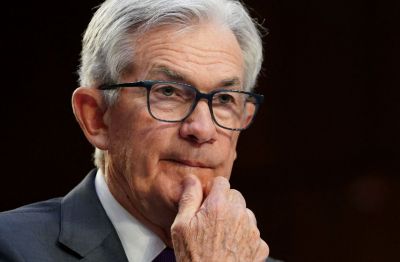
At a press conference held immediately after the March Federal Open Market Committee (FOMC) regular meeting on the 22nd (local time), Powell said in response to questions about pausing rate hikes, "I considered it ahead of the meeting." However, he explained the background of this month's baby step (a 0.25 percentage point increase in the benchmark rate) by saying, "Data on inflation and the labor market were stronger than expected, so I judged it appropriate to continue raising rates." He added, "Before the banking issues erupted, I even thought we might need to raise rates further," emphasizing the need to maintain public confidence in achieving the 2% inflation target.
The Fed raised the federal funds rate by 0.25 percentage points from the previous 4.5?4.75% range to 4.75?5% at this meeting. Despite rising concerns over a systemic banking crisis, the Fed continued its tightening path. This FOMC attracted attention as the first rate decision after the SVB collapse intensified fears of a banking system crisis. The rapid tightening since last year was confirmed to have dealt a direct blow to the asset soundness of banks, including SVB, putting the Fed's tightening trajectory under scrutiny.
Chairman Powell began the press conference by addressing the heightened banking risks. He first stated, "All depositors' savings are safe," and "Our banking system holds solid capital and liquidity and is sound and strong." He also emphasized, "The SVB collapse is an exceptional case," and "It is not a risk across the entire U.S. banking system." He added, "We are prepared to use all necessary measures to maintain the soundness of the banking system," and "We will take additional actions to ensure such an event does not recur."
However, Powell quickly expressed concerns about inflation and an overheated labor market, reinforcing the Fed's tightening stance. He said, "Inflation has eased somewhat since mid-last year, but inflationary pressures remain high," and "We understand that high prices are eroding purchasing power and causing pain to the public." Regarding the labor market, he expressed concern that "wage pressures have weakened, but the labor market remains very strong."
Regarding the removal of the phrase "ongoing rate increases are appropriate" and the inclusion of "policy firming" in the March FOMC statement, Powell explained, "It reflects uncertainty while indicating that rates will be raised."
On the possibility of rate cuts this year, he said, "I am not expecting any cuts." The dot plot released that day showed the year-end rate forecast unchanged at 5.1%, leading the market to widely expect that the tightening cycle would end after one more hike. Powell directly dismissed pivot expectations. Toward the end of the press conference, he reiterated, "There will be no cuts this year." When asked whether a 5.1% rate is sufficiently restrictive to achieve the 2% inflation target, he replied, "Not necessarily," but added, "Credit conditions are tight, so inflation could come down further. We need to watch closely."
Powell anticipated ongoing economic repercussions from the SVB-related crisis. He said, "It will tighten credit conditions for households and businesses and have economic effects," adding, "It might impose a greater burden than rate hikes." Nevertheless, he stated, "It is too early to know the full extent of these effects. It is also too early to decide how monetary policy should respond," making clear that policy responses will depend on the situation.
When asked about the possibility of a soft landing, he said, "It is too early to talk about economic repercussions," and warned, "The longer it drags on, the more credit tightening could occur."
Meanwhile, through the Summary of Economic Projections (SEP) released that day, the Fed raised its inflation forecast for this year from the previously projected 3.1% to 3.3%. The real Gross Domestic Product (GDP) forecast for this year was slightly lowered to a 0.4% increase. The median year-end federal funds rate forecast in the dot plot remained at 5.1%, unchanged from the December projection. Among individual FOMC members, 10 out of 18 projected the year-end rate to be between 5.0% and 5.25%.
© The Asia Business Daily(www.asiae.co.kr). All rights reserved.
![Clutching a Stolen Dior Bag, Saying "I Hate Being Poor but Real"... The Grotesque Con of a "Human Knockoff" [Slate]](https://cwcontent.asiae.co.kr/asiaresize/183/2026021902243444107_1771435474.jpg)
















