Year-End Outlook Maintained at 5.1%
The U.S. central bank, the Federal Reserve (Fed), recently implemented a so-called 'baby step' by raising the benchmark interest rate by 0.25 percentage points amid rising concerns over a banking system crisis. The existing rate path on the dot plot, which projects rates to reach 5.1% (median) by the end of this year, was maintained.
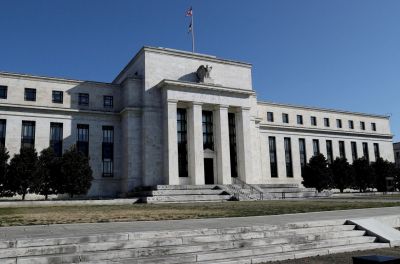
On the 22nd (local time), following the March Federal Open Market Committee (FOMC) regular meeting, the Fed announced in a statement that it would raise the federal funds rate by 0.25 percentage points from the previous 4.5?4.75% range to 4.75?5%. This marks the ninth rate hike since the rate-hiking cycle began in March last year. As a result, the interest rate differential with South Korea (3.5%) widened to 1.25?1.5 percentage points.
The FOMC stated, "The U.S. banking system is sound and resilient," adding, "Recent events may lead to tighter credit conditions for households and businesses, potentially weighing on economic activity, employment, and inflation, but the extent of these effects is highly uncertain." It also emphasized that it is "paying close attention to inflation risks."
The FOMC further noted, "To achieve a sufficiently restrictive monetary policy stance to bring inflation down to the 2% target over the longer term, some additional policy firming may be appropriate." The phrase "ongoing increase" in interest rates, which appeared in previous FOMC statements, was removed and replaced with "additional policy firming may be appropriate." The FOMC also added that this depends on incoming data.
The accompanying dot plot showed a year-end interest rate forecast of 5.1%, unchanged from the level presented at the December FOMC meeting last year. This effectively signals that the rate-hiking cycle will end after one more increase. The rate is expected to decline to 4.3% next year.
Additionally, the inflation forecast for this year was revised upward from the previously projected 3.1% to 3.3%. The GDP growth forecast for this year was slightly lowered to 0.4%.
This FOMC meeting attracted attention as the Fed's first rate decision following the recent banking system crisis triggered by the collapse of Silicon Valley Bank (SVB). The rapid tightening since last year was confirmed to have dealt a direct blow to the asset soundness of banks, including SVB, causing a pause in the Fed's tightening path.
Earlier this month, the consensus was that the Fed would take a big step (a 0.5 percentage point increase) at this FOMC, and Fed Chair Jerome Powell had hinted at this possibility. However, after SVB's collapse on the 10th, the big step option disappeared from the table. There were also calls for a rate freeze, but it is analyzed that the Fed considered that such a move could undermine policy credibility.
The market is currently awaiting the upcoming press conference by Fed Chair Jerome Powell. With the Fed having chosen a 0.25 percentage point increase as expected, investors' attention will focus on whether Powell's remarks are 'hawkish' or 'dovish.'
© The Asia Business Daily(www.asiae.co.kr). All rights reserved.
![Clutching a Stolen Dior Bag, Saying "I Hate Being Poor but Real"... The Grotesque Con of a "Human Knockoff" [Slate]](https://cwcontent.asiae.co.kr/asiaresize/183/2026021902243444107_1771435474.jpg)











