IBS Research Team Explores Potential Use for COVID-19 and Other Disease Control Measures
A domestic research team has produced findings that identify the route through which the COVID-19 virus begins infection in the nasal cavity among various human organs. They have completed the first-ever three-dimensional detailed map of the blood vessels and lymphatic vessels in the nasal cavity.
The Institute for Basic Science (IBS) announced on the 22nd that the research team led by Gyu-Young Ko, head of the Vascular Research Center and distinguished professor at KAIST Graduate School of Medical Science and Engineering, along with research fellow Sunpyo Hong, has completed the first 3D detailed map of the blood vessels and lymphatic vessels in the nasal cavity.
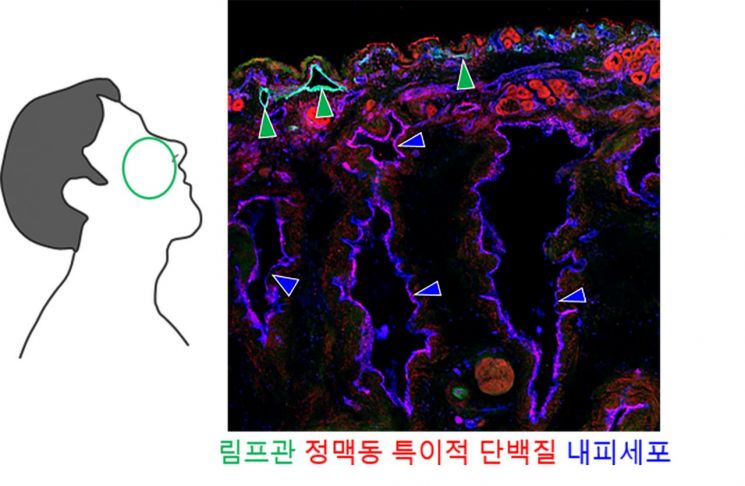
This study was selected as the cover paper of the international journal Nature Cardiovascular Research and was published online on the 21st.
The nose is not only a sensory organ responsible for olfaction but also the first gateway through which external air enters the lungs. It functions to warm and humidify the incoming air, and particularly, the mucous membrane of the nasal cavity serves as the first immune barrier that blocks external pathogens and foreign substances.
In previous research, the team identified that ciliated epithelial cells, which make up the majority of the mucosal epithelial cells, are the main targets for initial COVID-19 infection and proliferation. They also suggested that inducing mucosal immunity through nasal vaccine administration could be an effective strategy for COVID-19 prevention and treatment. In fact, some countries such as India claimed to have protected large populations from infection at low cost by administering inactivated COVID-19 virus intranasally to induce nasal immunity.
In forming nasal immunity, the role of microvessels and lymphatic vessels is as important as the activation of immune cells. This is because they serve as pathways for immune cells to move to lymph nodes and return to the nasal mucosa. However, due to the complex structure of the nasal cavity, the spatial distribution, interconnections, and cellular-level characteristics of microvessels and lymphatic vessels have not yet been clearly elucidated in three dimensions.
The research team utilized immunofluorescence staining, a technique that labels antibodies selectively binding to specific proteins with fluorescent substances, allowing observation of the protein locations. Using this advanced visualization technology, they completed a 3D micro-map of microvessels and lymphatic vessels in the nasal cavities of mice and humans. Beyond the morphological structure of the nasal cavity, they succeeded in elucidating molecular and cellular-level characteristics related to immune responses by combining single-cell gene analysis. They confirmed that, in addition to typical capillaries, venous sinus vessels carrying venous blood are distributed over a wide area within the nasal cavity. They also observed a special distribution dominated by atypical lymphatic vessels with pointed ends, whereas typical lymphatic vessel ends are rounded. This distribution of blood vessels and lymphatic vessels is specialized to perform immune responses against invading pathogens effectively. The VCAM1 protein, which plays an important role in immune cell migration, was specifically expressed in the venous sinus vessels, and a greater number and variety of immune cells were found migrating within the atypical lymphatic vessels compared to lymphatic vessels in other organs.
Furthermore, the team observed vascular changes in the nasal cavity using experimental animal models of allergic rhinitis and COVID-19. Interestingly, venous sinus vessels were atrophied due to rhinitis, and inflammation occurred due to COVID-19. They also observed abnormal dilation of venous sinus vessels with aging. These findings indicate that physiological and immune functions in the nasal cavity weaken due to various pathological conditions.
Research fellow Sunpyo Hong explained, "Activating the specialized blood vessels and lymphatic vessels in the nasal cavity suggests the possibility of establishing effective nasal immunity against viral infections." He added, "We plan to expand our research on immune responses to respiratory infections from the nasal cavity to the throat in the future."
© The Asia Business Daily(www.asiae.co.kr). All rights reserved.
![Clutching a Stolen Dior Bag, Saying "I Hate Being Poor but Real"... The Grotesque Con of a "Human Knockoff" [Slate]](https://cwcontent.asiae.co.kr/asiaresize/183/2026021902243444107_1771435474.jpg)
















