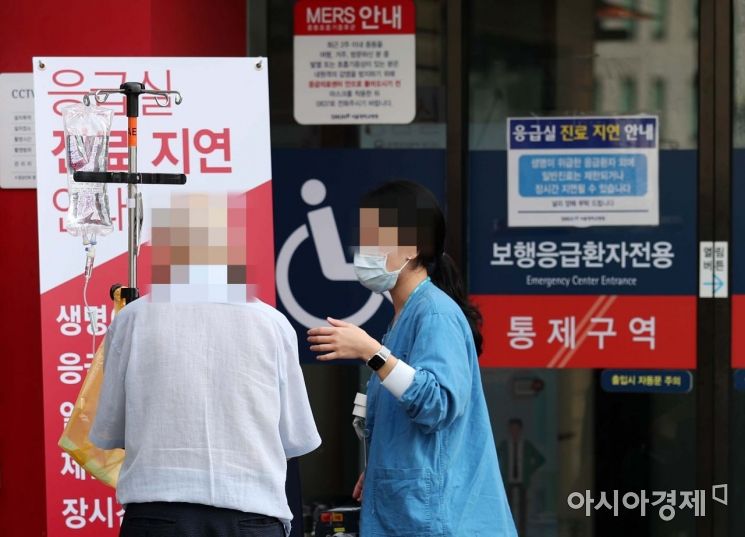
The emergency medical system will be reorganized so that critically ill emergency patients can receive treatment within one hour anywhere in the country. This comes in response to frequent cases where critically ill emergency patients, even after being transported to hospitals, cannot receive treatment due to a shortage of resources in essential medical fields and end up being transferred from hospital to hospital, ultimately missing the golden hour. According to the 2021 119 Ambulance Service Statistical Yearbook, 16.2% of re-transfers by 119 ambulance teams were due to ‘lack of emergency room beds.’
According to the ‘4th Basic Plan for Emergency Medical Care’ (2023?2027) announced by the Ministry of Health and Welfare on the 21st, the plan first aims to expand the critically ill emergency medical centers, which are absolutely insufficient, and strengthen the institutional foundation so that intensive care units and operating rooms, which are general treatment facilities of medical institutions, can be prioritized for emergency patients. For example, the government plans to create a new management fee for emergency patient admission rooms and pay hospitals opportunity costs through additional fees for intensive care units dedicated to emergency patients.
Currently, the system of regional emergency medical centers, local emergency medical centers, and local emergency medical institutions will be reorganized according to the condition of emergency patients (critical, moderate, mild). This is because there have been criticisms that the roles among these institutions have been ambiguous. At a public hearing last month, the new names for the institutions under the revised delivery system were introduced as critically ill emergency medical centers, emergency medical centers, and 24-hour treatment centers, but these were considered not intuitive and have been tentatively put on hold. Additionally, the government plans to gradually revise the designation criteria for emergency medical institutions, which currently focus on diagnosis and emergency treatment within emergency rooms, to include capabilities for follow-up treatments such as surgery and hospitalization. A government official stated, “The functions, designation criteria, names, and compensation plans of the reorganized delivery system will be prepared through consultative bodies and research involving stakeholders and experts.”
Without medical staff who handle emergency diseases, everything becomes futile. The government plans to improve the structure so that excellent personnel can be continuously secured by providing on-duty compensation for final treatment personnel of critically ill emergency diseases and ensuring that the income generated from emergency medical care is distributed to the medical staff themselves. Various measures are being considered to address the irregular and demanding working hours of medical staff handling emergency diseases.
For critically ill emergency diseases that are difficult for individual medical institutions to respond to 24/7, a regionally comprehensive response system will be established through a hospital cooperation network. Based on emergency medical resource surveys by local governments, a 365-day rotation on-call system (day-of-week duty hospital system) among hospitals within the region will be operated. For example, if Hospital A is responsible for the final treatment of a critically ill emergency disease on Monday, Hospital B will take the duty on Tuesday to prevent any gaps in coverage. In vulnerable areas with a shortage of medical staff, emergency medical models will be developed and supported through pilot projects for rotating and dispatching medical personnel to these areas.
Furthermore, the scope of work for emergency medical technicians during the transport phase will be expanded to provide necessary treatment during transport. For instance, in cases where a patient calls 119 for chest pain, under current law, paramedics who cannot perform electrocardiogram (ECG) measurements must first transport the patient to the nearest hospital. The plan is to allow emergency medical technicians to assess patient symptoms through ECG measurements inside the ambulance.
Under this emergency medical basic plan, the government has set a goal to reduce the in-hospital mortality rate of critically ill emergency patients from the current 6.2% to 5.6% by 2027. The preventable trauma mortality rate is also planned to be reduced from 15.2% (as of 2019) to 10%.
© The Asia Business Daily(www.asiae.co.kr). All rights reserved.

















