Consumer Prices Continue to Slow Alongside Producer Prices
Compounded by US SVB-Induced Financial Uncertainty
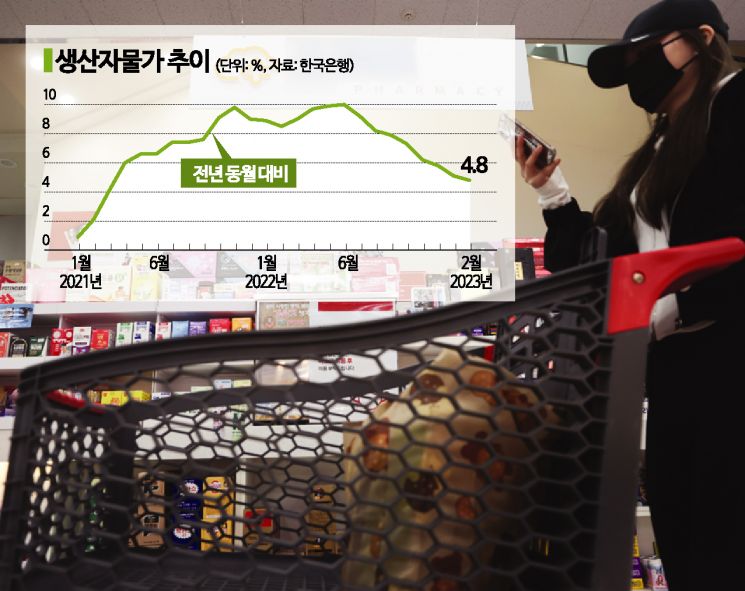
The producer price inflation rate in February fell to the 4% range for the first time in about two years, suggesting a potential easing of inflationary pressures. The Bank of Korea's Monetary Policy Committee is scheduled to meet on April 11, about three weeks from now, and with recent signs of slowing inflation, the likelihood of maintaining the current base interest rate is increasing.
According to the Bank of Korea on the 21st, last month's producer prices rose 4.8% year-on-year, continuing the trend of slowing growth for eight consecutive months. This is the first time in 23 months since March 2021 (4.1%) that the index has fallen to the 4% range. The producer price inflation rate surged to double digits in June last year, reaching the 10% range, but then declined to 9.2% in July, 7.3% in October, 6.2% in November, 5.8% in December, 5.1% in January this year, and 4.8% in February, showing a gradual slowdown in the upward trend.
The index excluding food and energy also rose 2.8% year-on-year, indicating a slowdown in the upward trend. The rise in the index excluding food and energy also fell to the 2% range for the first time in 24 months since February 2021 (2.1%). Seo Jeong-seok, head of the price statistics team at the Bank of Korea, said, "Overall, the slowdown in price increases reflects a reduction in inflationary pressures," adding, "In February, producer prices related to energy such as petroleum and city gas fell compared to January, but service prices rose, causing the overall producer price index to increase slightly by 0.1%. For March, there are both upward and downward factors related to energy and service prices, so we need to monitor the situation."
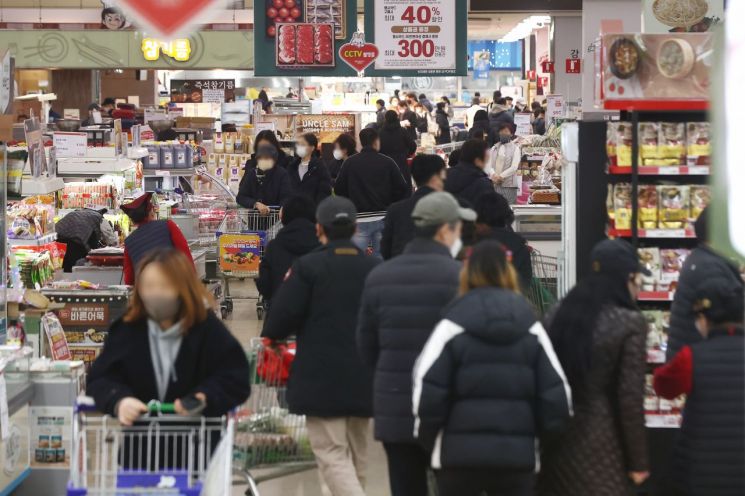
Following the slowdown in consumer prices, the deceleration in producer price inflation has increased attention on future monetary policy. On the 7th, Bank of Korea Governor Lee Chang-yong stated at a press club discussion, "The consumer price inflation rate, which was 4.8% in February, is expected to fall below 4.5% in March and reach the low 3% range by the end of the year." The March consumer price index will be announced in early April, before the Bank of Korea's Monetary Policy Committee meeting.
Recent financial market instability caused by the collapse of Silicon Valley Bank (SVB) in the U.S. and the shock from Swiss investment bank Credit Suisse (CS) is also considered a major variable for monetary policy. On the 14th, Deputy Prime Minister and Minister of Economy and Finance Choo Kyung-ho diagnosed, "This situation arose as financial instability in vulnerable sectors emerged amid high-level inflation responses and strong financial tightening," and pledged, "We will do our utmost to maintain financial market stability."
Kim Jeong-sik, emeritus professor of economics at Yonsei University, said, "Producer prices affect consumer prices with a lag of about 1 to 6 months," adding, "Given the slowing inflation trend and the SVB and CS incidents, the Bank of Korea, which must consider both price and financial stability, is likely to keep interest rates unchanged."
© The Asia Business Daily(www.asiae.co.kr). All rights reserved.


















