SNS Cashstuffing (#cashstuffing) Challenge
Using Money Envelopes for Meals, Shopping, and Other Purposes
"Increasing Debt Burden While Gaining Control Over Spending"
In the United States, the growing burden of debt has led to the popularity of the social media challenge '#cashstuffing'.
On the 20th (local time), AFP reported, "Although credit cards and mobile payments have already become the main payment methods, more people are returning to cash payments amid the increasing debt burden."
According to AFP, on the video-sharing platform TikTok, videos tagged with the hashtag 'cashstuffing' showing all spending done in cash are gaining popularity. The total views of this hashtag have reportedly surpassed 942 million.
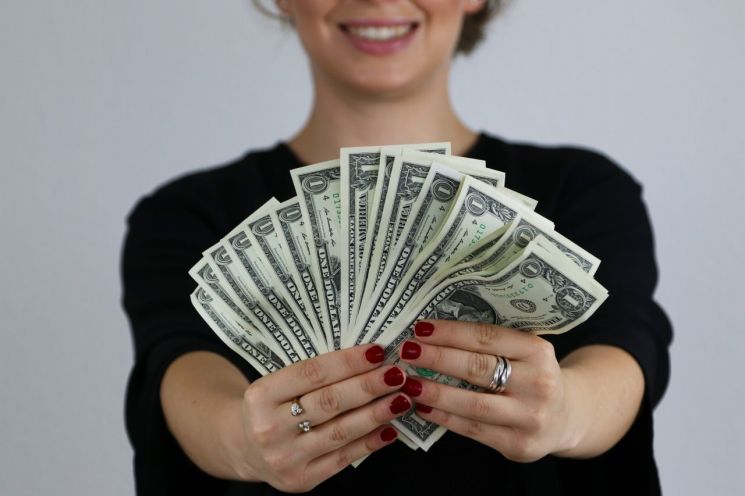
Cashstuffing refers to the practice of dividing cash into envelopes according to its intended use, a method common before credit card usage became widespread. Analysts suggest that more people are trying to control their spending by dividing cash.
Judia Greiner (25) from Virginia told AFP, "I started cashstuffing two years ago when I was a college student." She currently has over 200,000 TikTok followers.
Greiner explained, "I needed a way to save money to pay tuition without accumulating much debt, but I didn’t even know how much money I had, so I didn’t know what to do," which led her to start cashstuffing.
Jasmine Taylor (31) from Texas, who has about 620,000 TikTok followers, also said, "Although I had a degree, I had no job prospects and was a serious impulsive buyer with poor financial status," and started using cash.
The common feature of these individuals is that they pay for all their expenses in cash. To do this, they film videos showing how they sort cash into different envelopes labeled for purposes such as 'rent' and 'shopping'.
Greiner said she saved $7,500 through this method to pay her tuition. Taylor stated that by paying 95% of her expenses in cash, she was able to repay $32,000 in student loans, $8,000 in credit card debt, and $5,000 in medical insurance debt.
Greiner emphasized, "Credit cards don’t feel like real money," adding, "When you use cash, you can physically see the money disappearing, which helps reduce spending."
Priya Mulani, founder of the financial advisory service Stash Wealth, told AFP, "The economic recession plays a crucial role in the success of the cashstuffing strategy," adding, "It’s natural for people to look for spending methods they can control, and they find comfort in holding a one-dollar bill in their hands."
However, Jason Howell, a professor at American University and an asset management expert, pointed out, "In an era of high inflation, keeping cash at home earns no interest and loses value," calling this year "the worst time to keep cash at home."
Still, he noted, "It is a remarkable achievement that people gain a sense of control over their spending through cash use," and evaluated, "The greatest advantage of cashstuffing is that it makes people rethink their consumption."
© The Asia Business Daily(www.asiae.co.kr). All rights reserved.

















