Among OECD Countries, Lower Tier
1st Place is Finland... Last Place is Afghanistan
South Koreans' self-assessed subjective happiness score was 5.951 out of 10, ranking 57th in the world, according to a survey.
On the 20th, the United Nations (UN) Sustainable Development Solutions Network (SDSN) published this year's "World Happiness Report (WHR)" on March 20, International Day of Happiness. Since 2012, the UN has designated March 20 as the International Day of Happiness and annually releases the "World Happiness Report," which surveys the happiness of citizens in over 150 countries worldwide on this day.
This report is compiled by analyzing annual survey data on subjective well-being (SWB) conducted by the Gallup World Poll (GWP) in various countries around the world, reflecting data from the three years prior to the survey. The report considers six factors that may influence happiness: per capita Gross Domestic Product (GDP), healthy life expectancy, social support, freedom to make life choices, community generosity (tolerance), and corruption index. However, the happiness scores assigned by each citizen are calculated solely based on survey response data.
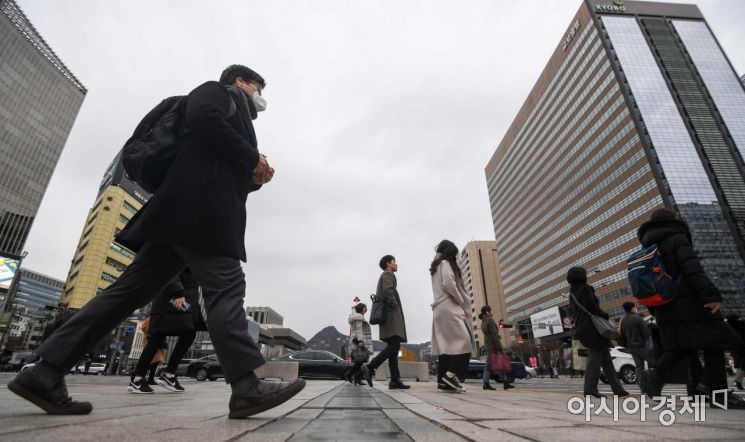
Since the report's first publication in 2012, South Korea has consistently scored around 6 points, ranking between 40th and 60th place. In 2021, it scored 5.845, ranking 62nd out of 149 countries; in 2022, it scored 5.935, ranking 59th out of 146 countries; and this year, it rose two places to 57th.
However, among the 38 member countries of the Organisation for Economic Co-operation and Development (OECD), South Korea remains in the lower ranks. According to this year's report, only three OECD member countries scored lower than South Korea: Greece (5.931, 58th), Colombia (5.630, 72nd), and T?rkiye (4.614, 106th).
The highest happiness score was 7.804, achieved by Finland, which ranked first worldwide for the sixth consecutive year. Following Finland were Denmark (7.586), Iceland (7.530), Israel (7.473), the Netherlands (7.403), Sweden (7.395), Norway (7.315), Switzerland (7.240), Luxembourg (7.228), and New Zealand (7.123), with Nordic countries occupying the top ranks.
Ranks 11 to 20 were Austria (7.097), Australia (7.095), Canada (6.961), Ireland (6.911), the United States (6.894), Germany (6.892), Belgium (6.859), the Czech Republic (6.845), the United Kingdom (6.796), and Lithuania (6.763), with France ranking 21st (6.661).
In the Middle East and Asia, Singapore (6.587, 25th), the United Arab Emirates (6.571), and Taiwan (6.535) made significant advances, ranking 25th to 27th. Saudi Arabia (6.463, 30th), Bahrain (6.173, 42nd), Kazakhstan (6.144, 44th), Japan (6.129, 47th), Uzbekistan (6.014, 54th), and Malaysia (6.012, 55th) also ranked higher than South Korea. Among Asian countries, those ranked lower than South Korea included Thailand (5.843, 60th), Mongolia (5.840, 61st), China (5.818, 64th), and India (4.036, 126th).
Among the 137 countries listed in this year's report, Afghanistan had the lowest happiness score at 1.859. Russia's happiness score was 5.661, ranking 70th, and Ukraine's was 5.071, ranking 92nd; this reflects data from 2020 to 2022. Comparing survey data from 2021 and 2022 shows that the happiness of Russian citizens, the invading country, increased, while that of Ukrainian citizens, the invaded country, decreased.
Meanwhile, the report stated that when comparing the periods before the COVID-19 pandemic (2017?2019) and during the pandemic (2020?2022), there was little change in global happiness overall.
© The Asia Business Daily(www.asiae.co.kr). All rights reserved.

















