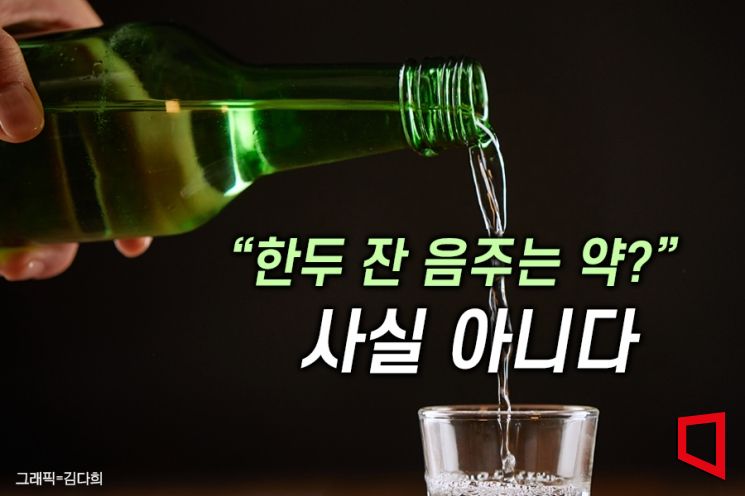
“Isn't it okay to have a light drink occasionally?”
Choi (29), a resident of Seoul, is a passionate drinker who drinks alcohol 2 to 3 times a week. Recently, as the liquor industry has been releasing ‘zero sugar’ (low-calorie) products that do not cause weight gain, Choi expects to enjoy both the pleasure of drinking and maintain health at the same time. Choi said, “I understand that moderate drinking, not excessive drinking, can be beneficial to health,” adding, “It’s also perfect for relieving stress accumulated from work life.” According to the Korea Disease Control and Prevention Agency’s ‘National Health and Nutrition Survey,’ the drinking rate in Korea (the proportion of adults who drank at least once a month in the past year) was 57.4% in 2021, when social distancing due to COVID-19 was enforced, marking the lowest since 2007 (56.7%). However, with the COVID-19 pandemic becoming endemic, there are expectations that drinking may increase again to pre-pandemic levels. In fact, quite a few people believe that “soju can sometimes be good for health.”
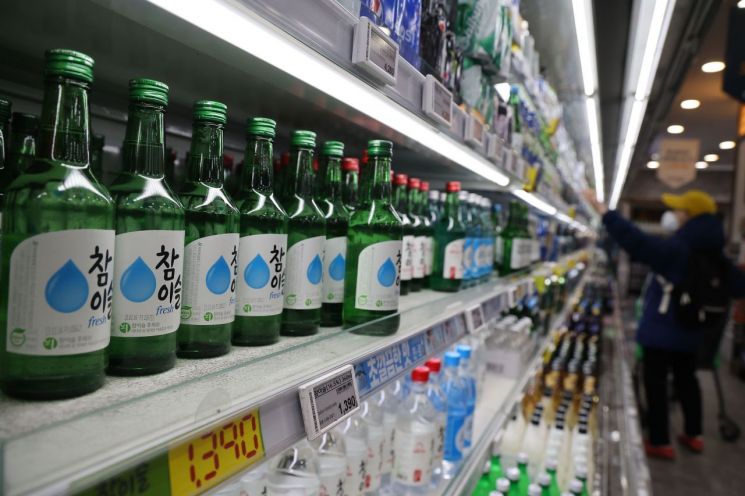
“One or two drinks, sometimes medicine?”
According to a drinking perception survey conducted by the National Cancer Center on 7,000 adults nationwide on the occasion of ‘Cancer Prevention Day’ on the 21st, nearly half of the population, 46.9%, believed that “one or two drinks do not pose significant health problems.” About 2 out of 10 people (18.0%) even responded that it helps health. However, Seo Hong-kwan, director of the National Cancer Center, said, “According to the World Health Organization (WHO), the healthiest habit is not to drink even small amounts of alcohol,” adding, “To prevent cancer, you should not drink at all.” Research has shown that even small amounts of alcohol increase the risk of death from cancer. According to a team led by Professors Sung Eun-joo and Ko Hyun-young from the Department of Family Medicine at Kangbuk Samsung Hospital and Professors Ryu Seung-ho and Jang Yoo-soo from the Cohort Research Center, those who drank 0.1?10g or 10?20g of alcohol per day had 1.67 times and 2.41 times higher risk of cancer death, respectively, compared to non-drinkers. Ten grams of alcohol corresponds to one glass of soju.
Only 33.6% of the population knew that alcohol is classified as a Group 1 carcinogen by the International Agency for Research on Cancer (IARC), a WHO-affiliated organization. This means that 7 out of 10 people do not know that alcohol is a carcinogen on par with asbestos, cadmium, and arsenic.
Why do Koreans not think so negatively about alcohol? This is largely attributed to the liquor industry embedding positive perceptions of alcohol by featuring popular celebrities in posters and advertisements. In response, the National Cancer Center pointed out, “Exposure to alcohol advertisements or drinking scenes can lead to earlier initiation of drinking among adolescents and promote alcohol consumption, as shown in numerous studies,” raising the need for drinking regulations. In fact, among the respondents of this survey, the top policy priority if the government were to implement drinking regulations was “banning alcohol advertisements” (22.9%).
“Korea has no regulations on liquor models”
In June 2021, the Ministry of Health and Welfare expanded the ban on liquor advertisements to transportation means such as subway stations and vehicles, buses, subways, and taxis, and prohibited liquor video advertisements on building exteriors and rooftop electronic billboards through amendments to the National Health Promotion Act. However, unlike overseas, there are no separate regulations on liquor models, which is criticized as insufficient to lead the public toward abstinence. In the United States, models under 25 years old are prohibited from appearing in liquor advertisements, and in the United Kingdom, models and characters popular among adolescents are not allowed in liquor advertisements.
Kim Byung-mi, head of the Cancer Prevention Division at the National Cancer Center, emphasized, “In Korea, alcohol is promoted as something good by featuring idols admired by young people or cute characters that stimulate purchasing desire in liquor advertisements,” adding, “For the promotion of public health, it is necessary to establish regulatory measures on liquor models.”
© The Asia Business Daily(www.asiae.co.kr). All rights reserved.


















