Even with 'Bad' or 'Very Bad' Air Quality,
Ventilation for 3-5 Minutes Daily Is Essential
Indoor Air Quality Deterioration Also Poses Risks
As warm spring weather continues, fine dust has been rampant for consecutive days. Fine dust contains heavy metals and air pollutants, which not only adversely affect various parts such as the eyes, nose, mouth, and skin but can also cause respiratory diseases. As a result, there is growing interest in the proper ways to cope with fine dust.
Refrain from Going Out, Wear Masks, and Ventilate
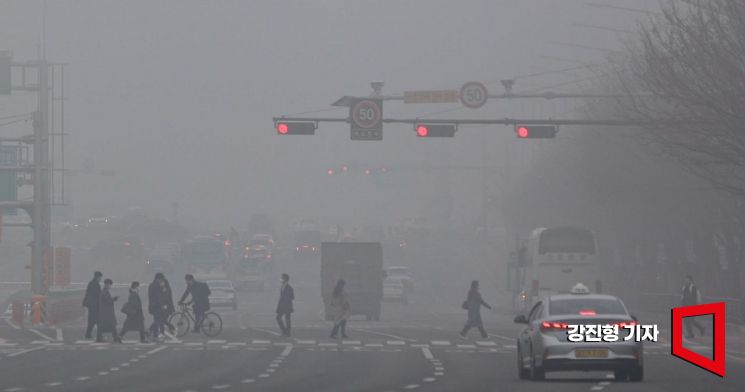 On the 20th, when the emergency fine dust reduction measures were implemented in the metropolitan area, Yeouido, Seoul was shrouded in fine dust accompanied by fog. Photo by Jinhyung Kang aymsdream@
Fine dust causes physical irritation to the skin, eyes, nose, and throat mucous membranes. Due to its small size, it can be inhaled into the lungs, affecting the respiratory system and potentially causing inflammatory reactions in various organs of the body.
In particular, those with pre-existing conditions, pregnant women, and children need to be especially cautious about fine dust. Patients with cardiovascular or respiratory diseases may experience worsened symptoms, and pregnant women may face risks such as fetal growth retardation and premature birth. Additionally, it can hinder lung development in children.
Therefore, on days with severe fine dust, it is advisable to refrain from going out and reduce outdoor activities as much as possible. When going outside, one should wear health masks such as 'KF80' or 'KF94'. KF80 masks filter out more than 80% of fine particles averaging 0.6㎛ in size, while KF94 masks filter out more than 94% of particles averaging 0.4㎛.
Also, when staying indoors, regular ventilation is necessary. Without any ventilation, pollutants such as carbon dioxide, formaldehyde, and volatile organic compounds accumulate, deteriorating indoor air quality.
Therefore, even on days with high fine dust concentration, it is recommended to ventilate at least three times a day. When the outdoor fine dust level is 'Good' or 'Moderate,' ventilating for more than 30 minutes is appropriate. On 'Bad' or 'Very Bad' days, ventilation for 3 to 5 minutes is essential. Opening windows on opposite sides to create a wind path increases effectiveness. Even when using an air purifier, it is beneficial to ventilate briefly to reduce indoor pollutant concentration.
Gray Sky... Seoul's Ultra-Fine Dust 'Very Bad'
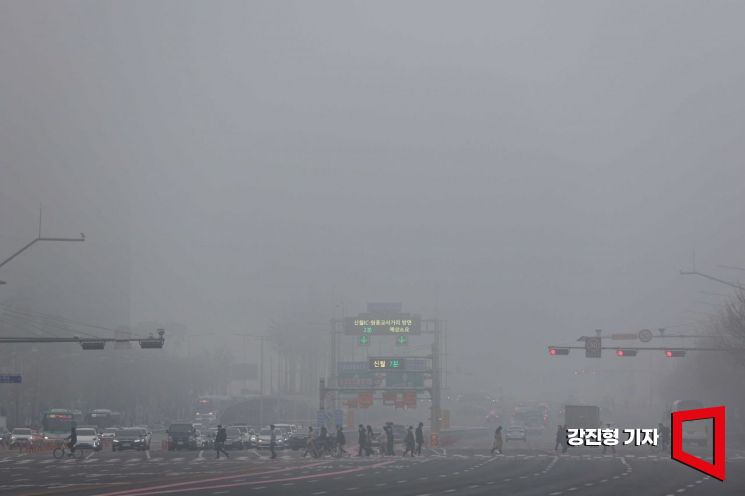 On the 20th, when the emergency fine dust reduction measures were implemented in the metropolitan area, Yeouido, Seoul was shrouded in fine dust accompanied by fog. Photo by Jinhyung Kang aymsdream@
Meanwhile, on the 20th, the ultra-fine dust (PM 2.5) concentration across Seoul was at a 'Bad' level or higher. According to the National Institute of Environmental Research under the Ministry of Environment, as of 9 a.m. that day, the hourly average ultra-fine dust concentration in Seoul was 84㎍/㎥, corresponding to the 'Very Bad' category. All 25 districts of Seoul showed hourly average ultra-fine dust concentrations at 'Bad' levels or higher.
Accordingly, an ultra-fine dust crisis alert at the 'Interest' stage was issued for the Seoul, Incheon, and Gyeonggi areas, and emergency reduction measures were implemented. The Ministry of Environment analyzed that the high fine dust concentrations in these areas were due to the accumulation of fine dust transported from abroad and domestically generated fine dust caused by stagnant air.
Meanwhile, tomorrow (21st), fine dust levels are expected to be 'Bad' in the metropolitan area, Gangwon Yeongseo, Chungcheong region, and Jeonbuk, while other regions are expected to be between 'Good' and 'Moderate.' However, Gwangju, Daegu, and Gyeongbuk are forecasted to experience temporarily 'Bad' levels in the morning.
© The Asia Business Daily(www.asiae.co.kr). All rights reserved.


















