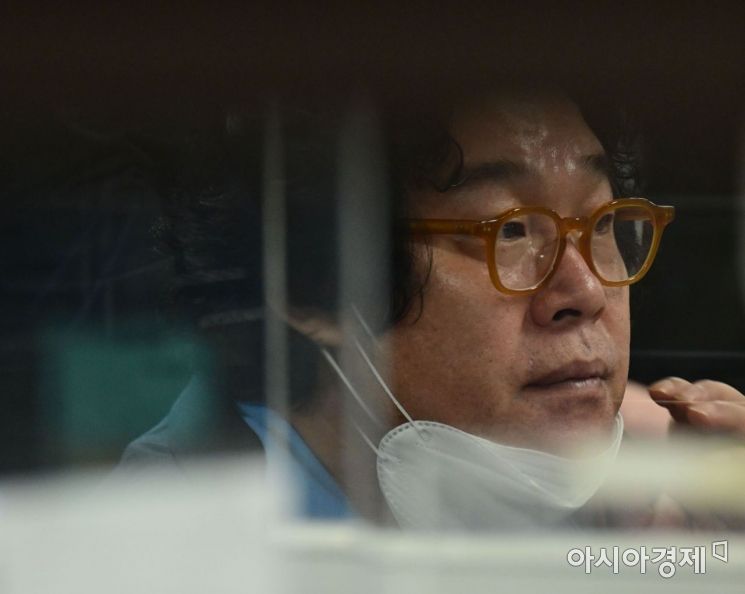
Former Ssangbangwool Group Chairman Kim Sung-tae ultimately lost a lawsuit seeking to cancel the capital gains tax imposed on stocks held under borrowed names.
According to the legal community on the 17th, the Supreme Court's First Division (Presiding Justice Oh Kyung-mi) dismissed Kim's appeal without review in the final appeal of the lawsuit against the National Tax Service to cancel the capital gains tax imposition, thereby upholding the second trial ruling that Kim must pay about 3.05 billion won in capital gains tax.
An appeal dismissal without review is a system in which the Supreme Court dismisses an appeal without substantive examination under the Act on Special Cases Concerning the Appeal Procedure when there are no grounds for appeal such as serious legal violations in the original trial, except in criminal cases.
Clarian Partners, the second-largest shareholder of Ssangbangwool Group, transferred 2,349,939 shares of Ssangbangwool stock to six people including Kim's spouse for a total of 9 billion won in 2010. These six individuals then sold the shares to third parties in the same year and pocketed the capital gains.
After conducting a tax investigation on Ssangbangwool in 2014, the National Tax Service imposed gift tax and other taxes, stating that the shares owned by three of these six people were actually Kim's borrowed-name stocks, and Kim paid the taxes for these three individuals.
Around the same time, prosecutors indicted Kim and Ssangbangwool executives on charges of artificially manipulating Ssangbangwool's stock price from 2010 to 2011 (violation of the Capital Markets Act), and Kim was convicted in 2017.
However, during this process, circumstances emerged suggesting that the shares owned by the remaining three of the six people, which the tax authorities did not consider as Kim's borrowed-name stocks in 2014, were also suspected to be actually owned by Kim.
In 2018, the National Tax Service revoked the previous tax imposition ex officio and re-imposed taxes totaling about 3.05 billion won, including a penalty tax of 2.6 billion won, on Kim. In response, Kim filed an administrative lawsuit, claiming that the shares owned by the remaining three individuals were not his borrowed-name stocks.
The first trial court ruled that only the portion owned by one of the three individuals in question was actually owned by Kim and canceled the rest of the taxation, excluding about 1.1 billion won.
However, the second trial overturned the first trial's ruling, stating, "Considering all circumstances, it is reasonable to view that the actual owner of the stocks under the names of all six people is Kim," and ruled that the National Tax Service's tax imposition was justified.
© The Asia Business Daily(www.asiae.co.kr). All rights reserved.
![Clutching a Stolen Dior Bag, Saying "I Hate Being Poor but Real"... The Grotesque Con of a "Human Knockoff" [Slate]](https://cwcontent.asiae.co.kr/asiaresize/183/2026021902243444107_1771435474.jpg)
















