"Poor Child Born in Japan"
Woman Fears 'Career Interruption', Man Worries About 'Economic Burden'
Japan's Nihon Keizai Shimbun (Nikkei) reported that in a survey related to the low birthrate issue, more than 30% of all respondents said they never wanted to have children. While responses indicating that the environment for having and raising children is difficult were predominant, it is expected that negative perceptions of parenting, especially among the younger generation, will not be easily changed.

On the 16th, Nihon Keizai Shimbun (Nikkei) introduced the results of a reader survey conducted last month with over 5,000 participants, noting that pessimistic answers such as "There is no hope in having and raising children in Japan" were prevalent in the subjective responses. Other responses included negative opinions like "Children born in Japan, which is entering a decline phase, are pitiful. We cannot take responsibility." Thirty percent of survey respondents answered, "I never wanted children in the past and have no intention of having them in the future."
Japan has shown a tendency to not have children earlier than South Korea. Demographically, 'Childless' refers to women who have no children by their 50s. The childless rate for women born in 1970 in Japan is 27%, the highest among OECD countries. Following Japan are Finland (20.7%), Austria, and Spain. Regarding this, Nikkei added, "In Europe, various support measures have led to a decrease in the childless trend later on, but in Japan, it seems to be intensifying." The National Institute of Population and Social Security Research in Japan also estimated that if the current low birthrate trend continues, 31-39% of women born in 2000 will remain childless throughout their lives.
Nikkei analyzed the background of this phenomenon and found different tendencies by gender. The answer "I wanted to marry but couldn't" was more common among men, while "I didn't marry because I didn't want to" was more common among women.
Additionally, women were found to worry about career interruptions related to having children, while men were concerned about economic burdens. Regarding reasons for not having children, the answer "I want to prioritize work" was higher among women than men across all age groups. The total percentage of women giving this answer was 11.6%, twice that of men (5.3%). Conversely, men answered "because I don't have financial stability" more frequently than women across all age groups. In the 40s age group, the male response rate was 10.6%, nine times higher than that of women (1.2%).
Notably, despite the tendency not to want children, 80% of all respondents answered "yes" to the question "Do you think having children is good?" Nikkei stated that this strongly reflects the anxiety and resignation of the younger generation within Japan's social atmosphere that enforces traditional gender roles. Nikkei introduced responses such as "I felt that raising children meant sacrificing myself after seeing mothers who quit work to become full-time housewives" and "I find it hard to imagine a household where roles are shared and lived in a patriarchal family."
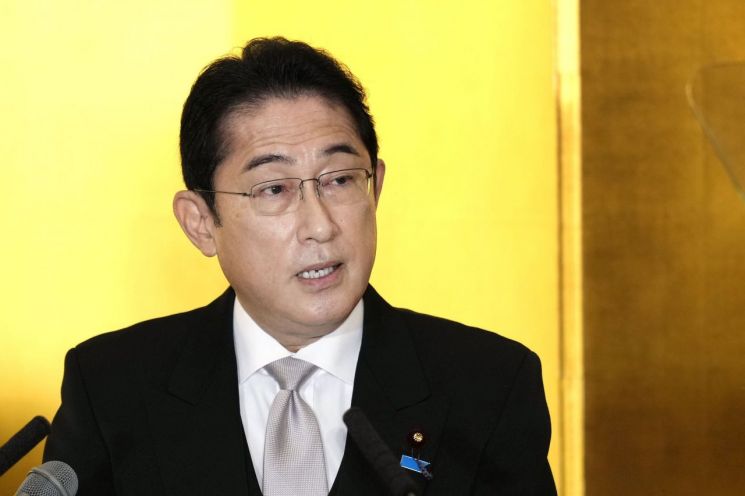
In fact, expert opinions from the Cabinet Office's 2020 "International Awareness Survey on Low Birthrate Society" state, "For Japanese people, parenting is a socially expected role or responsibility that can easily cause a sense of burden." Nikkei added, "Social norms such as 'you must have children,' 'women must raise children,' and 'men must earn money' may have changed lifestyles. Although the Kishida administration is taking measures such as doubling the children's budget, without a fundamental message, it will be difficult to move the hearts of the people."
© The Asia Business Daily(www.asiae.co.kr). All rights reserved.
![Clutching a Stolen Dior Bag, Saying "I Hate Being Poor but Real"... The Grotesque Con of a "Human Knockoff" [Slate]](https://cwcontent.asiae.co.kr/asiaresize/183/2026021902243444107_1771435474.jpg)

















