1st Trial: "No Evidence to Prove Former Chairman Lee Ordered or Involved in Transactions"
Supreme Court: "Former Chairman Lee Contributed to Strengthening Control... Indirectly Involved"
The Supreme Court overturned the first trial ruling, judging that there is a strong possibility that former Taekwang Group Chairman Lee Ho-jin was involved in the ‘forced purchase of kimchi and wine by affiliated companies’ case under the Taekwang Group. However, the Supreme Court ruled that the Fair Trade Commission’s (FTC) imposition of fines on the affiliated companies was justified.
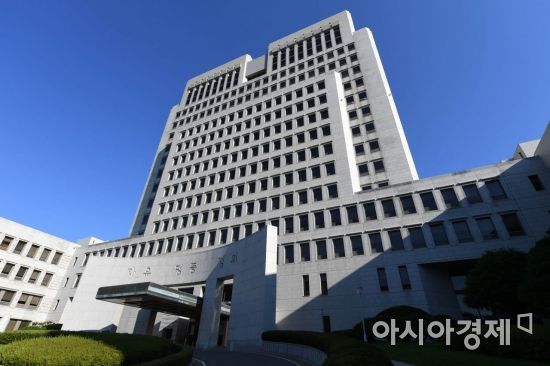
The Supreme Court’s First Division (Presiding Justice Kim Sun-soo) on the 16th overturned the lower court’s ruling that canceled the corrective order against former Chairman Lee in the appeal trial of the lawsuit filed by Taekwang Group affiliates against the FTC’s corrective order and fine payment order, and sent the case back to the Seoul High Court.
In 2019, the FTC discovered that 19 Taekwang Group affiliates had unfairly purchased kimchi and wine from ‘Whistling Rock CC (Tisis)’ and ‘Merbang,’ companies wholly owned by the family of the group’s head, and imposed fines totaling 2.18 billion KRW. A corrective order was issued against former Chairman Lee.
The FTC’s investigation found that Whistling Rock CC sold napa cabbage kimchi and young radish kimchi to other affiliates at prices higher than the market rate. From the first half of 2014 over two years, the total amount of kimchi purchased by Taekwang Group affiliates was 512.6 tons, with a transaction value reaching 9.55 billion KRW.
The Taekwang Group’s Management Planning Office set the kimchi unit price at 190,000 KRW per 10 kg, referencing prices of high-end kimchi produced by hotels, and allocated purchase quantities to each affiliate. The affiliates purchased Whistling Rock CC’s kimchi as company expenses (employee welfare expenses, promotional expenses) and distributed it to employees as part of their salary.
Additionally, the Management Planning Office sought to expand internal transactions among affiliates to enhance so-called ‘group synergy,’ and as part of this, it was investigated that Merbang wine was actively used when affiliates provided gifts.
The Seoul High Court Administrative Division 3 (Presiding Judge Ham Sang-hoon) ruled to cancel the corrective order against former Chairman Lee issued by the FTC but dismissed the affiliates’ claims. The court viewed that since all affiliates were mobilized to support companies wholly owned by special related parties, it constituted a serious violation warranting fines. The court also found no evidence that former Chairman Lee directed or was involved in the transactions. The FTC’s disposition effectively holds the same weight as the first trial, and the first trial lawsuit is handled by the High Court.
However, the Supreme Court’s judgment differed. The Supreme Court found that there is a strong possibility that former Chairman Lee was involved in the kimchi and wine transactions. First, the court stated, “Whether a special related party ‘was involved’ in unfair benefit provision acts should be judged comprehensively considering all circumstances, including whether there was a motive to commit the act. At this time, it is also necessary to consider that special related parties can indirectly participate in various ways by using their influence over the corporate group.”
It further judged, “Former Chairman Lee, as a person playing a dominant role in Taekwang’s decision-making process, had a strong interest in Tisis’s profits and revenue structure because the kimchi and wine transactions provided stable profits to Tisis, which contributed to strengthening Lee’s control, irregular wealth transfer, and succession of management rights to Lee’s son. Therefore, he could have indirectly participated in various ways by using his influence.”
The court added, “It does not appear that the Management Planning Office had a motive to conduct the kimchi and wine transactions without former Chairman Lee’s knowledge. Rather, they likely reported the progress of the transactions to receive favorable evaluations from him and to be recognized for their achievements,” and ordered a retrial of the first trial.
However, the Supreme Court ruled that the first trial’s judgment that the kimchi and wine transactions constituted unfair benefit provision to special related parties and that the FTC’s imposition of fines was justified, had no problems.
© The Asia Business Daily(www.asiae.co.kr). All rights reserved.

















