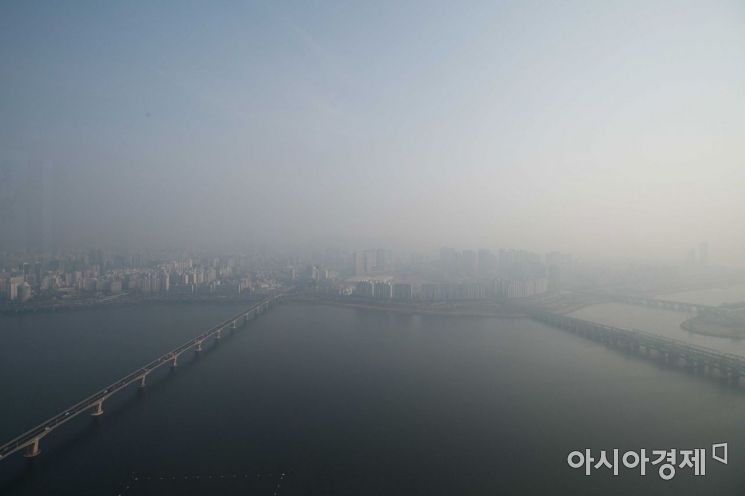
A study has found that air pollutants increase the risk of Alzheimer's dementia.
The research team led by Professors Jae-Rim Cho and Chang-Soo Kim from the Department of Preventive Medicine at Yonsei University College of Medicine, and Professor Young Roh from the Department of Neurology at Gachon University Gil Medical Center, announced on the 16th that air pollutants such as fine dust thin the thickness of the cerebral cortex, thereby increasing the risk of Alzheimer's dementia. This study was published in the international journal Environment International (IF = 13.352).
Air pollutants enter the lungs through the respiratory tract and cause inflammation, which is known to trigger various diseases throughout the body. In particular, when they reach the brain, they cause neuroinflammation. Previous studies confirmed that air pollutants affect cerebral cortex atrophy, but there was no evidence linking this to cognitive decline and Alzheimer's dementia.
The cerebral cortex is the area on the surface of the brain where nerve cells gather and is responsible for brain cognitive functions such as memory and learning. Changes in the cerebral cortex are closely related to brain diseases; in fact, the average cerebral cortex thickness of Alzheimer's dementia patients is 2.2 mm, thinner than that of healthy individuals, which averages 2.5 mm.
 Professors Jae-Rim Cho and Chang-Soo Kim from Yonsei University College of Medicine, and Professor Young Noh from Gachon University Gil Medical Center (from left).
[Photo by Yonsei Medical Center]
The research team studied the effects of air pollution on brain health by measuring three major air pollutants?ultrafine particulate matter (PM2.5), particulate matter (PM10), and nitrogen dioxide (NO2)?in 640 healthy adults aged 50 and over without brain diseases from Seoul, Incheon, Wonju, and Pyeongchang over 32 months starting in August 2014. As a result, as the concentration of air pollutants increased, the thickness of the cerebral cortex decreased. When the concentrations of particulate matter and ultrafine particulate matter increased by 10 μg/m³, and nitrogen dioxide by 10 ppb, the cerebral cortex thickness decreased by 0.04 mm, 0.03 mm, and 0.05 mm respectively.
Next, using brain imaging-based artificial intelligence to predict the risk of Alzheimer's dementia through the 'Alzheimer's Dementia Brain Atrophy Index Assessment,' the pattern of cerebral cortex reduction caused by air pollutants was similar to the cerebral cortex atrophy areas in Alzheimer's dementia patients. For every 10 μg/m³ increase in particulate matter concentration, the thickness of the frontal lobe decreased by 0.02 mm, and the temporal lobe thickness decreased by 0.06 mm. In the case of ultrafine particulate matter, the temporal lobe thickness decreased by 0.18 mm for every 10 μg/m³ increase. When nitrogen dioxide concentration increased by 10 ppb, the frontal and parietal lobes decreased by 0.02 mm, the temporal lobe by 0.04 mm, and the insular lobe by 0.01 mm.
As the concentration of air pollutants increased, cognitive function also declined. For every 10-unit increase in ultrafine particulate matter, particulate matter, and nitrogen dioxide concentrations, cognitive function scores dropped by 0.69 points, 1.13 points, and 1.09 points respectively. This indicates that the participants’ calculation, language, and memory abilities deteriorated due to air pollution. Additionally, the risk of mild cognitive impairment, a pre-dementia stage, increased by 1.5 times, 2.2 times, and 1.7 times respectively for every 10-unit increase in ultrafine particulate matter, particulate matter, and nitrogen dioxide concentrations.
Professor Jae-Rim Cho stated, "This study confirmed that air pollutants cause cerebral cortex atrophy, reduce cognitive function, and increase the risk of dementia." He added, "It is advisable to avoid going outside when air pollution is severe and to wear health masks during outdoor activities."
© The Asia Business Daily(www.asiae.co.kr). All rights reserved.
![Clutching a Stolen Dior Bag, Saying "I Hate Being Poor but Real"... The Grotesque Con of a "Human Knockoff" [Slate]](https://cwcontent.asiae.co.kr/asiaresize/183/2026021902243444107_1771435474.jpg)












